“Be Like a Passion Fruit: vibrant, full of flavor, and true to your unique essence.”
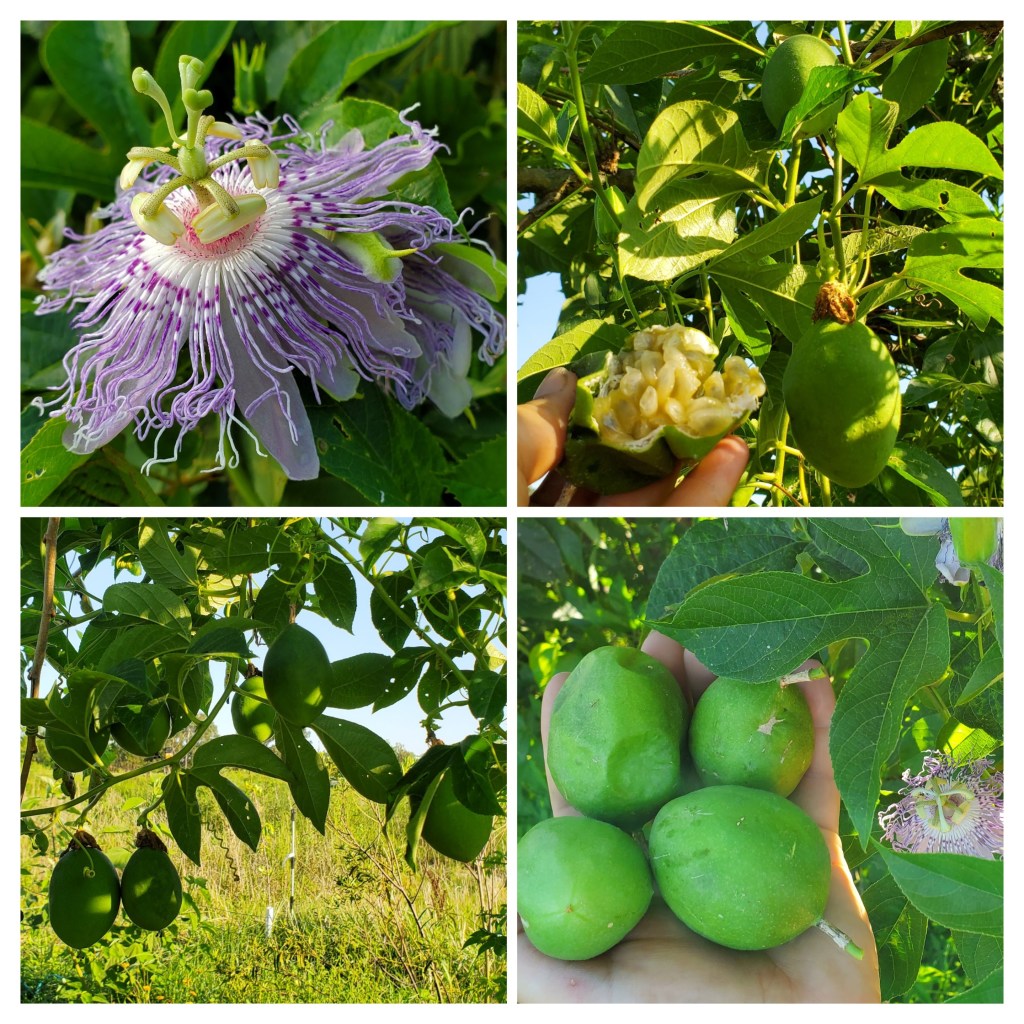
Passiflora Incarnata, also known as Purple Passionflower, Maypop and Wild Passion Vine
The fruit of the Wild Passion Vine is one of my absolute favorite things that can be foraged in my area of the Ozarks. I harvested my first handful of fruits yesterday which put a huge smile on my face. Just the smell of the ripe fruit is like a passport to a tropical paradise. Some people see this vine as a nuisance but they don’t realize the treasure it is! It grows wild all over my property and I still propagate it to plant in more desirable areas and train it up trellises to make harvesting easier. I have even planted some in our front garden to adorn the front of the house with its gorgeous flora. If you have Wild Passion Vine, consider yourself lucky. If you don’t, find some – you won’t regret it. Of course, always ask permission if you aren’t foraging on your own property, make sure the plants haven’t been sprayed with anything, and don’t take it all. Leave some plants/seeds/fruit to replenish and fulfill it’s role in nature so there will be future foraging opportunities for everyone. Also, never eat something that you can not identify with one hundred percent certainty.
Description: The Passion Vine is a fast-growing perennial vine that uses tendrils to climb up anything they can grab or to spread along the ground if nothing is available to climb. It grows in full sun to part shade in fence rows, un-mowed fields, prairies, roadsides, thickets, and woodland edges. You may see butterflies and caterpillars as frequent visitors as it is a larval host for several butterfly species. The flowers are also a favorite to bumblebees and carpenter bees.
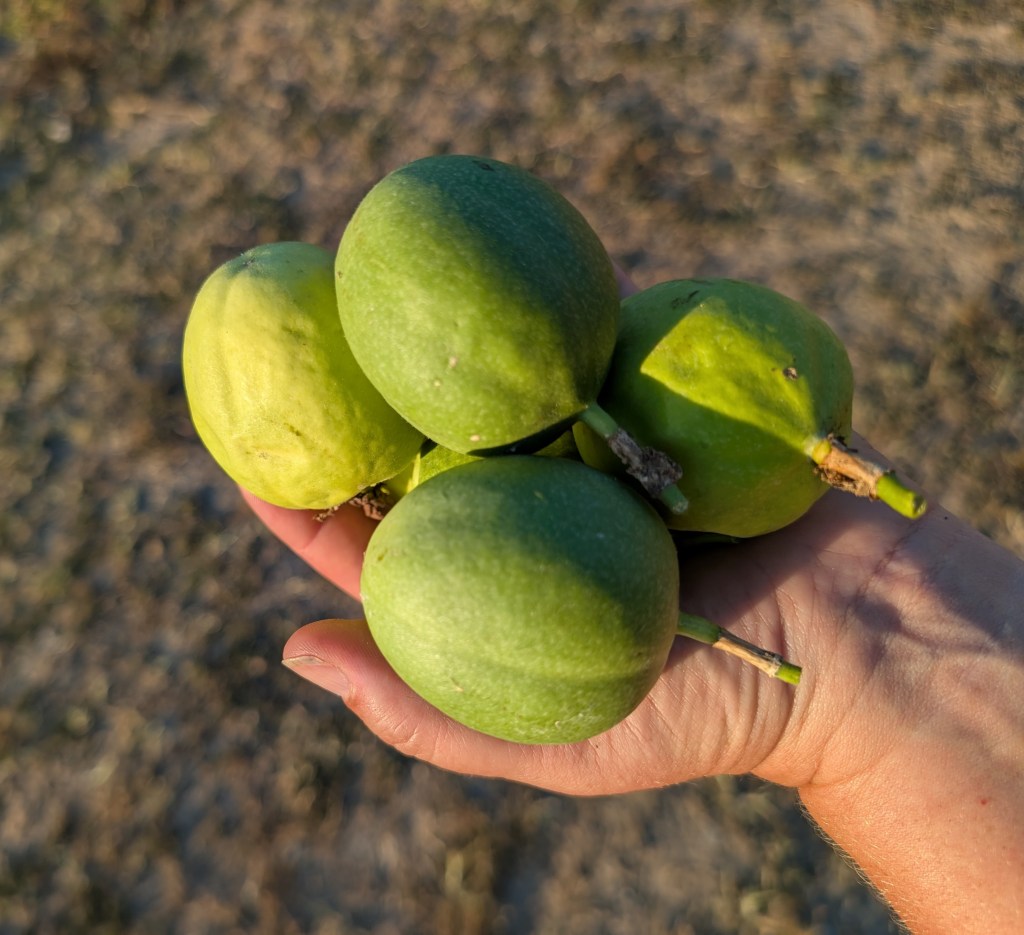
The vine has green, 3- or sometimes 5-lobed leaves. Flowers are purple and exotic-looking and appear in June and bloom through the summer and fall. Fruits are egg-shaped and green and when popped open they contain numerous sweet arils, each containing a small black seed. The fruit has an exquisitely sweet, tropical and slightly citrus flavor and is rich in vitamin C. The fruit begins to ripen in August and continues to ripen through the first frost.
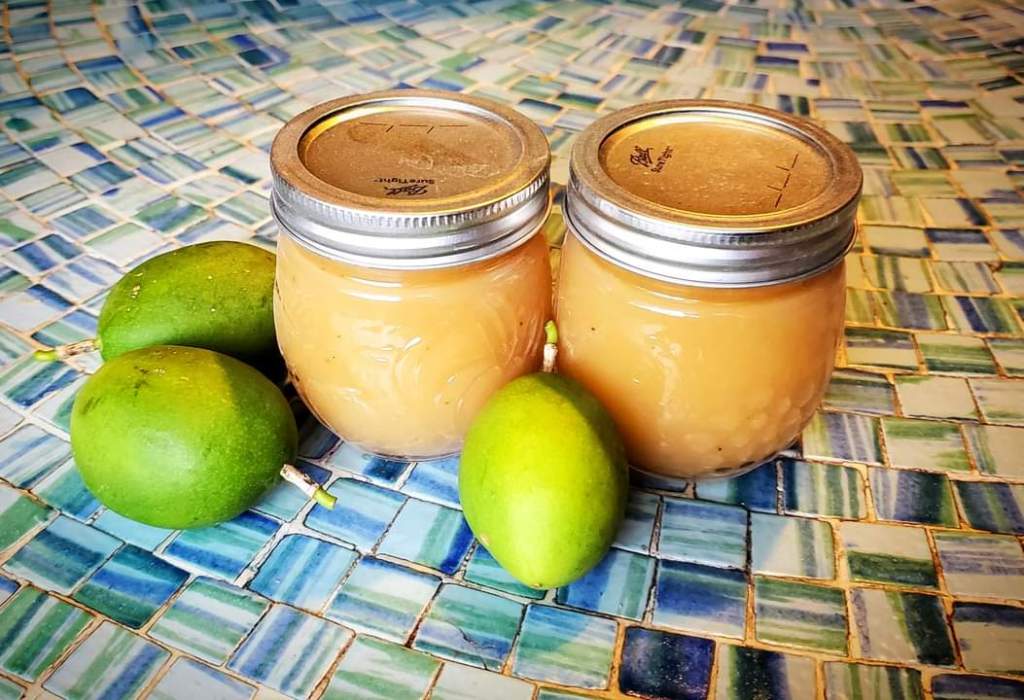
Uses: Fruits, buds, flowers, leaves, and seeds are all edible raw or cooked. The fruit is delicious straight out of the husk – you can suck the juice off from around the seeds and then spit out the seeds, or you can crunch it all up and eat the whole thing. I find the seeds are too hard and crunchy for my taste, however. You can simmer the pulp in water, strain and let cool to drink. My favorite use for this plant, however, is to make an absolutely decadent jam with the fruit. The juice can also be made into syrup or wine and is used commercially for a food flavoring. Flowers can be eaten raw and make a beautiful addition to salads. The flowers can be infused and fermented in honey. Husks of younger fruits can be boiled as a vegetable. Tea can be made with the fresh or dried leaves, flowers and/or stems and is commonly used for insomnia, lowering blood pressure, inflammation, heart problems, menopausal symptoms, skin conditions, muscle spasms, ADHD depression, anxiety, and as an aid in opiate withdrawal.
Harvest: Pinch off flowers, leaves and stems. The fruit is ripe when it falls off the vine – give the vine a gentle shake and then pick up any that are on the ground. When ripe, they will have a wonderful, sweet smell, even through the husk.
Storage: Flowers, leaves and stems can be dried and stored in an airtight container. My favorite way to preserve the fruit is to can it as a shelf-stable jam. Since harvesting season is spread over months, I will gather fruit daily and take the husks off, placing the arils in a freezer bag in the freezer until I have collected enough for a batch of jam. Then I will thaw it and process it to remove the seeds and make my jam. Keep reading for my jam recipe and others!
Propagation: The best way I have found to propagate passionflower vines is by seed. I get good germination rates by fermenting the seeds in their own juice and a little bit of water for several days at room temperature followed by cold stratification. You can do this by planting directly outside in the fall and letting nature do it’s thing over winter, or you can use the refrigerator method with a moist paper towel in a plastic bag (adding cinnamon can help inhibit mold growth). In my opinion, you can not have enough of this beautiful vine that provides such a delicious fruit!
Warnings: Passionflower tea should not be consumed by pregnant or nursing mothers. Consuming the tea in excess can result in vomiting, cognitive distress, dizziness, and stomach upset.
Purple Passionflower Recipes
Passionflower Tea
*Recipe from The Forager’s Guide to Wild Foods
Place two flowers and 2-3 leaves with stems in 1 1/4 cup boiling water. Cover and steep for 10 minutes. Strain and add honey, to taste.
Passion Fruit Jam
*This is a recipe of my own making and (along with my peach salsa) is one of my favorite things to stock up my canned goods pantry with!
4 cups of passion fruit juice (I use an electric food strainer to remove the seeds)
1 1/2 cups of sugar
4 tsp Pomona’s Pectin
4 tsp calcium water
Pour fruit juice into pan, add calcium water and stir. Measure sugar and pectin into separate bowl and mix well. Bring juice to a full boil. Add the sugar/pectin mixture and stir constantly and vigorously for 1-2 minutes to dissolve pectin (wire whisk is handy). When moisture returns to full boil, remove from heat. Skim off foam (edible but not pretty). Fill jars to within 1/4 inch of rim. Wipe rims and screw on lids. Water bath for 10 minutes.
Passion Fruit Whey Cooler
*Recipe adopted from Lindsay Kolasa
Makes two 750 mL wine bottle (empty screw tops or swing tops)
1/2 cup whey (the liquid that separates from curds when making cheese from milk)
1/2 cup honey
1/4 teaspoon sea salt
2 Tablespoons lemon juice
5-6 passionfruits
1 1/2 quarts water
Scoop out the passionfruit pulp and place in pan. Add water and bring to simmer. Turn off heat and let cool to room temperature. Add in honey, salt, whey, and lemon juice and stir well. Strain the seeds out through a mesh filter. Pour into two screw-top wine bottles and screw the lids on tightly. Set in a warm place for 3-5 days (in the summer-time, this will be ready in 3 days max). Taste the brew and see if it is fizzy and ready. If it is still too sweet for you, let it sit out more so that it will culture more. When ready to drink, transfer to the fridge and serve cold.
(Warning: be careful when opening! These drinks get very fizzy and a lot of foam will pour out of the bottle!)
Passion Fruit Curd
Recipe adapted from The Flavor Bender
Ingredients
- ½ cup passion fruit pulp (about 3 – 4 passion fruits, depending on the size), seeds strained out
- 2 tbsp lemon juice
- ¼ cup sugar
- 6 tbsp unsalted butter
- 4 egg yolks (from large eggs)
Instructions
Place the passion fruit pulp and sugar in a heat-proof glass bowl or the top of a double boiler.
Heat a few inches of water in a saucepan or in the bottom part of a double boiler, and bring the water to a boil. Then lower the heat to a simmer.
Place the bowl of passion fruit pulp and sugar on the saucepan or the double boiler, and whisk for a few minutes to warm up the ingredients and dissolve the sugar.
Add the egg yolks and lemon juice into a separate jug or bowl, and whisk to form a smooth paste.
Pour the warm passion fruit and sugar in a thin stream into the eggs, WHILE whisking constantly to temper the eggs.
Next, pour the egg and passion fruit mix back into the bowl, and return the bowl to the double boiler.
Add the unsalted butter to the warm passion fruit curd. The butter will melt as the passion fruit curd heats, and the whisking/stirring will help emulsify the butter into the passion fruit curd.
Stir well (or whisk) frequently, while cooking the mixture. Make sure to not let the mixture set at the bottom of the bowl (this will cause the eggs to overcook). Stir or whisk frequently until the passion fruit curd thickens. This can take up to 10 – 20 minutes (the time depends on the bowl and the heat).
The most accurate way to ensure that the passion fruit curd is cooked well is to use a temperature probe and check the temperature of the curd often, in between whisking. When the passion fruit curd registers 160° F, it’s ready!
Storing the curd: Sterilize a 1 x 11 oz glass jar (324 mL) and sealable lid in boiling water. Remove the sterilized jar from the water and pour the hot passion fruit curd into the jar. Close the jar with the lid. Store in the fridge overnight, to completely chill the curd. The passion fruit curd will last in the fridge for about 3 weeks (with unopened sterilized jars), or about 7 days with unsterilized jars or bowls. Or it will last longer in the freezer (up to 3 months). Once opened, use within 7 – 10 days for best results.
If you haven’t tried our native passion fruit yet, I highly suggest going out and looking for this unique vine. It is absolutely worth finding and perhaps cultivating for easy harvests! It is beautiful enough to cultivate just as an ornamental, in my opinion, but what a bonus that it produces delicious fruit as well!
Tell me in the comments if you have tried this wonderful native fruit before and if you have, how did you like it? If you haven’t, go try it and come back and let me know!

 Radiant Roots
Leave a comment and let me know what you think!