“You don’t have to do it all. Just do what fits your land, your hands, and your heart.”
If you’ve ever found yourself daydreaming over a glass of fresh milk about whether to bring home a dairy cow or a few dairy goats, you’re not alone. As a dairy farmer with both, I get asked often which is best. It’s one of those big homestead crossroads – the kind that can shape your daily rhythm, your chores, and even your adventures into other dairy products. Both cows and goats can provide nourishing milk and a deeper sense of self-sufficiency, but they each come with their own quirks and considerations.
Let’s walk through the pros and cons of each to help you decide which fits your lifestyle best.
Dairy Goats Pros
- Smaller size, easier handling. Goats are much less intimidating than a cow. They are easier to house, milk, and physically manage – especially if you’re new to livestock.
- Lower feed costs. They eat less than cows and can thrive on browse (weeds, shrubs, brush) that cows wouldn’t touch, making them a thrifty option for smaller properties that may not have ideal pastureland.
- High-quality milk for cheese and soap and people who can’t tolerate cow milk. Goat milk is naturally homogenized, making it ideal for homemade yogurt, kefir, skincare products, and people who have trouble digesting the larger protein molecules in cow milk.
- Goats can be easily hand milked so don’t require investing in a milking machine.
- Breeding goats is a lot easier than breeding cows in that a buck is a relatively safe animal to have on a homestead while a bull (especially a dairy bull) is not. Artificial insemination (AI) is also an option for both species but that is an investment in either case.
- Goats are easier to transport. While an adult goat isn’t easy to lift, they can be lifted by two or three people and put into a vehicle or crate. No specialized equipment needed for transport.
Dairy Goats Cons
- Smaller yields. You’ll get less milk per animal. If you invest in quality dairy goats you should be getting at least a gallon per day per animal in their peak. If you have a large family and wish to make dairy products as well as have fresh milk available, this may not meet your needs unless you have multiple goats in milk.
- Seasonal breeders. Standard dairy breeds typically only breed at certain times of the year which requires careful planning if you want a milk source year round.
- Learning curve. It is more difficult to find an experienced goat vet than a vet with cow experience. There has been a lot more research done on cows and their care so the learning curve is steep if you are new to goats, especially if you don’t have an experienced mentor to help you.
- You can not have just one goat. They are herd animals so you will have to plan on housing two at the very least. (But honestly, this should be on the pros list because they are like potato chips, you won’t want just one.)
Dairy Cows Pros
- Cream. While you can use a cream separator to get cream from your goat milk, it is undeniably easier to get cream from cow milk. If your goal is to utilize cream to make butter or other products, cow cream rises naturally and quickly making the cows unbeatable in this category.
- Large milk yield. A good dairy cow can provide anywhere from 4-8 gallons or more per day, depending on breed and diet. That’s enough for your family, your pigs, your chickens, and your neighbors.
- Milk flavor. Generally mild and consistent and what most people are used to. I prefer it myself.
- Great manure output. Cow manure is garden gold – rich and easy to compost for your garden.
- Year round breeders. Cows can be bred and calve any month of the year making it easy to have milk year round should you choose to keep two cows and stagger their dry periods.
Dairy Cows Cons
- Feed and space requirements. A cow eats a lot – roughly 25-30 pounds of dry feed daily – and needs a lot more pasture and shelter space than goats.
- Sheer size. Handling a full grown cow can be intimidating, especially if she’s nervous, protective of her calf, or just being downright belligerent.
- More milk than you can use. Unless you have a large family, lots of pigs, or want to sell/share milk, a single cow might overwhelm you with abundance.
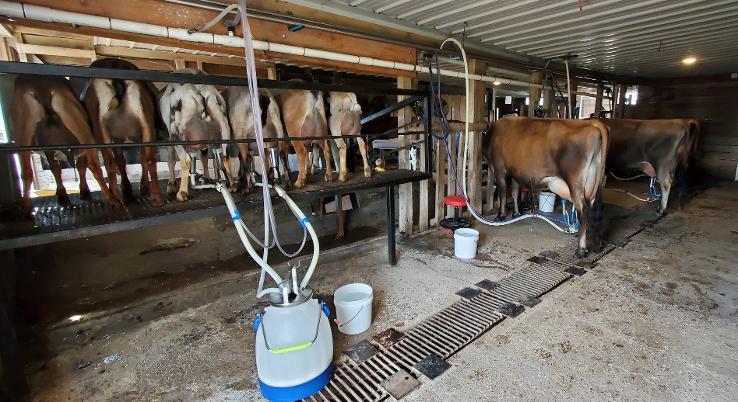
- Cost of equipment. It is very challenging to milk a cow out by hand because they just have so much milk! Most people who milk cows end up investing in a milking machine to save their hands and time as well.
- Messy. Cows are messy. Their poop is messy and gets everywhere. They will lay in it. They will sling their tails in it and sling it on you. They will cough while they are pooping and spray paint whatever happens to be behind them.
- Breeding. It doesn’t make sense to house a bull for just one or two cows and breeding via AI is an investment. Even with dozens of cows to breed we rarely keep a dairy bull around because they are unpredictable and can turn on you in an instant. You will either need to pay someone to AI your cow (plus pay for the semen), invest in a semen tank and learn how to AI your own cow (plus pay for the semen), or haul your cow to someone else’s bull to be bred which comes with headaches of its own.
- Transport requires a truck and trailer.
Which one fits your Homestead best?
Choose goats if:
- You have limited space or budget.
- You enjoy smaller, easier to handle animals.
- You want milk for cheese-making, soap, sensitive digestive systems and/or small family use.
- You don’t mind a steep learning curve or you already have an experienced goat mentor and/or vet.
Choose a cow if:
- You have plenty of pasture and want to maximize milk and cream production.
- You love butter, cream, and big batches of cheese or yogurt.
- You want just one dairy animal.
- You’re ready for a larger commitment and investment.
There’s no wrong choice – just the right fit for your homestead. Whether you end up milking a sweet Jersey cow at sunrise or laughing as your goats cavort around your ankles like puppies, both animals bring a rhythm and richness to daily life that’s hard to beat.
If you do decide to go with goats, don’t miss my post, Intro to Goat Keeping.
Have you raised dairy animals before? Are you team cow or team goat – or maybe both? Tell me in the comments what you’ve loved (or learned the hard way!) about your dairy journey, and let me know what you’d like me to cover next – maybe milk handling, cheese and/or butter making, management tips for cows/goats, something else?? Should I write an intro to keeping cows?

 Radiant Roots
Leave a comment and let me know what you think!