“Education is not the filling of a pail, but the lighting of a fire.”
-William Butler Yeats
My mom was a preschool teacher for 25 years. She recently asked me when I was going to start my 4 year old twins on preschool curriculum since she knows I plan to homeschool. Homeschooling is much more accepted these days than it used to be, even just a handful of years ago. However, many people look at it like it should be similar to public school, just done at home. Curriculum-driven with deadlines and outlines and structure. I have many reasons for deciding to homeschool my children and not a single one of them is because I want to teach like a public school teaches.
I have nothing against curriculum and I know a lot of homeschoolers use different curriculums with great results. My mom was a fantastic preschool teacher and I definitely view her as a valuable resource for my twins, even though I do plan to teach them in a different style than she is used to. I hesitate to label it because homeschooling has such a wide variety of possibilities, but if I had to I would say my “plan” is closest to what is typically called unschooling style. I believe that learning is a lifelong, inherent drive and people, especially children, are naturally curious and eager to explore the world around them. Rather than focusing on formal lessons and textbooks, I want to encourage learning through hands-on experience, real-world interactions, and exploration of anything that piques their interest. I want to have a flexible learning environment that will allow them to learn at their own pace and in their own way. I will be right there with them, sharing in their curiosity and experiences, providing resources and encouraging their voracious appetite for learning.
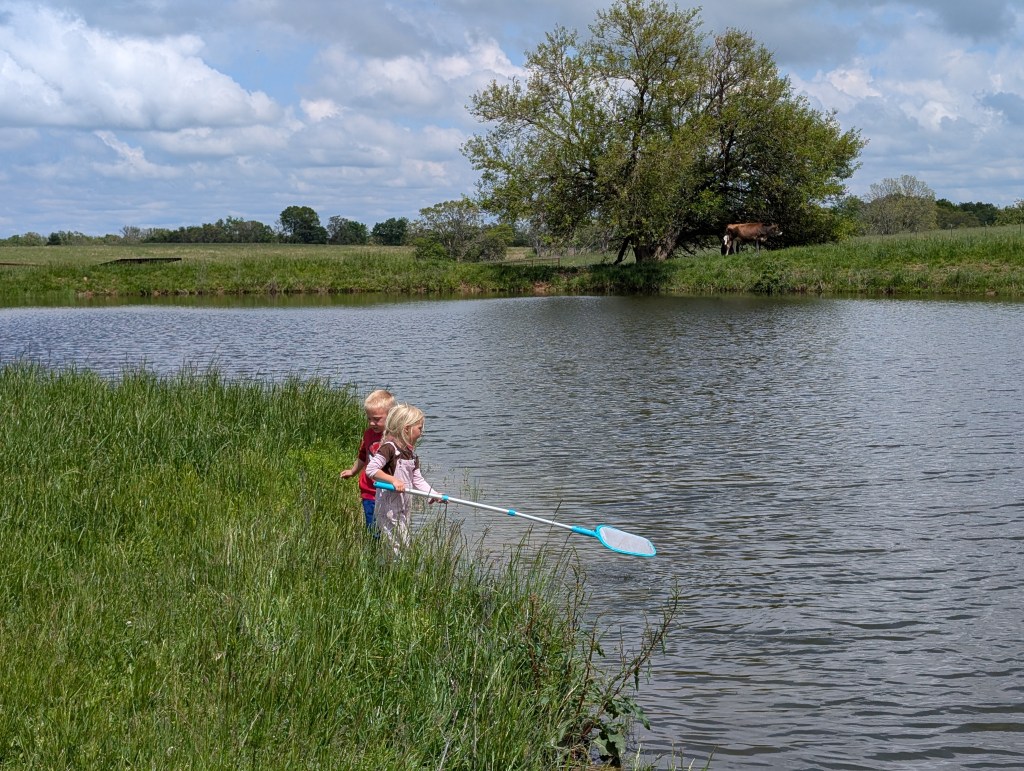
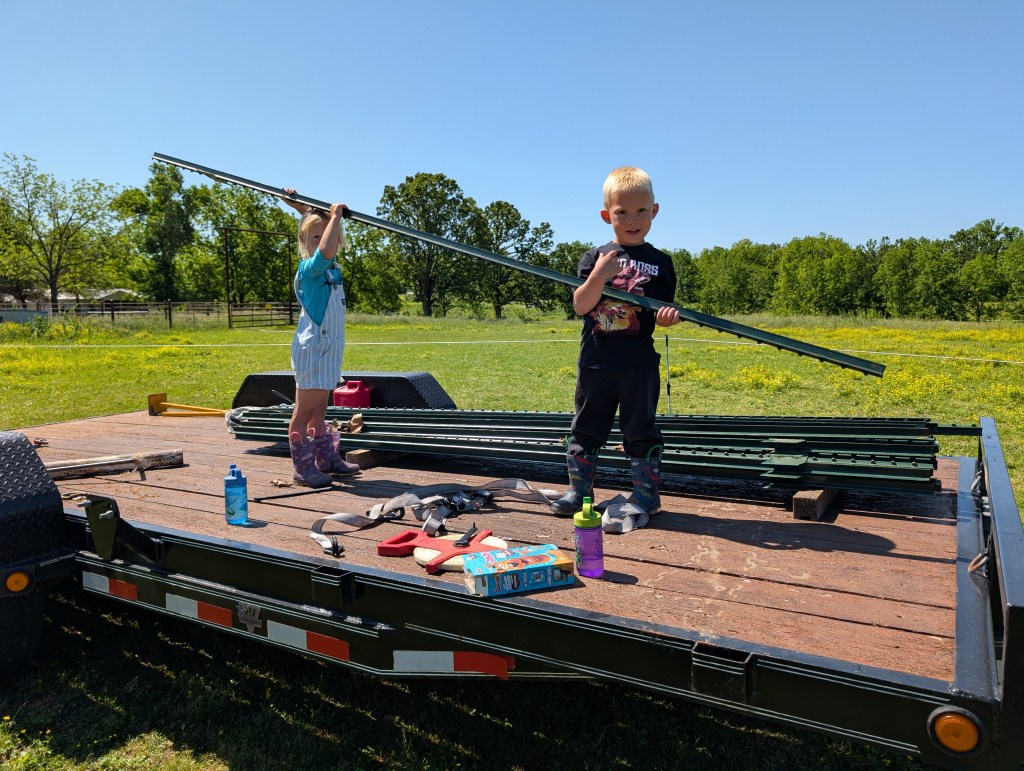
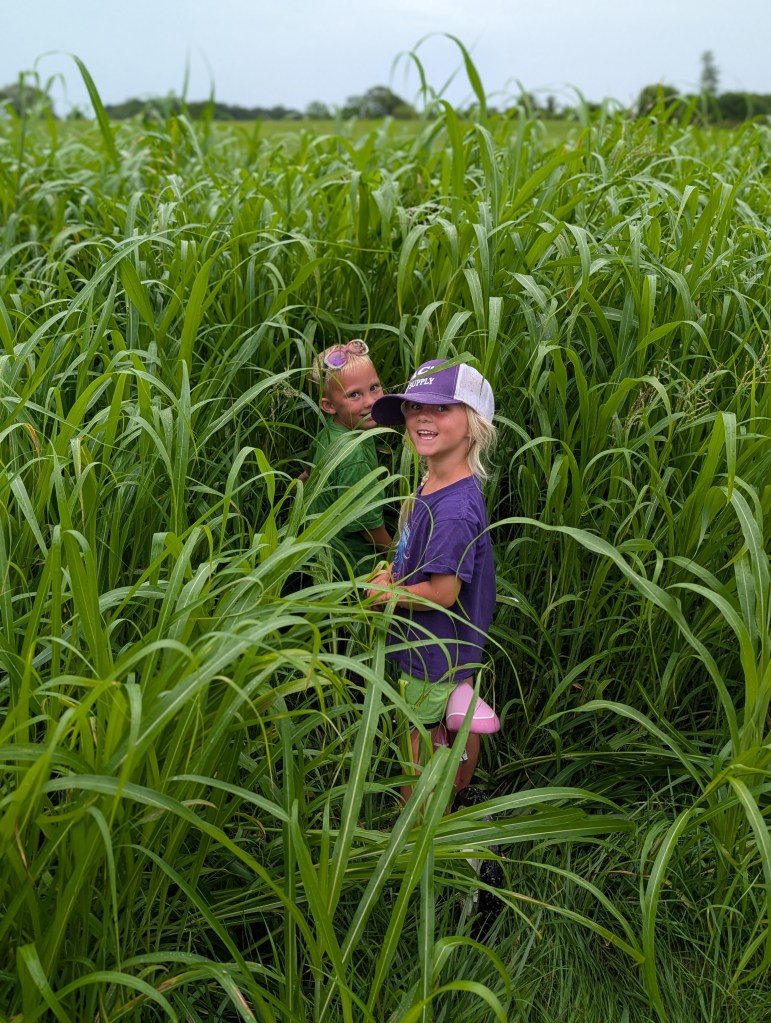
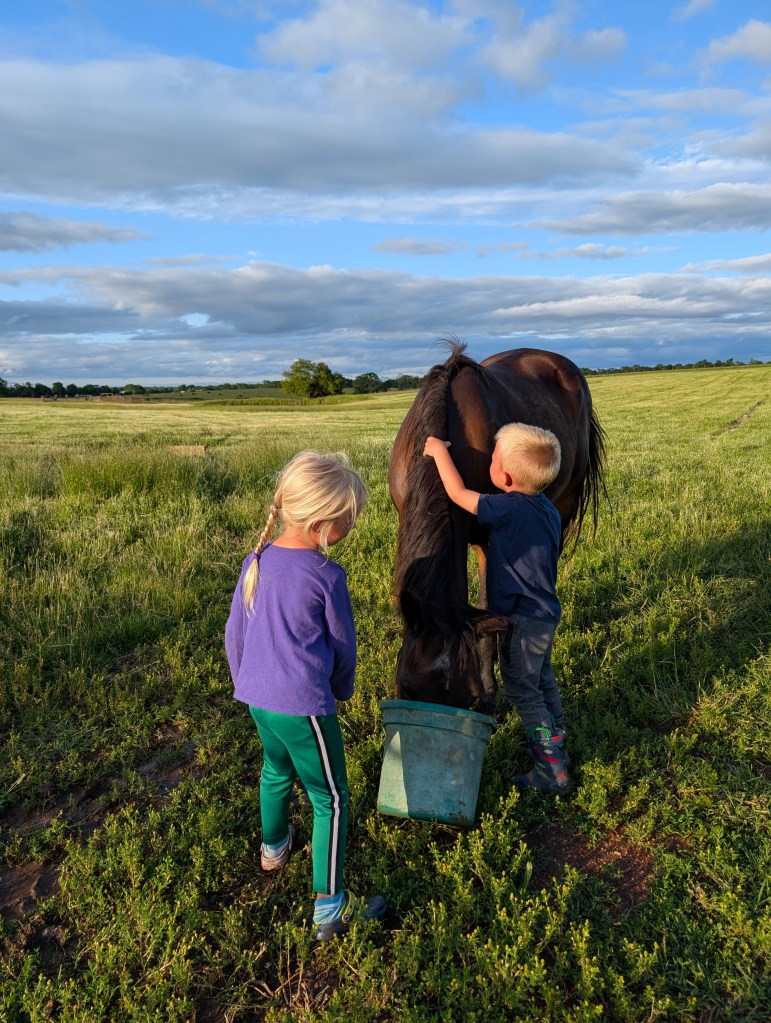
Learning is not compartmentalized into specific times or places; it is interwoven into daily life. It is about fostering a love of learning by allowing children to explore their passions and discover the world on their own terms. They won’t be trying to just remember things long enough to pass a test and then forgetting most of it. They will be learning about things that they are interested in and skills that they can use in real life. I will share some recent, real-life examples from my 4 year old twins:
- My kids asked the other day when we would be able to start selling our guinea eggs in our farm store. We had gathered 5 eggs that day. I showed them that the cartons hold 12 eggs and that we need a full carton before we can put them in the store. I then asked them ‘if we get 5 eggs a day, how many days will it take to get 12 eggs?’ I guided them through the math of it and they came up with the right answer – three days!
- My kids have a favorite game called Wildcraft: An Herbal Adventure Game. This game teaches 27 important healing herbs and edible plants that can be harvested in the wild. They can easily identify many of these plants in real life just walking around outside. It also teaches teamwork as it is a cooperative game where you rely on each other’s knowledge of plants and working together to win together!
- We have dairy cows and keep a couple of semen tanks for breeding. We had some trouble settling our cows earlier this summer so we got the microscope out to check a straw and make sure our tank hadn’t gone bad. The kids got to look through the microscope and learn about microscopic life. They were amazed that a little dot of liquid with nothing visible to the naked eye could have so much life in it and that those tiny microscopic cells could result in a real live calf!
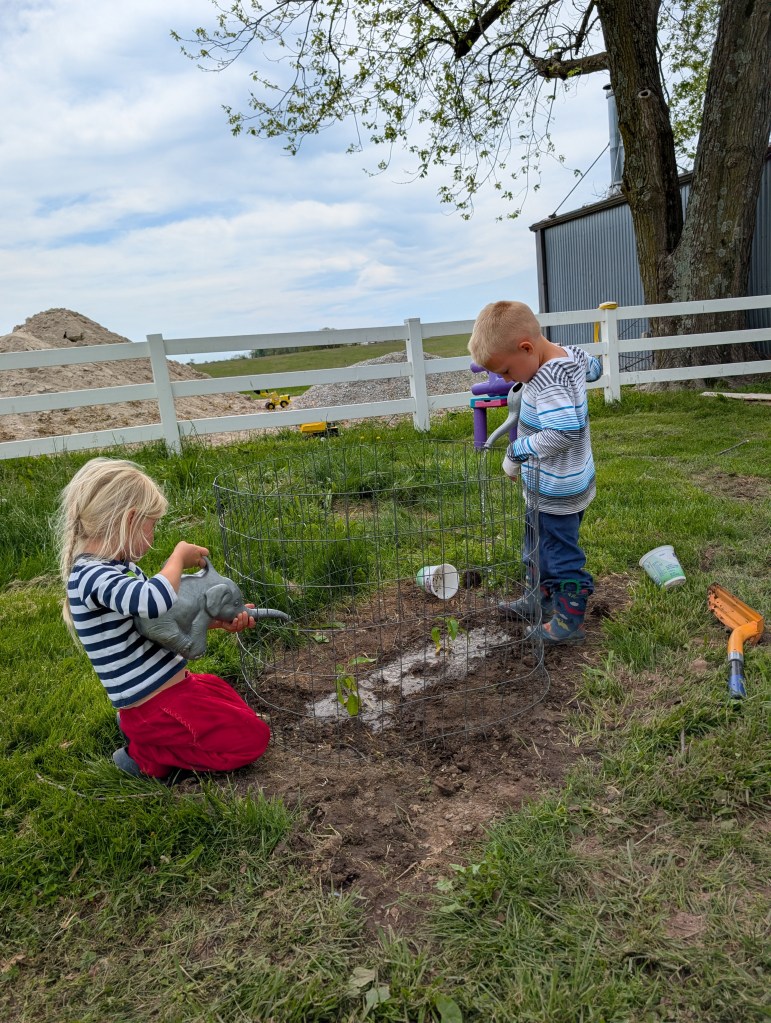
- Some other general examples: helping with cooking and baking helps them practice math skills when measuring ingredients and learn about fractions, develop reading skills and sequencing skills when following recipes, learn about nutrition and where food comes from. Building with blocks or Legos develops spatial reasoning and problem-solving skills. Reading books together fosters a love of reading and expands vocabulary. Nature walks and explorations can develop knowledge of plants, animals, and the world around us as well as provide sensory exploration and imaginative play opportunities. Planting seeds and plants in the garden, watching them grow, caring for them, and observing the changes over time teach about life cycles and plant science. Playing in water can teach about density (float or sink) and water displacement. The list could go on and on.
Many people question how you can be sure to hit all the subjects without a curriculum to follow because traditional schooling typically organizes curriculum by subjects. At first this seems like a good method to make sure you don’t miss any subjects, but the problem is, that isn’t how you naturally learn. People naturally learn by discovering an area of interest, and as we explore that interest, it crosses over into multiple subjects. By learning through an area of interest, we learn faster and in more depth than we can ever imagine. I struggle more with trying to narrow down which subject my kids are learning in with each experience because there is so much crossover!
When people ask, “How do you unschool?” My answer is that we follow our interests – and our interests inevitably lead to science, literature, history, mathematics, music – all the things that have interested people before anybody thought of them as “subjects”. A large component of unschooling is grounded in doing real things, not because we hope they will be good for us, but because they are intrinsically fascinating.
-Earl Stevens
One example of this would be the avid interest my kids have for animals. They love to read fictional and non-fictional books about animals (READING) and we have enjoyed visits to zoos and Wonders of Wildlife, which has taught them various facts about animals including classifications of species (ZOOLOGY, SCIENCE, PHONICS, WHOLE LANGUAGE), how different species and breeds were discovered and domesticated (HISTORY, SCIENCE), and what areas of the world different species originate from (GEOGRAPHY, HISTORY). These experiences as well as the classes they’ve attended at Wonders of Wildlife have provided opportunities to talk to others about animals and gain knowledge from their experiences (SOCIAL INTERACTION, SPEECH, REAL LIFE APPLICATION). They love to draw and color animals, use animal stickers for crafts, make pretend binoculars and hats for pretend safaris, cut out animals shapes, play like they are animals doing animal things, etc (ART, LANGUAGE ARTS). They have learned how different animals eat, what they eat, their health and environments (SCIENCE, PHYSIOLOGY, BIOLOGY). They have their own flock of chickens and have the opportunity to learn about animal/feed/healthcare costs and income from egg sales (MATH, BUDGETING, BUSINESS). They love singing songs about animals, many times dancing along (MUSIC, DANCE). When they are older, I imagine they will also be writing about animals (they already pretend to write in their notebooks about which livestock they need to keep and which they need to sell), as well as learning how to research using books and the internet (READING, WRITING, COMPUTER SCIENCE, INFORMATION TECHNOLOGY). And that is just ONE area of interest out of MANY that my 4 year olds already have!
I do not fear that they will lack covering the subjects they need to thrive (or to reach state requirements) and I know that their fascination, curiosity, and love for learning will not be dampened by too much structure. God made children insatiable sponges, if we can just provide them with the right opportunities to soak it all in. Even adults learn better when they are allowed to pursue what they are interested in. Why should children be any different?
Do you homeschool? What would you call your style of homeschooling? Tell me in the comments!


 Radiant Roots
Leave a reply to Right Here, Right Now – Radiant Roots Cancel reply