“The best loaves are shaped by hand and heart.”
-Traditional Proverb
Are you too intimidated by sourdough to give it a go? Trust me, I completely understand. I put it off for a long time because it just seemed like too much. I bought books and researched online. Everything I read just confirmed my fears; this was intimidating and probably not for me. I was too busy with too many dependents already. I did not want another one. And that is exactly what a sourdough starter sounded like to me – a needy dependent.
I was overwhelmed by “beginner-friendly” sourdough books with pages of instruction on how to create a wild yeast starter, seemingly unending lists of necessary equipment which I did not have that added up to a scary amount of money to purchase for a hobby that I was not even sure I would stick with – if I ever even started it.
Let me save you some trouble and stress. First, you do NOT need a ton of special equipment. Some of it is nice to have but most of what you need, you likely already have. As for a starter, I have heard about many people’s struggles with getting their starters going and strong. It can be very discouraging. There are many strong and resilient starters out there. My advice is to find one of them and acquire some. You’ll be starting with an already proven strong and resilient starter and can get right to baking.
I personally acquired a freeze dried starter that is over 100 years old all the way from Italy. It just took re-hydrating and a few days of feeding and I was baking delicious sourdough. No worrying about whether it was developing bad bacteria before the good could develop. No discarding until the starter is safe to use like you would when starting from scratch. The best part? I can toss my starter in the back of the refrigerator and forget about it for months when I am busy and then pull it out, pour off the hooch (more about hooch below), feed it a couple of times and be ready to bake again. Radici (‘Roots’ in Italian and what I named my starter) is strong and resilient and presents me with every opportunity to succeed, even through the neglected seasons.
What is hooch?
Hooch is the liquid that forms on a hungry sourdough starter. It is the totally normal acidic and slightly alcoholic byproduct of anaerobic fermentation which occurs when your yeasts run out of flour and water to “eat”. The hooch can be stirred in if you prefer a tangier loaf of bread, or poured off for a cleaner, less acidic flavor.
So, yes, it is okay to begin with an established starter. More, I think it will set you up for a rewarding and successful journey. Find a sourdough baker and ask for a starter. Most are willing to share. If not, buy a starter like I did. I have never regretted it.
The rest is pretty simple. You will need a container for your starter to live in. Glass mason jars work great for this. I use a silicone lid to allow for pressure changes and a rubber band around the jar for a visual to measure the rise. A simple kitchen scale that measures in grams makes feeding your starter easy and you’ll want a cast iron dutch oven for baking. You’ll need at least one big bowl – I prefer a big glass mixing bowl, and a tea towel or beeswax wraps or similar to cover it with. I would also include a silicone bread sling on the must-have list. Some other items that are nice to have but not necessarily required are cloth-lined bannetons (for shaping and proofing the bread), bread lame (razor blade for scoring the bread), and a bench scraper (I only use this to cut bulk dough into multiple loaves but some use it to help with shaping a single loaf).
A few things to keep in mind: if you keep your starter out at room temperature, you will need to feed it every day. If you are like me, and don’t have the time or desire to bake every day, and you have a strong starter, just keep it in the refrigerator and only get it out when you want to bake. Mine spends months at a time in the refrigerator and then when I pull it out, I will feed it a couple of times, and then mix up enough dough for four loaves of bread before sticking my starter back in the fridge. I bake those four loaves and then cut each loaf in half, putting most of them in the deep freezer to thaw as needed. Make sourdough work for you – it does not need to rule your life!
The process is pretty straightforward but does take a bit of practice to figure out your specific conditions. The temperature of your house as well as what and how you feed your starter will influence how the starter behaves. In my house, with my starter, I can typically feed 1-1-1 (one part starter, one part flour, one part water, by weight) and have a more than doubled, active and bubbly starter ready to make dough within a few hours. You just watch for that starter to at least double and mix your dough at peak, before it deflates.
{The following paragraph contains affiliate links, meaning I may receive a small commission if you make a purchase through them, at no extra cost to you. I will never recommend something unless I have first hand knowledge of it and genuinely believe it to be valuable.}
Notes: I only feed my starter an organic heritage bread blend flour which can be found here: Sunrise Flour Mill Heritage Organic Bread Flour Blend. I feel this helps keep my starter strong. This company is also where my starter came from and I highly recommend them. The starter is available here: Sunrise Flour Mill Heritage Organic Sourdough Starter. I use a less expensive but still high quality flour for actually mixing my dough for baking: King Arthur Unbleached Organic Bread Flour. I use this silicone bread sling and these cloth-lined bannetons. These Silicone Stretch Lids are handy for SOO many things, one of which is the top of my sourdough starter jars. I am not super crazy about the bread lame I have so until I find one I like, I will not be sharing a link to one. You can just use a simple razor blade or sharp knife to score your loaf. No need to get fancy unless you want to.
The rest of my sourdough process is on my recipes page here: Recipes. Just find the Honey Oatmeal Sourdough recipe. There is also an optional add-in of Asiago cheese at the end of the recipe which I highly recommend trying once you have the hang of the regular loaf.
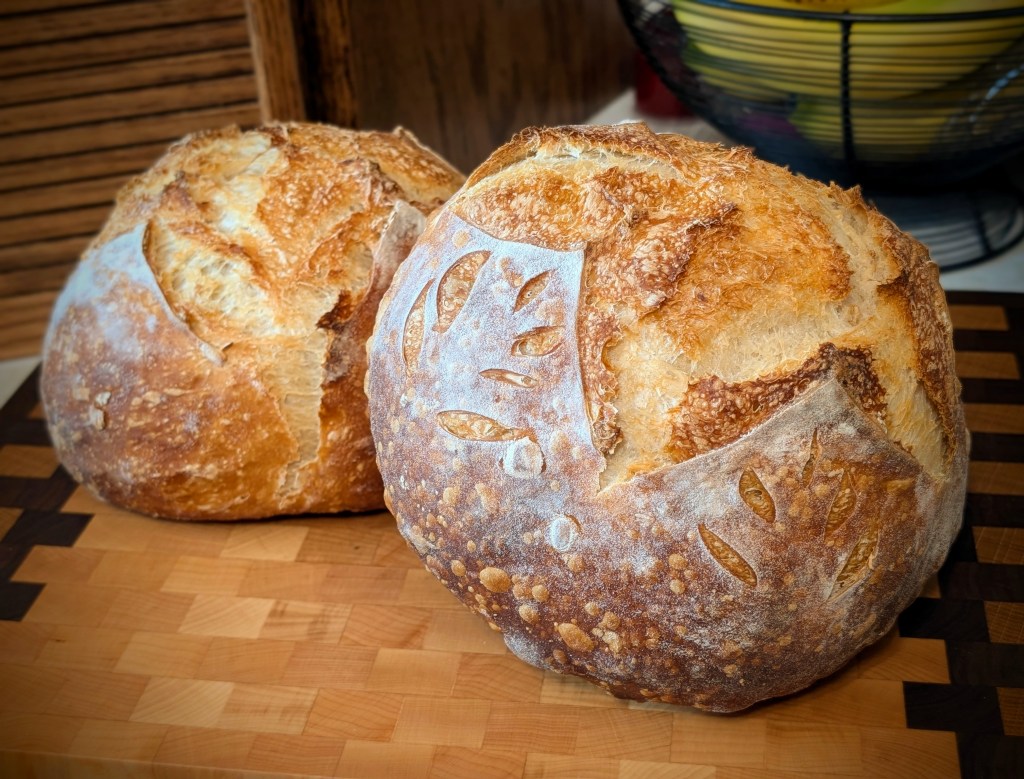
So, if sourdough has felt a little mysterious and intimidating, take a deep breath and remember – you don’t need to make sourdough your life or take on a needy new pet. Make sourdough work for you! Give it a go – before long, you’ll be pulling a golden, crusty loaf from the oven because – you’ve got this.
Do you have a starter? What did you name yours?
Did this post encourage you to give sourdough a try? Tell me in the comments!


 Radiant Roots
Leave a reply to Simple. Natural. Sustainable. A Scrunchy Girl’s Guide to Easy Swaps. – Radiant Roots Cancel reply