“Why doesn’t constant trampling defeat the dandelion? The key to its strength is its long and sturdy root, which extends deep into the earth. The same principle applies to people. The true victors in life are those who, enduring repeated challenges and setbacks, have sent the roots of their being to such a depth that nothing can shake them.”
-Daisaku Ikeda
For many, the sight of bright yellow dandelions popping up in a manicured lawn is a call to arms. But for the wild forager, the homesteader, and the homeschooling family, these tenacious plants are a reminder that what the world often calls a weed is frequently a gift in disguise. When we slow down and look at the “lowly” dandelion, we see a masterful design—a plant that provides food, medicine, and beauty exactly when the earth needs it most.
Origin of the Dandelion
It might surprise you to learn that the dandelion isn’t actually a native plant in North America. It was so highly valued that it earned a spot on the Mayflower. Early settlers didn’t view dandelions as a weed; they saw them as a living medicine chest and a vital food source. They purposefully brought seeds across the Atlantic because dandelions were a reliable survival crop. While other garden plants might fail in harsh New England winters, the resilient dandelion was often the first fresh green to emerge in the spring, providing essential vitamins to families who had spent months eating dried stores.
Dandelions (Taraxacum officinale) are one of the most accessible wild foods available to us. So, let’s dive into the details of harvesting, preserving and making use of their abundance.
Identifying and Harvesting:
Dandelions are one of the most recognizable plants with no toxic look-a-likes so they are a great plant for beginner foragers. The leaves form a rosette from a central tap root. The bright yellow flowers will bloom throughout the year, early spring and often even into the winter. The stem when broken will ooze a white liquid. As the flower ages, the petals are replaced with hundreds of seed heads, making a soft, white globe at the top of the stem.
- The Leaves: Best harvested in early spring when they are young and less bitter. They offer a peppery bitterness that clears the palate after a long winter. Snip the outer leaves near the base of the plant.
- The Flowers: Gather these when they are fully open and bright. They are a vital early-season food source for bees—part of the intricate balance of creation. Pinch off the flower head just below the green sepals.
- The Roots: These go deep, breaking up compacted soil and pulling nutrients to the surface. They are best dug in the fall when the plant’s energy is concentrated below ground and the roots are larger and more medicinally potent. Use a trowel or dandelion fork to dig deeply and carefully around the plant, extracting as much of the taproot as possible. Leave part of the root behind if you want them to regrow.
A Note on Stewardship: Always forage from areas free from chemicals. As stewards of our health and our land, we want to ensure we are harvesting what is pure and life-giving.
Homesteading Tip: Consider intentionally cultivating a patch of dandelions in a designated area of your garden. This ensures a clean, reliable supply for your culinary and medicinal needs without impacting your lawn aesthetics (if that’s a concern!).
From Garden to Table: Culinary Uses
Dandelions are incredibly versatile in the kitchen, offering a slightly bitter, earthy flavor that can add a wonderful dimension to many dishes. The versatility of the dandelion is a testament to the “hidden” abundance all around us.
- Leaves: Young, tender leaves can be made into a tea or added raw to salads for a peppery, slightly bitter kick. Can be steamed and used like spinach. Older leaves are best cooked to reduce bitterness – try them sautéed with garlic and olive oil, blanched and added to soups, or incorporated into quiches and frittatas. They’re packed with wonderful nutrients! Lemon juice can be used to counter the bitterness of the leaves. (Pro-Tip: harvest seeds and grow as superfood microgreens that are harvested before the bitterness sets in!)
- Buds and Flowers: The bright yellow petals can be used to make tea, wine, jelly, salad garnish, or even fried into delicious fritters! Simply pull the yellow petals away from the green base (which can be bitter). Unopened flower buds can be prepared into pickles similar to capers.
- Roots: Roasted dandelion roots can be ground and brewed into a caffeine-free coffee substitute, offering a robust, earthy flavor. They can also be added to stews or stir-fries after a good scrub. The roots can be cooked and eaten with a taste similar to a turnip. They can even be used in brownies or made into a sweet syrup!
Homesteading Tip: If you’re making dandelion syrup, brownies, or truffles, involve the kids! It’s a beautiful way to show them how something “common” can be transformed into something sweet and special through a little work and gratitude.
Note: I have included links for a few books from which the below recipes come. I may receive a small commission if you make a purchase through them, at no extra cost to you. I will never recommend something unless I have first hand knowledge of it and genuinely believe it to be valuable.
Culinary Dandelion Recipes
Roasted Dandelion Root Syrup
*This recipe is from Wild Foraged by Rachael West
This rich caramel-like syrup can be added to coffee, toast, folded into breads, and over ice cream.
1/2 lb cleaned dandelion roots, chopped
Water – to cover roots
Sugar
Bring roots to a boil for about 30 minutes, until the water is a deep caramel color and fragrant. Strain roots from tea and pour into a large stock pot. Measure out exactly double the sugar as you had tea (1 cup tea = 2 cups sugar). Bring to a boil, stirring constantly. Simmer for 5 minutes and pour into mason jars. Store up to a month in the refrigerator.
Tip 1: To thicken into something similar to caramel, turn heat low and simmer, barely simmering for another 12-17 minutes. Turn off heat and allow to cool.
Tip 2: Save the boiled roots for brownies (next recipe).
Dandelion Root Brownies
*This recipe is from Wild Foraged by Rachael West
1/2 cup butter
1 cup sugar
2 eggs
1 tsp vanilla extract
1/3 cup unsweetened cocoa powder
1/2 cup boiled dandelion roots
1/2 cup flour
1/2 tsp salt
1/2 tsp baking powder
Preheat oven to 350. Grease and flour an 8 inch square pan. Add parchment paper to it. In a large saucepan, melt butter. Then in the same pan, add boiled dandelion roots, eggs, sugar, and vanilla. Last, add in cocoa powder, flour, salt, and baking powder. Spread onto a prepared pan and bake for 25-30 minutes. Serve warm with whipped cream and dandelion syrup.
Dandelion Salad – two versions
*This version comes from Wet, Wild and Woodsy Cookbook
1/2 lb dandelion greens, torn
1 small red onion, chopped
2 tomatoes, chopped
1/2 tsp basil
In a medium bowl, toss together ingredients and top with favorite dressing.
*This version comes from The Wild Food Gourmet Cookbook
Salad
4 cups dandelion leaves
4 slices bacon
2 eggs
Dressing
1 tsp prepared hot mustard
2 TB balsamic vinegar
1/4 cup olive oil
salt
pepper
croutons
Clean dandelion leaves thoroughly. Cook bacon until crisp. Drain on paper towels, then crumble. Poach eggs 3 minutes in boiling water. Drain. Combine mustard with vinegar; add oil while beating. Season with salt and pepper. Arrange dandelion leaves on serving plates. Garnish with croutons and bacon chips. Pour dressing over and top with poached egg.
(Poached egg: Combine 2 cups water and 2 TB white vinegar. Bring to a boil. Break egg into a cup. Swirl a spoon in the water to create a whirlpool effect. Drop egg delicately in the middle. It will keep its shape.)
Fried Dandelion Blooms
*This recipe comes from Wet, Wild and Woodsy Cookbook
1/2 lb dandelion flowers
2 tsp salt, divided
1 cup milk
1 egg
1 cup flour
1/2 cup oil
In small bowl, soak flowers in cold water and 1 tsp salt for 30 minutes. Drain dandelions in colander to remove excess moisture. In mixing bowl, combine remaining salt, milk, egg and flour; mix well. Dip each flower in to the batter and fry in hot oil until lightly browned. Gently blot excess oil with paper towel. Serve hot.
Dandelion Cream Truffles
*This recipe is from Foraging with Kids and will make 25-30 truffles.
scant 1/2 cup heavy cream
3 tsp dandelion root powder (roots that have been washed, chopped, rinsed, dried, and ground into powder)
400 g white chocolate, chopped
50 g butter, chopped
2 tsp vanilla extract
300 g milk or dark chocolate, chopped
Combine heavy cream and dandelion root in a pan and gradually bring to a boil. Remove from heat and add white chocolate, leaving them to melt into the hot cream. Add the butter and leave to cool even further.
When mixture is just warm, add the vanilla and beat lightly with spoon to mix thoroughly. Transfer to a lidded container and refrigerate for 2 hours to harden.
Scoop out chunks of the mixture and roll into neat balls, about 3/4 inch in diameter. Put them in a container with sheets of wax paper between each layer and freeze them overnight.
Next day line a baking sheet with wax paper. Melt your milk or dark chocolate and using two forks, dip each truffle into the chocolate, covering it completely, then place onto the lined baking sheet. Let set in a cool place.
*Note: Rachael West’s Wild Foraged book has 8 more recipes for dandelions that I did not include in this post. I highly recommend her book – it has gorgeous photographs and very useful recipes for some of the most common edible plants in the Midwest.
Nature’s Pharmacy: Home Remedies
For centuries, dandelions have been used as a gentle support for the body. Many see the bitter profile of the plant as a natural way to wake up the digestive system and support the liver. They contain vitamins A, B, C, beta carotene, zinc, and lecithin. Lecithin is not only great for the liver but also thought to help brain function and potentially slow Alzheimer’s disease. The roots and leaves contain high amounts of inulin which is a prebiotic that helps feed good gut bacteria, helps regulate blood sugar, and has anti-tumor effects on cancer cells. The entire dandelion plant can be used medicinally. According to The Lost Book of Herbal Remedies, dandelion can be used for:
- Digestion Problems, Liver and Gallbladder Function
- Liver Protection and Healing
- Diuretic and Detoxifying the Body
- Skin Wounds, Corns, and Warts
- Acne, Eczema, and Ringworm
- Osteoporosis and Bone Health
- Controlling Blood Sugar
- Urinary Tract Disorders
- Preventing and Treating Cancer
- Preventing Iron Deficiency Anemia
- Treating Hypertension
- Boosting the Immune System
- Mastitis and Lactation
- Fighting Inflammation and Arthritis
Medicinal Dandelion Recipes
Dandelion Lemonade: for Gallbladder Health
Lemons are known for their cleansing properties and high content of B and C vitamins, which also help balance out the bitterness of dandelion.
*Recipe from Forgotten Home Apothecary
Ingredients:
2-3 fresh dandelion leaves and root or 1 tsp of dried dandelion leaves and root
1 cup of boiling water
1-2 tablespoons of fresh lemon juice (adjust to taste)
1-2 teaspoons of honey or maple syrup (optional, for sweetness)
Ice cubes (optional)
Lemon slices and fresh dandelion flowers for garnish (optional)
Instructions:
Harvest a young tender plant, leaves and roots. Rinse it thoroughly and chop it all into small pieces. Or you can use dried leaves and roots instead.
Bring 1 cup of water to a boil. Place dandelion in a heatproof cup or teapot. Pour the boiling water over the leaves. Cover and let steep for 5-10 minutes to allow the beneficial compounds to infuse into the water.
After steeping, strain the infusion with a fine-mesh strainer to remove the leaves and root. Stir in 1-2 tablespoons of honey or maple syrup for sweetness and stir well.
Allow the dandelion lemonade to cool to room temperature, then refrigerate it until it’s cold. You can add ice cubes for quicker cooling. Garnish before serving, if desired.
Dosage:
Drink 1 glass of dandelion lemonade first thing in the morning to support your body’s natural cleansing processes.
Notes:
Keep in a sealed container in the refrigerator for up to a week, or frozen for two to three months.
Dandelion and Burdock: Purge
Dandelion is known for its diuretic properties, which help eliminate excess water weight and toxins from the body. Burdock root is rich in fiber, which promotes feelings of fullness and aid in weight management efforts.
*Recipe from Forgotten Home Apothecary
Ingredients:
2 tablespoons of dried dandelion root
2 tablespoons of dried burdock root (Arctium lappa)
4 cups of filtered water
1 tablespoon of honey
lemon slices for garnish (optional)
Instructions:
Boil 4 cups of filtered water. Add dried herbs. Reduce the heat and allow the herbal mixture to simmer for approximately 10-15 minutes to allow the beneficial compounds to infuse into the water.
Remove the pot from heat and let the elixir cool for a few minutes. Strain the cooled elixir to remove the herbs. Sweeten with honey and stir until it dissolves. Pour the elixir into a clean container and allow it to cool to room temperature. You can also refrigerate it for a cold, refreshing drink. Garnish before serving, if desired.
Dosage:
Drink 1 cup of this elixir before meals, up to three times a day. It’s recommended to follow this routine for a few weeks as part of a balanced diet and healthy lifestyle.
Notes:
You can also make a more concentrated form of this herbal remedy by turning it into a tincture.
Dandelion Salve: for Sore Muscles and Joints
Dandelion’s potent anti-inflammatory properties, courtesy of flavonoids and polyphenols, can help alleviate joint pain and stiffness. It is also a nutritional powerhouse rich in vitamins (A, C, and K) and minerals like calcium and potassium, supporting joint health and tissue repair. Dandelion’s diuretic effects assist in eliminating excess fluids and toxins, providing relief for swollen joints. Its antioxidants, including beta-carotene and polyphenols, combat harmful free radicals, safeguarding joint tissues from damage and pain.
*Recipe from Forgotten Home Apothecary
Ingredients:
1/2 cup dried dandelion flowers
1 cup coconut oil
1/2 cup sweet almond oil
1.5 oz beeswax
1 oz Shea butter
10-15 drops of essential oil of your choice (I personally love a blend of Lavender and Frankincense essential oils for their anti-inflammatory, soothing properties)
Instructions:
Place clean, dried dandelion flowers in a clean, dry glass jar. Melt the coconut oil and sweet almond oil together until they are warm but not boiling. Pour the warm oils over the dandelion flowers in the jar. Seal the jar and let it sit in a sunny spot for about 2 weeks to infuse. Shake the jar gently daily. After the infusion period, strain the oil through a fine-mesh strainer or cheesecloth to remove the dandelion flowers.
Melt the beeswax and Shea butter together. Once melted, add the dandelion-infused oil to the beeswax and Shea butter mixture. Stir well to combine. Add 10-15 drops of your chosen essential oil for a pleasant fragrance and added benefits. Pour into clean, airtight containers (small tins or glass jars). Let the salve cool and solidify. Label.
Dosage:
Apply the dandelion salve to sore joints as needed. Gently massage it into the affected areas.
Notes:
Consider drinking dandelion tea as well to provide more comprehensive support for your joints.
Dandelion Tea: General Medicinal Use
*This recipe is from The Lost Book of Herbal Remedies
Ingredients:
1/2 – 2 teaspoons of roasted dandelion root, in small pieces
1 cup boiling water
Instructions:
Pour boiling water over roasted or dried dandelion root and allow it to steep for 20 minutes. Strain the tea and drink.
Dosage:
Drink 3 cups a day for general medicinal use.
Notes:
Do not add sweeteners, as they reduce the herb’s effectiveness. Milk may be used to taste, if desired.
Note: Always consult with a healthcare professional before starting new herbal remedies, especially if you are pregnant or on medication.
Homeschooling: A Living Lesson
Dandelions offer a fantastic opportunity for hands-on learning for homeschooling families over a broad spread of subjects.
- Botany & Life Cycles: Observe the dandelion’s life cycle from seed to sprout, flower, and then puffball (seed head). Watch how the flower closes at night and opens with the sun. Learn about plant parts – roots, stems, leaves, flowers.
- The Design of the Seed: Observe how the seeds are designed to catch the wind. It’s a great jumping-off point for discussing how every part of creation has a specific “job” to do.
- Ecology: Discuss the role of dandelions in the ecosystem – providing early nectar for pollinators like bees and their resilience in various environments.
- Practical Skills: Involve children in identifying, harvesting, and preparing dandelion dishes and/or remedies. This teaches valuable foraging and homesteading skills.
- Art & Creativity: Use dandelion flowers for natural dyes, make dandelion chains, or draw and paint them in their different stages.
- Character Lessons: Dandelions are nothing if not persistent and resilient. They grow in the cracks of sidewalks and the middle of fields alike. They remind us to bloom wherever we are planted, regardless of the soil.
A Faith Connection for the Kids: Just like the dandelion can grow in a crack in the sidewalk or in the middle of a beautiful field, we can choose to be joyful and bloom no matter where God puts us!
Activities for the Kids: The Details
There are so many opportunities for learning and playing with dandelions; things as simple as blowing the seeds to make a wish, making dandelion garlands, or even the generations-old practice of counting how many blows it takes to blow all the seeds off a dandelion seed head and that number will tell you the time (accurate, yes or no?). Looking for more specific “lesson” plans? Here are some specific activities in detail:
1. The Sun Clock Observation (Science & Patience)
Dandelions are nyctinastic, meaning they respond to light!
- The Activity: Pick a specific dandelion in the yard. Have your child check on it at 8:00 AM, 12:00 PM, and 6:00 PM.
- The Lesson: They’ll discover the flower “wakes up” (opens) with the sun and “goes to sleep” (closes tightly) in the evening. It’s a beautiful way to talk about how God designed plants to protect their pollen.
2. Nature’s Paintbrush (Art & Sensory)
The bright yellow pigment in dandelion heads is incredibly vibrant and works like a natural crayon.
- The Activity: Give your child a piece of heavy paper or card-stock. Let them use the flower heads as crayons to draw sunshine, lions, or patterns.
- The Lesson: Discuss natural dyes. You can even try rubbing the leaves to see the difference between the yellow pigment of the flower and the green chlorophyll of the leaf.
3. The Puffball Physics (Botany & Wonder)
Every child loves blowing a dandelion seed head, but there is incredible engineering in those tiny seeds!
- The Activity: Use a magnifying glass to look at a single seed. It looks like a tiny parachute (called a pappus).
- The Lesson: Challenge them to see how far one seed can travel with a single breath. Talk about how the wind carries life to new places—a divine design for travel without legs!
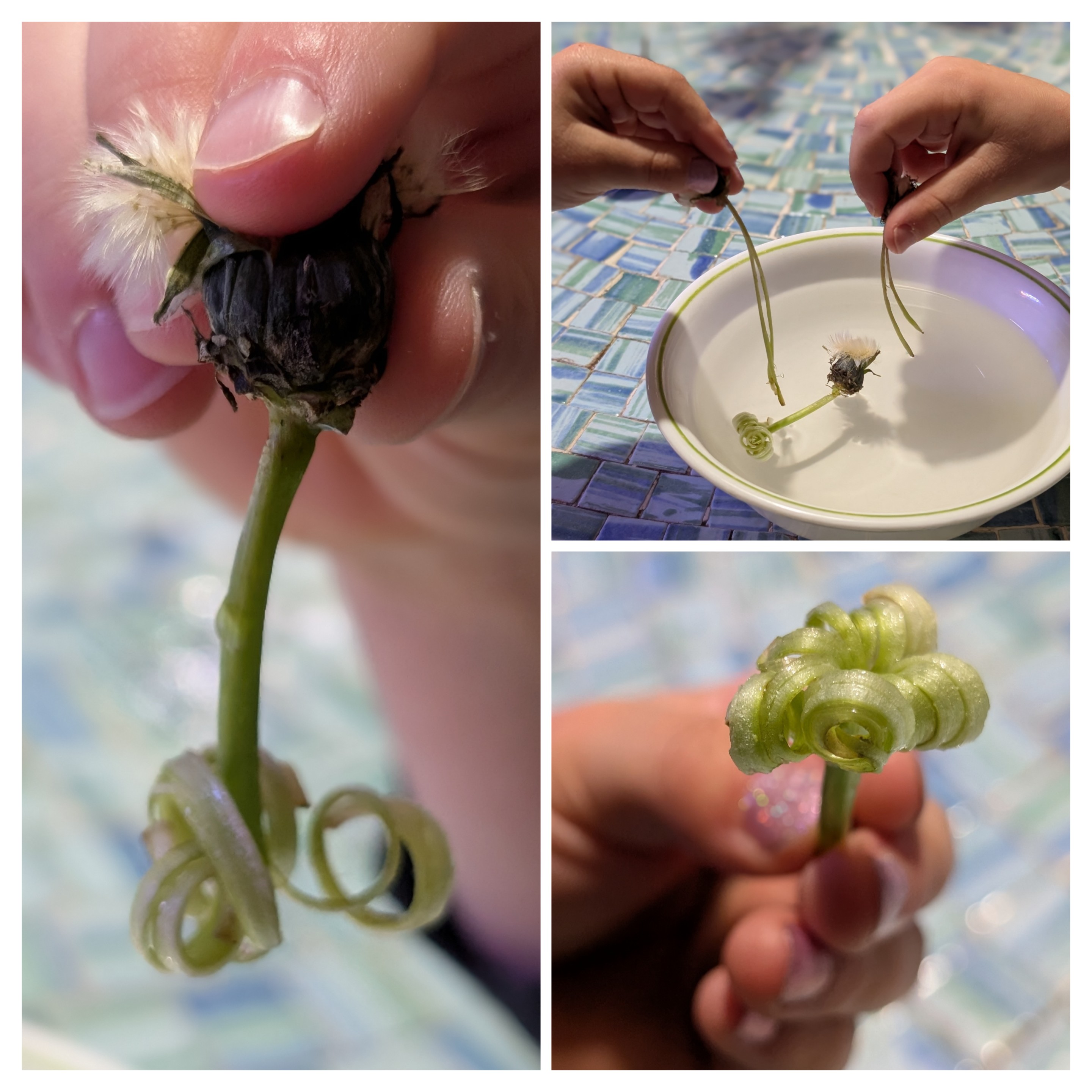
4. Dandelion Curls (Water Science)
This is a “magic” trick that kids find fascinating.
- The Activity: Pick a few long, hollow dandelion stems – fat, juicy ones work the best. Use your fingernail or a pair of scissors to slit the stem lengthwise into 2-4 strips, but leave them attached at the top. Drop the stem into a bowl of cold water.
- The Lesson: Within seconds, the strips will curl into tight, beautiful spirals! This happens because the cells on the inside of the stem absorb water faster than the “skin” on the outside.
5. Kitchen Chemistry: Dandelion “Honey” (Life Skills)
While it’s not made by bees, this syrup tastes remarkably like honey and is a great homesteading starter recipe.
- The Activity: Have the kids help petal pluck—pulling the yellow petals out of the green base (the green part is bitter, so it’s a great lesson in precision!).
- The Lesson: Boil the petals with water, strain, and simmer with sugar and lemon. It teaches them about infusions and how we can create sweetness from the simplest things.
6. Kitchen Garden Activity: Dandelion Microgreens (Botany & Patience)
While we usually see dandelions as wild, growing them as microgreens yields a much milder, tender green that is far less bitter than the mature leaves found in the yard.
What You’ll Need:
- A shallow tray or recycled plastic container with drainage holes
- A light seed-starting mix or coconut coir
- Dandelion seeds
- A spray bottle with water
- A sunny windowsill
The Steps for Kids:
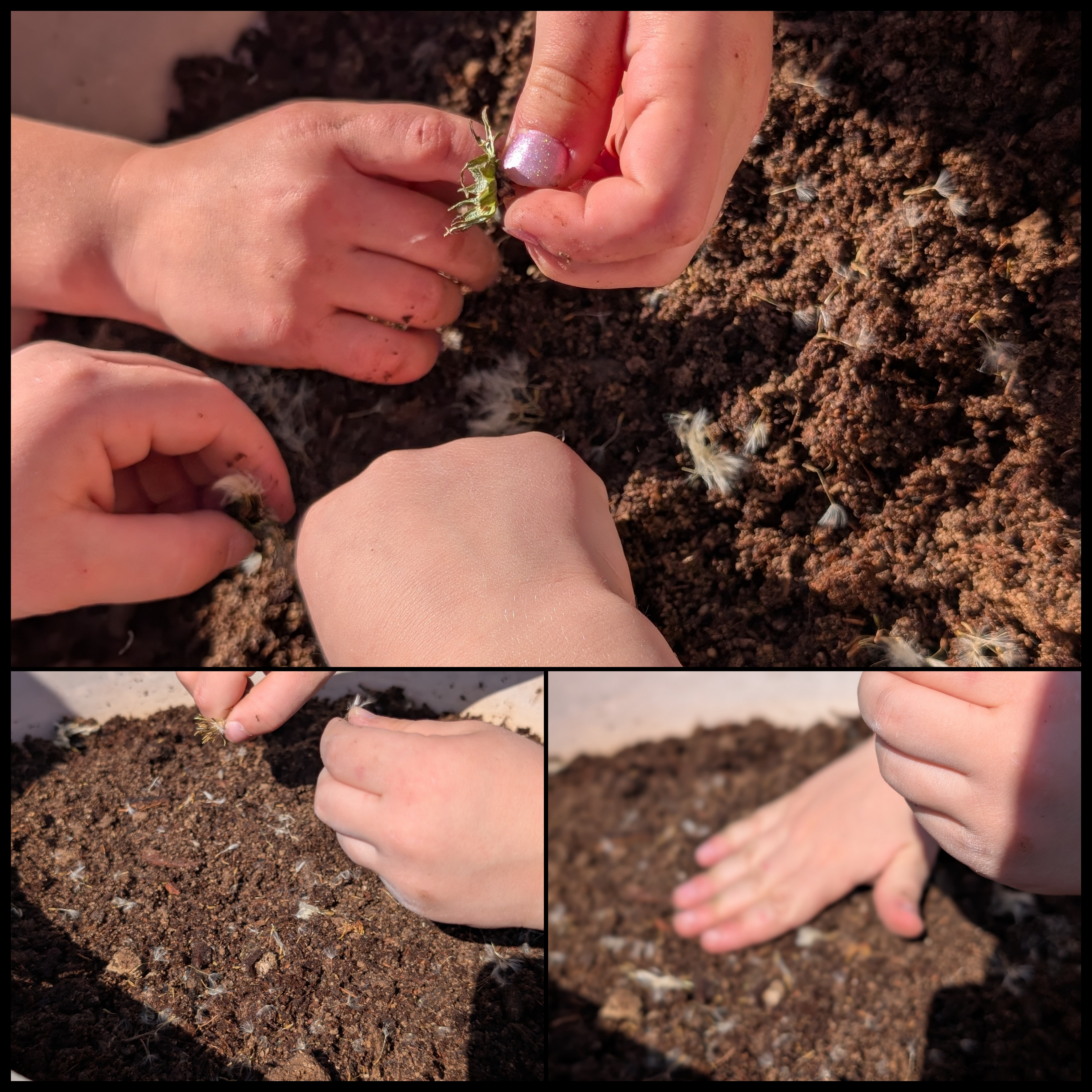
- Prepare the “Bed”: Let the kids fill the tray with about 1–2 inches of soil. Have them pat it down gently so it’s flat like a little bed.
- Sowing the Seeds: Since dandelion seeds are tiny, have the kids “pepper” the seeds across the surface. You want them to be quite thick—like sprinkles on a cupcake!
- The “Big Mist”: Instead of pouring water (which can wash the tiny seeds away), let the kids use the spray bottle to mist the soil until it’s damp.
- The Waiting Game: Cover the tray with a damp paper towel or another tray for 2–3 days to keep them dark and moist. Once you see tiny green “hooks” popping up, uncover them and move them to the sun.
- Harvesting: In about 10–14 days, when they are roughly 2 inches tall and have their first set of leaves, let the kids “play barber” and snip them with safety scissors.
- How to Eat Them: Microgreens are delicate. Encourage the kids to sprinkle their harvest on top of their eggs, a sandwich, or even a bowl of soup. It’s a great way to get them to try greens they grew themselves!
The Lesson:
- Botany: Explain that a microgreen is a “baby” plant. It contains a concentrated burst of all the energy and nutrients the plant needs to start its life, which is why they are a “superfood” for us!
- Fine Motor Skills: Handling the tiny seeds and using scissors for the harvest are excellent ways for younger children to develop hand-eye coordination.
- Faith Connection: This is a perfect time to talk about the Parable of the Sower. You can look at the seeds together and talk about how providing good soil, water, and light helps them grow strong, just like we grow when we stay close to good things.
Closing Thoughts
Next time you see those bright yellow heads dotting your fields or lawn, don’t reach for the weed killer! Instead, grab a basket and see what this incredible plant has to offer – you might just find your new favorite “weed”! Whether you’re brewing a cup of dandelion tea or blowing fluffy seeds into the wind with your children, the dandelion is a humble reminder that abundance is often right beneath our feet.
Do you have a favorite way to use dandelions, a family remedy or favorite recipe passed down through generations? I would love to hear how you and your family are enjoying dandelions! Whether you’re brewing your first batch of root tea, trying out the dandelion curls with your kids, or successfully growing microgreens on your windowsill (ours are growing out by the greenhouse in deep pots so we can try them as microgreens and harvest mature plants later on), please share with me in the comments!

 Radiant Roots
Leave a comment and let me know what you think!