“Consider how the wild flowers grow. They do not labor or spin. Yet I tell you, not even Solomon in all his splendor was dressed like one of these.”
Luke 12:27
**Before proceeding with this article, please note that these articles in my foraging for food and medicine series are very in depth and therefore can get a bit lengthy. I utilize a type of expanding detail feature for some things (particularly all the recipes) to help organize the post and make navigation easier. This feature as well as others do not work correctly when reading directly from your inbox so if you want a more user-friendly read, please check at the top of your email and you should see an option to read directly on my blog where the features all work as they should. Thank you!
It is that time of year when the “weeds” start to reclaim the garden beds. But before you reach for the hoe, take a closer look at the sea of purple currently hugging the ground.
Purple Dead Nettle (Lamium purpureum) is often one of the first gifts of spring. Despite the intimidating name, it doesn’t sting (the “dead” in the name is because it resembles a nettle but it does not sting), and for a homesteader or forager, it is an absolute powerhouse of nutrition and medicinal potential.
Did You Know?
In British folklore, the tiny tubular flowers were often called “Fairy Horns” or “Bee-Butts.” Children were told that if they picked a tiny flower and sucked the bottom of the tube, they would taste the “honey of the fairies.” (It’s actually just a tiny drop of very sweet nectar, which is why bees love them so much!)
Identification & Harvesting
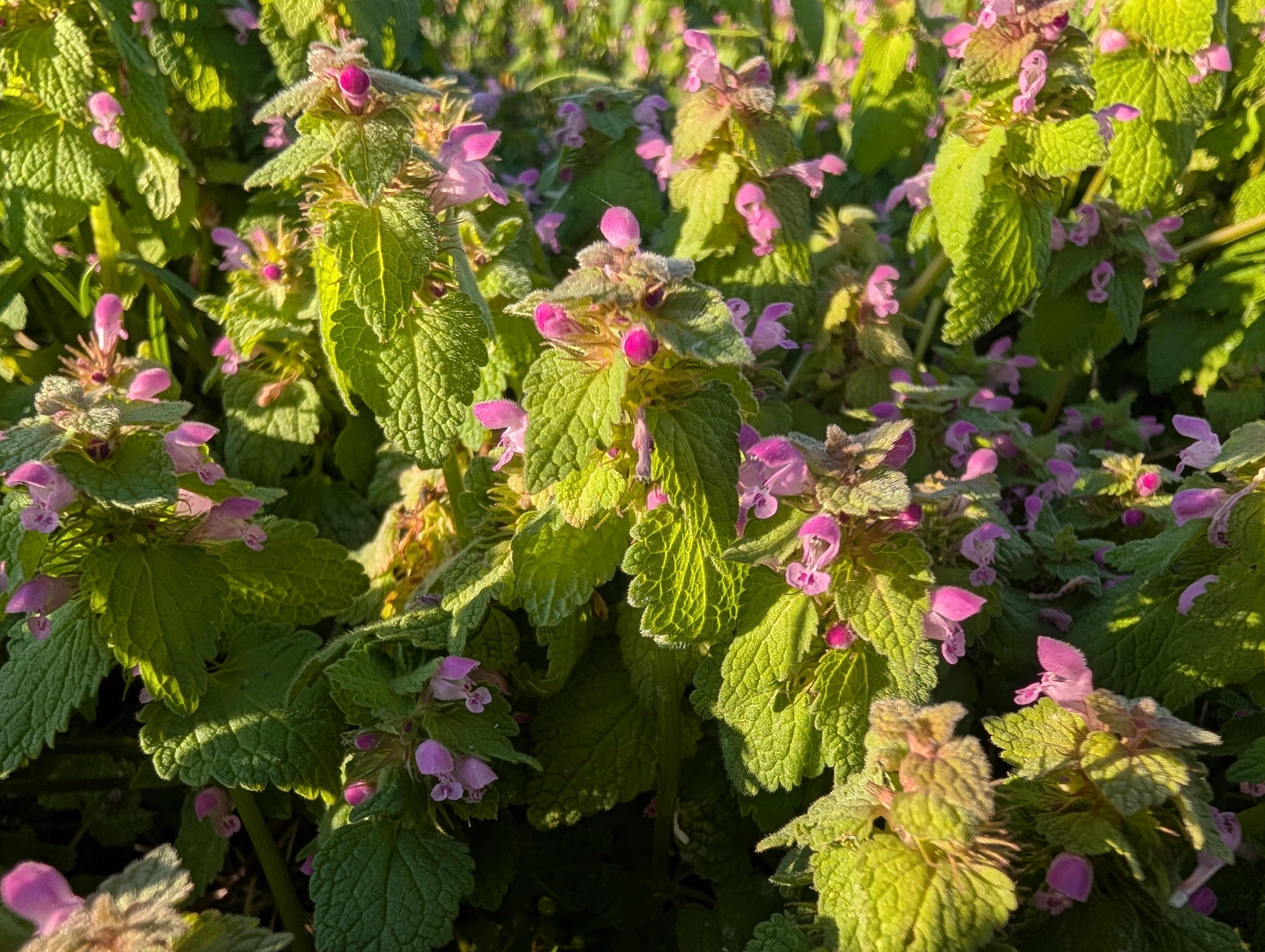
You’ll likely spot this member of the mint family by its fuzzy, spade-shaped leaves that transition from green at the bottom to a lovely reddish-purple at the top.
- The Stem: Like all mints, it has a distinct square stem. Feel it between your fingers; you’ll notice the four flat sides.
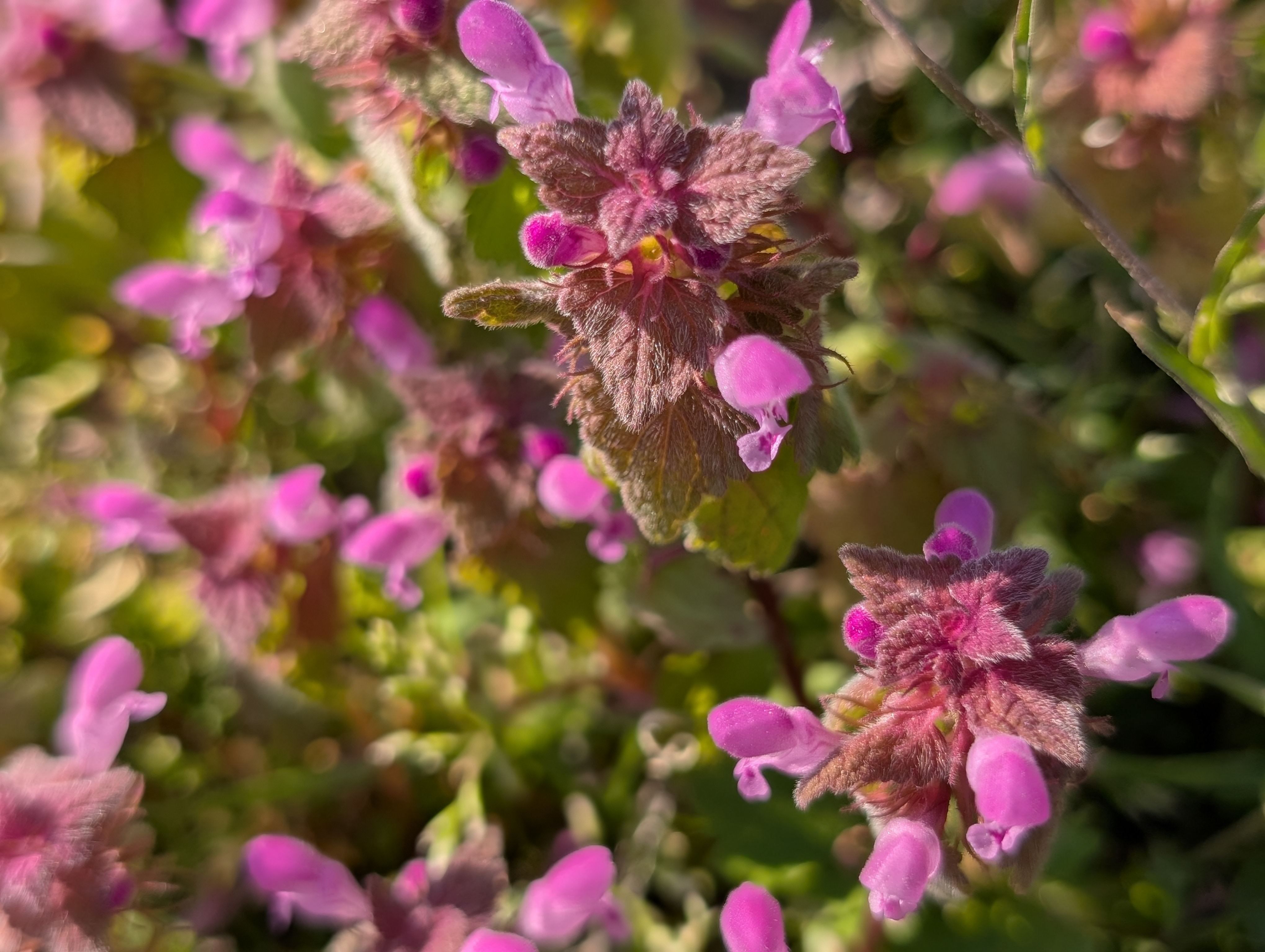
- The Flowers: Look for tiny, tubular light-purple flowers peeking out from under the upper leaves.
- The Leaves: Gradually change from green at the bottom of the plant to purple towards the top. Roughly heart-shaped with a pointy leaf tip.
- The Harvest: Simply snip the top few inches of the plant where the color is most vibrant. It grows in abundance, so don’t be afraid to take what you need for your kitchen or apothecary.
Look-a-Likes
| Plant | How to Tell the Difference | Forager’s Note |
| Henbit (Lamium amplexicaule) | The leaves are circular and hug the stem completely without a stalk. They don’t turn purple at the top like Dead Nettle. | Edible & Medicinal. It’s a close cousin and perfectly safe to eat! |
| Ground Ivy / Creeping Charlie (Glechoma hederacea) | The leaves are scalloped and round, and the plant creeps along the ground rather than standing up in a little pagoda shape like dead nettle. It has a very strong, pungent “minty-musk” smell. | Edible/Medicinal. Safe in moderation, but has a much stronger, more bitter medicinal flavor. |
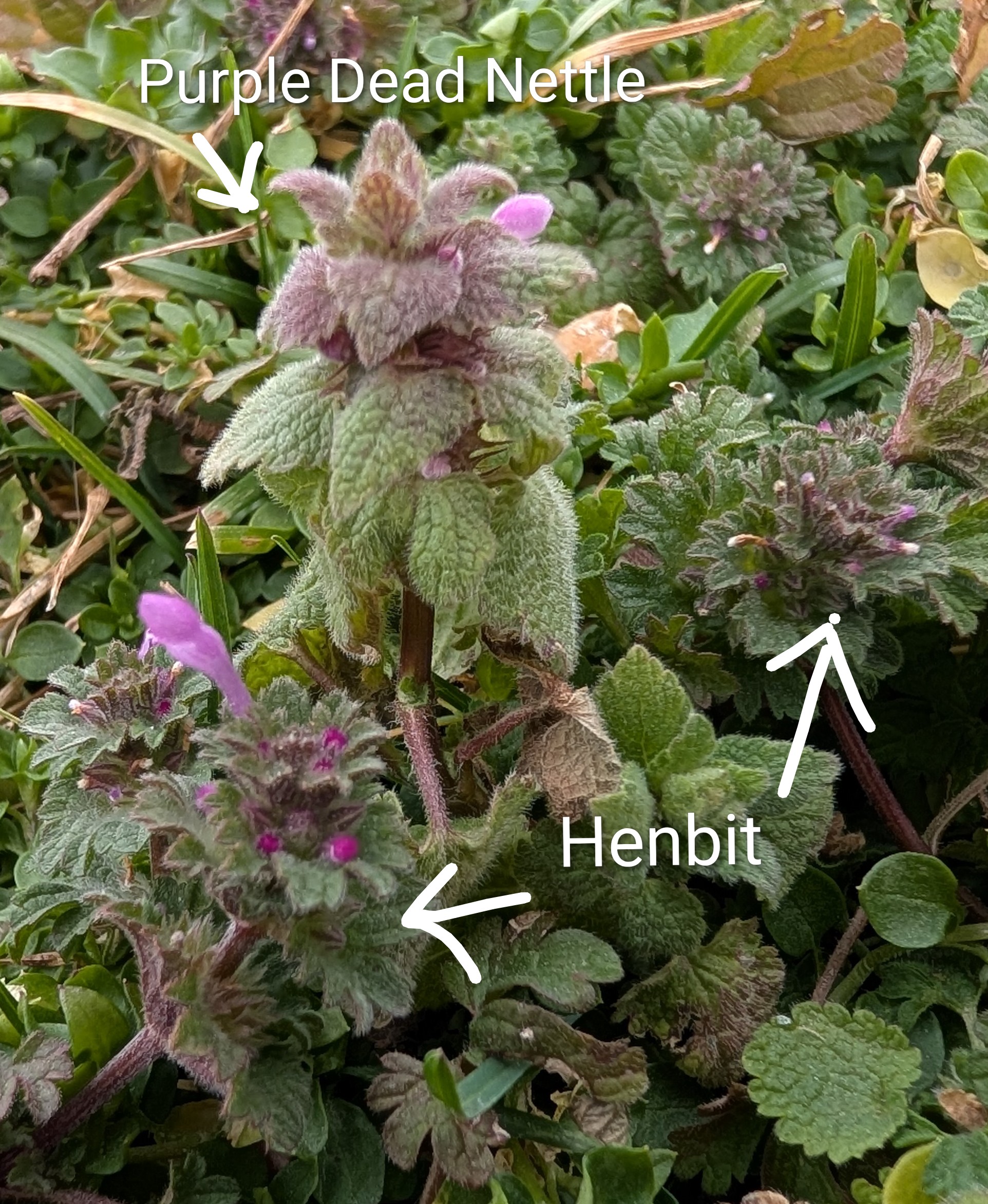
Always remember the Golden Rule of Foraging: If you aren’t 100% sure, leave it for the bees! Since none of these specific lookalikes are toxic, Purple Dead Nettle is a low-risk plant to start with and it’s a great way to practice botanical observation skills.
Use in the Kitchen
Dead Nettle has a mild, earthy, and slightly floral flavor. It is a wonderful way to get fresh greens into your diet before the kale and spinach have even thought about waking up. It is a superfood with high nutritional value. It contains nutrients such as vitamin C, vitamin A, vitamin K, iron, and fiber.
Purple Dead Nettle and Potato Stew
*Recipe by Rebecca
To make this stew, start by sautéing onions, carrots, and celery in a large pot until they turn soft and fragrant. Then, add diced potatoes and vegetable broth, allowing them to simmer until the potatoes are tender and infused with the flavors of the broth.
As the potatoes cook, it’s time to introduce the star of the dish – purple dead nettle. Add a generous amount of washed and chopped purple dead nettle leaves to the stew, stirring them gently to incorporate. Let the stew simmer for a few more minutes, allowing the purple dead nettle to infuse its unique taste into the dish.
To enhance the creaminess of the stew, you can choose to add a dollop of sour cream or a splash of coconut milk. Season the stew with salt, pepper, and aromatic herbs like thyme or rosemary for an extra layer of flavor.
Serve this purple dead nettle and potato stew piping hot, perhaps with a side of crusty bread or a sprinkle of grated cheese. The combination of tender potatoes and the earthy goodness of purple dead nettle will leave you feeling satisfied and nourished.
Purple Dead Nettle Ice Cream
Ingredients
4 cups whole milk (preferably raw Jersey milk) or full fat canned coconut milk for dairy-free option
¾ to 1 cup pure maple syrup (use 3/4 cup for a floral forward taste; 1 cup for a classic sweet dessert.)
2 to 3 packed cups purple dead nettle (stick to the purple tops for the sweetest, most floral flavor.)
A pinch of sea salt
Instructions
Gently rinse the purple tops (leaves and flowers) and place them in a blender with 1 cup of your milk. Blend on high until it is completely liquefied. In a heavy-bottomed saucepan, combine the nettle mixture with the rest of your milk. Heat until it just begins to simmer, then remove from heat. Let it steep for at least 30 minutes, or up to 2 hours for a deeper flavor. Strain out the leaves with a fine mesh strainer or, better yet, a cheesecloth, squeezing firmly to extract every drop of flavor, then whisk in your maple syrup and a pinch of sea salt while the milk is still warm so the syrup incorporates well. Put the mixture in the fridge until it is ice cold (at least 4 hours, or overnight). Once completely chilled, churn in your ice cream maker as you would with your regular ice cream recipes.
Purple Dead Nettle Lemonade
*Recipe by Rebecca
A handful of fresh purple dead nettle leaves, lemons, water, and sweetener of your choice. Start by washing the leaves thoroughly to remove any dirt or impurities. Then, squeeze the juice from the lemons and set it aside. Boil a pot of water and add the purple dead nettle leaves. Let it steep for about 10 minutes, allowing the flavors to infuse into the water. Afterward, strain the liquid to remove the leaves, and let it cool down to room temperature. Once cooled, mix the purple dead nettle-infused water with the freshly squeezed lemon juice. Add sweetener to taste, whether it’s honey, agave syrup, or your preferred sweetener.
Purple Dead Nettle Pilaf
*Recipe from Timber 2 Table
Ingredients
1 large shallot, diced
2 cloves garlic, minced
2 cups freshly picked and rinsed purple dead nettle leaves
2 tablespoons butter
1 teaspoon kosher salt
1 cup long-grain rice
2 cups chicken broth or veggie broth
Instructions
Peel and mince both the shallot and the garlic. Set them aside. Give the purple dead nettle leaves a quick rinse under cold water to remove any dirt or insects that might be on them. Pat dry with paper towels or run them through a salad spinner. Heat the butter in a medium saucepan with a lid. Add the diced shallot to the pan and cook 4 to 6 minutes until softened. Add the garlic and cook an additional minute or two. Pour and stir in the rice, evenly coating the grains with the butter. Add the purple dead nettle and continue to cook until the leaves are wilted, about 3 to 5 minutes. Add the salt. Add the chicken stock and bring the mixture to a boil, reduce heat to a simmer, cover the pot and simmer the rice for 15 minutes. Remove from heat and fluff with a fork.
A few other simple culinary uses for purple dead nettle:
- Spring Pesto: Substitute half your basil for purple dead nettle for a nutrient-dense spread or toss it in with the chickweed in the pesto recipe in Chickweed: The Forager’s Winter Star.
- Smoothies: This is my favorite culinary use. Toss a small handful into your morning blend; the flavor is mild enough to be masked by fruit while providing a massive boost of iron and Vitamin C. My favorite smoothie recipe is the Tropical Green Smoothie in Chickweed: The Forager’s Winter Star. I just follow that recipe and add a few purple tops to it for an extra boost of goodness.
- Fresh Salads: Use the tender purple tops as a colorful garnish or base for a wild-foraged salad.
- Focaccia: As with many herbs, purple dead nettle can be incorporated into a bread dough and made into a delicious focaccia.
- Potherb, Soups, Stir-fries: Use as you would any herb in your recipes.
Purple Dead Nettle Medicinal Uses
This plant is known for being anti-inflammatory, antimicrobial, and antifungal. Purple Dead Nettle contains:
- Antioxidant properties such as polyphenols which help support gut and cardiovascular health.
- Quercetin flavonoids which reduce the inflammatory reactivity of the immune system and counteract oxidation. Quercetin also encourages histamine release to help reduce allergy symptoms. This paired with the anti-inflammatory and immune-supporting properties of the plant make it an especially powerful herb for those suffering from topical and respiratory seasonal allergies.
- Free radical-fighting flavonoids which have been shown to have even more powerful antioxidant effects than ascorbic acid.
- Antibacterial properties that may be useful in fighting topical infections like staph and internal infections like E. coli.
- Antifungal properties that can fight candida infections both externally and internally.
Purple Dead Nettle also:
- Reduces pain and inflammation by inhibiting the release of prostaglandins, which play a primary role in pain and inflammation, especially with regard to allergies and chronic inflammatory conditions
- Supports healthy kidney function by working as a diuretic and has been shown to help break up kidney stones and support renal function.
- Supports detoxification with diaphoretic properties and induces sweating to help clear toxins out of the body.
How to Prepare Purple Dead Nettle for Your Apothecary:
| Method | Best For… | Shelf Life |
| Fresh Tea | Immediate allergy relief & vitamin boost. | 24 hours (refrigerated) |
| Dried Leaves | Year-round tea or infusing into oils. | 1 year (in a dark jar) |
| Infused Oil | Salves, lip balms, and muscle rubs. | 6–12 months |
| Tincture | Concentrated medicine for travel or quick use. | 3–5 years |
| Oxymel* | MCAS support and respiratory tonics | 6-12 months |
*Note: If you are highly sensitive to fermented histamines, consider a glycerite as an alternative to an ACV-based oxymel.
Purple dead nettle is a natural styptic (helps stop bleeding). You can use it in a salve or as a “spit poultice” for minor garden cuts and scrapes.
A Note on Harvesting for Medicine: To get the most medicinal punch, harvest when the purple color is most vibrant at the top of the plant. This is when the concentration of anthocyanins and quercetin is at its peak!
More on Preserving Purple Dead Nettle
1. Air Drying (Best for Tea & Infusions)
Because dead nettle is slightly fuzzy, it can hold onto moisture. Drying it properly is key to preventing mold.
- Bunch small handfuls of the purple tops together and tie them with twine. Hang them upside down in a warm, dry place out of direct sunlight.
- You can place the bunches inside a paper bag with a few holes poked in it. This catches any falling flowers or seeds and keeps the dust off.
- Once it is completely dry (the stem should snap, not bend), strip the leaves and flowers into a glass jar. It will stay potent for about a year.
2. The Ice Cube Method (Best for Kitchen Use)
Since I enjoy adding these to smoothies (like my favorite Tropical Green smoothie), freezing is my best friend.
- The Smoothie Method: Blend fresh purple tops with a small amount of water. Pour the slurry into ice cube trays. Once frozen, pop them into a freezer bag. Perfect to toss in your blender when you’re ready for a smoothie and dead nettle is out of season.
- The Savory Method: Chop the leaves and pack them into ice cube trays, then cover with olive oil or melted coconut oil. These are perfect to drop into your cooked dishes like stew or pilaf later in the year.
3. Alcohol or Glycerin Tincture (Best for Long-Term Medicine)
If you want to keep the medicinal properties available for several years, a tincture is the way to go.
- Alcohol: Use a high-proof clear alcohol (like 100-proof vodka) to cover fresh, chopped nettles in a jar. Let sit for 6 weeks, then strain. This is stable for 3–5 years.
- Glycerite: For a non-alcoholic version, use vegetable glycerin. This is a great choice if you find vinegar or alcohol too harsh for your system.
4. Infused Oil & Salves (Best for First Aid)
Since Dead Nettle is a great styptic for those garden scrapes:
- The Solar Infusion: Place dried (not fresh!) dead nettle in a jar and cover with a shelf-stable oil like olive or jojoba. Let it sit in a sunny window for 2–4 weeks. Strain and use as a base for your homemade soaps or first-aid balms.
Disclaimer: I am not a doctor. Always consult with a medical professional before introducing new wild herbs into your diet, especially if you are pregnant, nursing, or have existing health conditions.
Fun Activities for Kids
Since dead nettle doesn’t sting and is safe and easy to identify, it is the perfect plant for little hands to explore.
- Natural pH Indicator Activity: Science, Art & Homestead “Magic”
Because Purple Dead Nettle is rich in anthocyanins (the same pigments found in red cabbage and blueberries), you can use it to create a “magic” color-changing liquid. My kids LOVE science experiments like this!
- The Tea: Have the kids help you mash up a handful of the purple tops in a little bit of hot water until you have a strong tea. *Note: Make sure you get ones that are quite purple for best results.
- The Set-Up: Give them two small clear jars or cups. Fill one with a little bit of vinegar (acid) and the other with a little water mixed with baking soda (base).
- The Magic: Use a dropper or a spoon to add the purple dead nettle tea to each jar.
- In the vinegar, the tea will turn a bright, vibrant pink/red.
- In the baking soda, it will shift toward a blue or muddy green.
The science behind it: the acid and base actually change the structure of the anthocyanins causing them to reflect light in different color spectrums. If your kids are young, you can explain it as the plant having a hidden language – a secret code hidden right inside the leaves – to communicate with us. Is it magic? No, it’s chemistry!
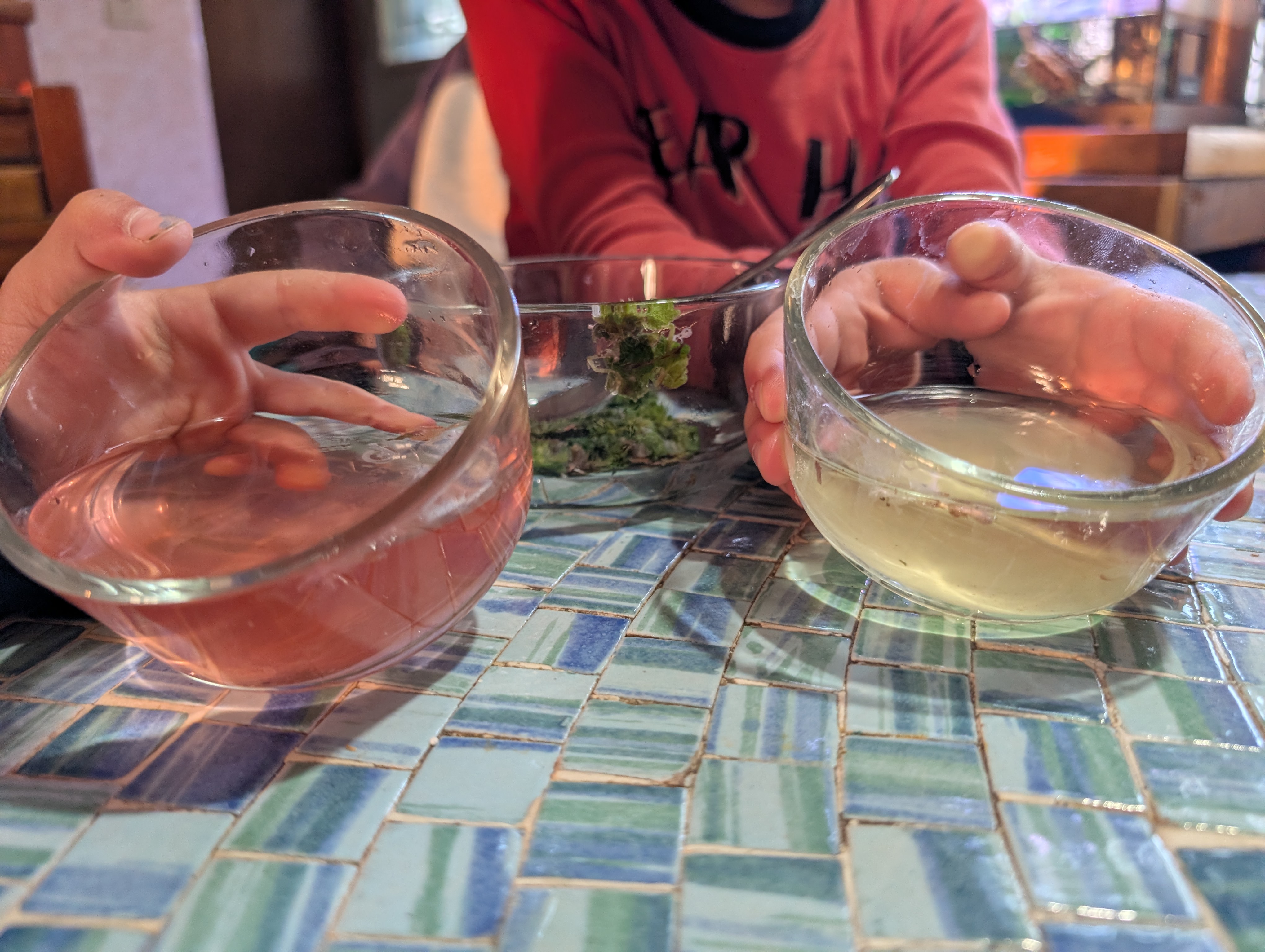
*Note: This is why your Purple Dead Nettle Lemonade might change color! When you add the lemon juice (which is acidic) to your purple-tinted tea, you’ll watch the drink transform from a muddy purple or blue-green to a beautiful, vibrant pink. It’s a science experiment you can actually drink!
Bringing Faith into it: You can also explain that just like the tea changes color depending on what it’s mixed with, our hearts and attitudes can be influenced by the things we surround ourselves with. We want to be mixed with God’s word so we show His beautiful colors!
A few more activities for the kids:
- Nature Weaving: Use the long, sturdy stems to weave fairy crowns or small mats.
- Pollinator Watching: On a sunny day, sit quietly and watch the bees. Dead nettle is one of the very first food sources for honeybees and bumblebees—it’s fun to see them crawl deep into the tiny flowers!
- Square Stem Challenge: Have the kids close their eyes and try to find the square-stemmed plants just by feel.
Bringing Faith Into It
Did You Know
For centuries, people were confused as to why a plant that looked so much like a Stinging Nettle didn’t hurt. The name Dead Nettle literally means “Stingless Nettle.” In some regions, it was called “Dumb Nettle” because it “refused to speak” (sting) when touched. This was often used as a metaphor in early sermons about having a gentle spirit despite a rough appearance.
In the garden, purple dead nettle is often dismissed as a nuisance, yet it is one of the first plants to provide life-sustaining nectar to the bees and healing to our bodies. While you’re watching the bees crawl into those “Fairy Horns,” think about why the flowers are there so early. Those bees are hungry and there aren’t many flowers out yet. God painted the ground purple with dead nettle before many other plants even started budding. If He remembers to feed the tiny bees, imagine how much He remembers to take care of you!
“Look at the birds of the air… your heavenly Father feeds them. Are you not much more valuable than they?” (Matthew 6:26)
It also serves as a beautiful reminder of Psalm 147:8: “He covers the sky with clouds; he supplies the earth with rain and makes grass grow on the hills.” Even the smallest “weed” that we might step over is part of a divine design, placed there to provide exactly what is needed at exactly the right time. Just as the dead nettle thrives in the transition from winter to spring, we can find peace knowing that God provides for all His creatures, from the bees in the fields to the families in our homes.
I’m already seeing several more divinely designed treasures waking up around the farm and orchard. Keep an eye out for the next posts, where we’ll dive into one plant that I have been anxiously waiting on for helping with my AGS/MCAS and another plant that I’ve been watching for to help my husband with his chronic pain. Can you guess what they are?

 Radiant Roots
Leave a comment and let me know what you think!