“Children learn as they play. Most importantly, in play children learn how to learn.”
— O. Fred Donaldson
If you’ve ever looked at unending curriculum options and complex homeschool tracking systems and felt instantly overwhelmed, welcome to the club. I am not naturally built for rigid schedules, color-coded binders, or complicated homeschool planners. Between farm chores and outdoor time, we need learning tools that actually hold attention and a dead-simple way to keep track of homeschooling hours. Right now, our sweet spot is a mix of educational games, interactive books, and a Google Sheet that does the heavy lifting of record-keeping for me.
Some of the links below are affiliate links, which means I may earn a tiny commission if you decide to buy through them—at zero extra cost to you.
Here are 8 of our current favorite homeschooling resources plus an absolute gem I found for tracking hours—no matter how organized (or chaotic!) your days are:
1. D is for Dinosaur
A brilliant Biblical A-to-Z rhyming book that connects foundational phonics with big creation and science concepts, from Adam and the Ark to dinosaurs and Earth’s history. It’s packed with bright illustrations, memory rhymes, quick discussion points, and hands-on activities—plus structured notes and extra answers for parents that make it effortless to adapt for any lesson.
2. Wildcraft! An Herbal Adventure Game
A wonderful cooperative board game that introduces kids as young as 4 to edible and medicinal plants. Players work together as a team to gather herbs, learning plant names and uses through clear, child-friendly illustrations. Plus, it includes downloadable storybooks, guides, and coloring pages to extend the learning offline. Fun for all ages!
3. Sum Swamp Math Game
An absolute staple for early math skills. An award-winning board game that turns basic math drills into a fun adventure for kids ages 5 and up. Players roll two number dice and an operations die to add and subtract their way through the swamp, navigating crocodile shortcuts, even/odd challenge spaces, and the hilarious “endless loop.” It’s an ideal tool for building early mental math fluency, number recognition, and basic equations through play.
4. Sequence Letters
A brilliant ABC twist on classic Sequence that targets letter recognition and phonics as well as tactical strategy. Players match upper- and lower-case letter cards to the beginning sounds of pictures on the board, using color-coded squares for quick recognition as they race to place 5 chips in a row.
5. I Sea 10! Math Game
A fast-paced, sea-themed card game that builds early number sense and addition fluency. Players flip over number cards and race to spot combinations that total 10—shouting “I See 10!” to collect them—while dodging surprise shark cards that reset their stash.
6. Bilingual Memory Game
A durable 72-card memory matching set featuring 36 pairs of simple Spanish-English vocabulary words—like everyday animals, fruits, and household objects. Made with thick, wipe-clean cardboard and non-toxic ink, the double-sided design features vibrant patterns on one side and a blank side for kids to illustrate their own custom matching games.
7 & 8. Sight Word Toss & Sight Word Swat
When sitting still isn’t happening, these active learning games save the day. Tossing beanbags or swatting sight word cards gets kids moving physically while building instant word recognition.
Digital Hour Log Sheet (Google Sheets)
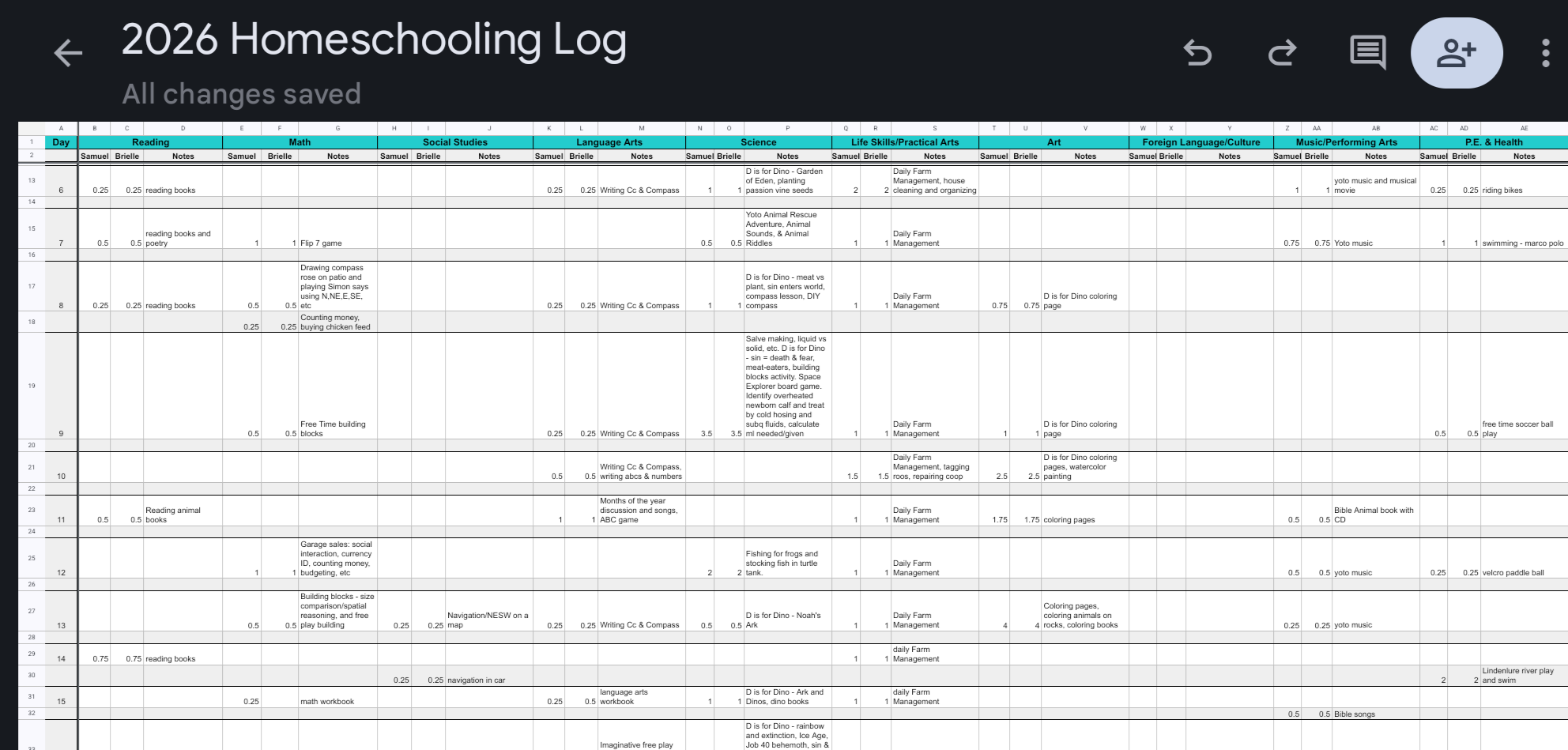
On the administrative side, keeping a simple digital spreadsheet for logging educational hours makes record-keeping as stress-free as possible. Updating it digitally in real time takes less than two minutes a day and keeps everything organized for the year.
*Pro Tip: Blessed Homeschool will send you a Free Homeschool Hours Log when you subscribe to her blog. I use this digital spreadsheet, customized to my needs (I removed the columns for more than 2 kids and added a column to make notes next to the hours so I can track what activities are contributing to the hours on the same document). The spreadsheet automatically tracks core vs. non-core hours AND home vs. not-home hours for each child, giving a running total for each month and also for the year as you go along.
I can edit my spreadsheet from anywhere using my phone or my laptop with Google Sheets. Then, I print each month off as we go and stick it in a folder with examples of their work from that month. Easy peasy!
What is currently working best in your homeschool space? Drop your favorites in the comments below!


Leave a comment and let me know what you think!