“Every farm has its own rhythm; the right bird is simply the one that sings in tune with yours.”
If you’re looking to expand your homestead flock beyond standard backyard layers—or deciding where to start—it’s easy to get overwhelmed by the options. Chickens are the universal default, but guineas and quail offer unique options that might fit your land, timeline, and goals better.
Here is a breakdown comparing chickens, guineas, and quail – pulling from my personal experience – across care requirements, production yields, breeding ease, and overall personality to help you choose the right bird for your setup.
1. Quick Overview & Key Differences
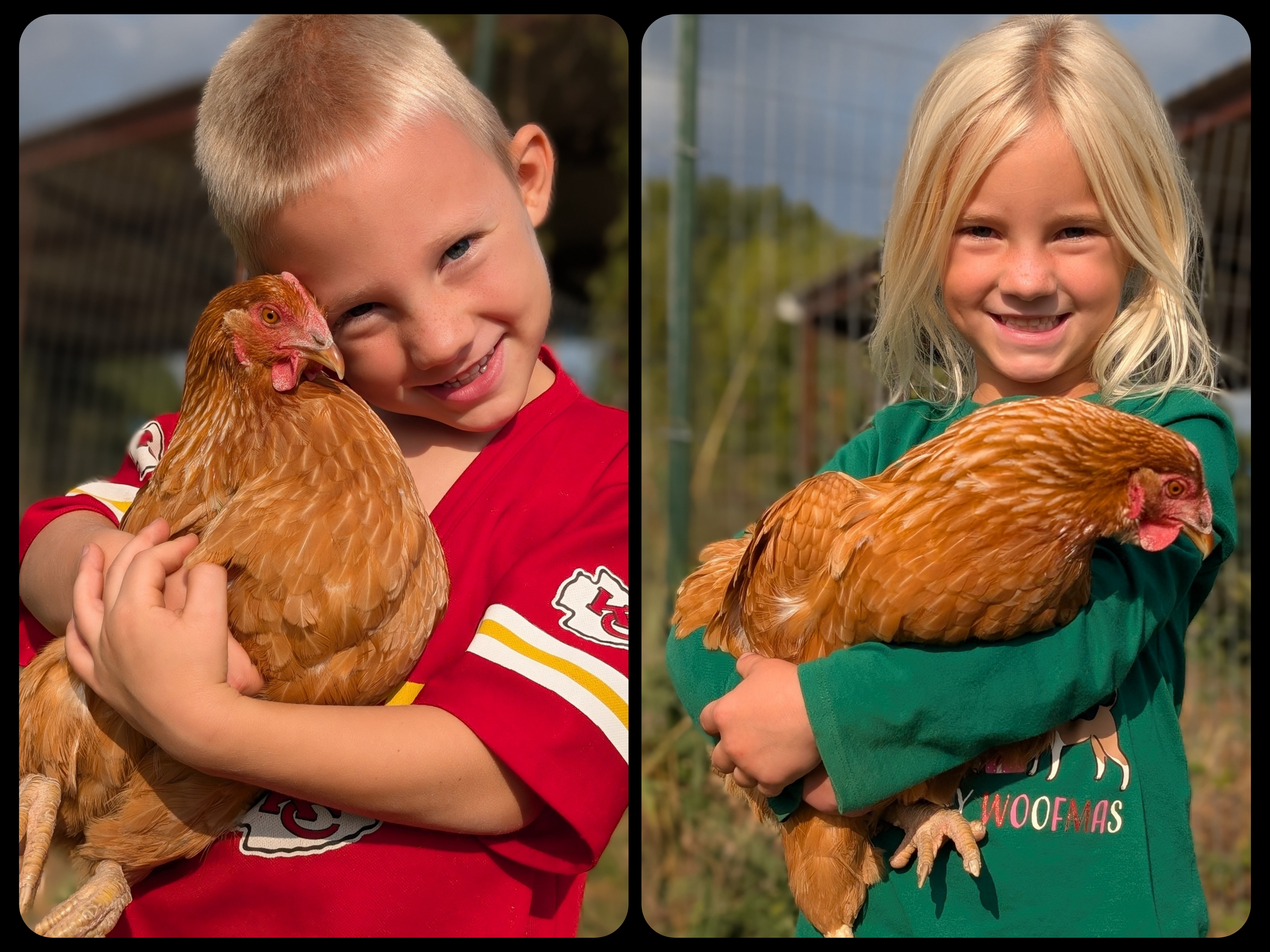
- Chickens: The all-around standard. Easy to contain, predictable layers, friendly, and highly adaptable to small backyards or large pastures. Typical barnyard sounds, especially from roosters. Can be super friendly or not, but not hard to handle or manage.
- Guineas: The feral security guards. High-energy, loud, unmatched pest-control scavengers that thrive in free-range, semi-wild environments. They may not be super friendly, and definitely prefer a hands-off management, but they are absolutely hilarious and entertaining.
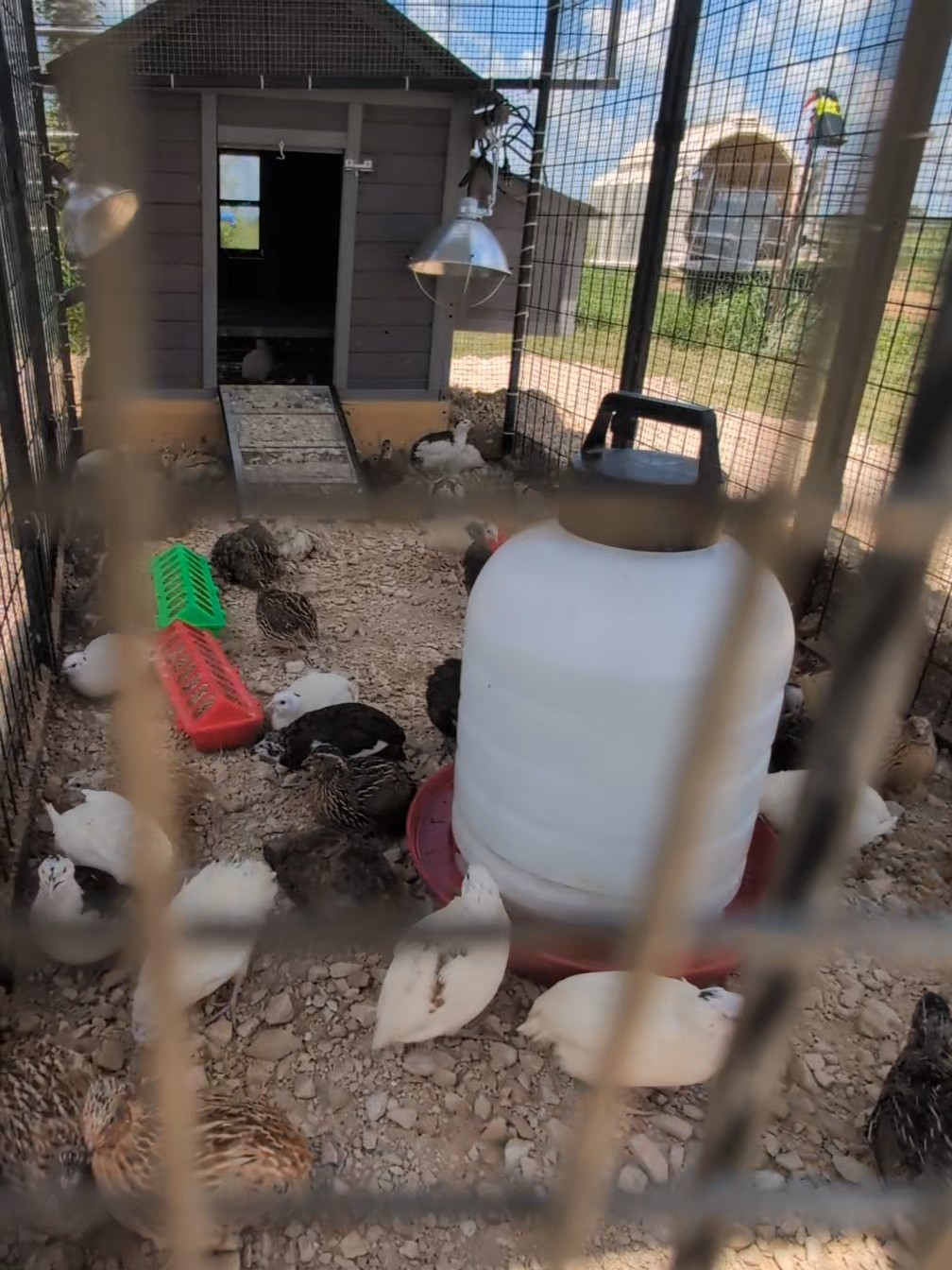
- Quail (Coturnix): The specialized mini-livestock. Fast turnaround, low space requirements, quiet, and work well for small acreage or suburban lots. Beautiful, soft calls almost like songbirds and fall somewhere between feral and friendly. Prefer hands-off management but easy to handle when necessary.
2. Ease of Maintenance & Housing Requirements
| Feature | Chickens | Guineas | Quail (Coturnix) |
| Space Needs | Moderate (3-4 sq ft inside coop, 10 sq ft in run) | Moderate to High (Prefer wide open free-range but can be content in large enclosures.) | Extremely Low (1 sq ft per bird in hutch/cage) |
| Containment | Easy (Standard fencing, simple coops) | Moderate (High flyers, standard fencing will not always contain them) | Moderate (Must be fully enclosed—they fly fast, straight up and get out any gaps) |
| Noise Level | Low to Moderate (Roosters crow, hens vocalize) | High (Extremely loud, alarm calls from everyone at everything) | Very Low (Soft chirps and subtle crowing) |
| Foraging Skill | Good (Scratch gardens, eat bugs/greens) | Superior (Tick/grasshopper/rodent exterminators, low feed cost through foraging seasons) | None (Rely 100% on provided complete feed) |
- Chickens are simple and easy to manage. They don’t tend to wander far when free ranging and they return to the coop at night automatically. Chickens typically stay contained behind standard goat/poultry wire or electric netting and don’t try to fly out of anywhere. Chickens also can form bonds with their people. (I have one Cinnamon Queen who insists on being carried to the coop each night and getting her hugs and pets before tucking in.)
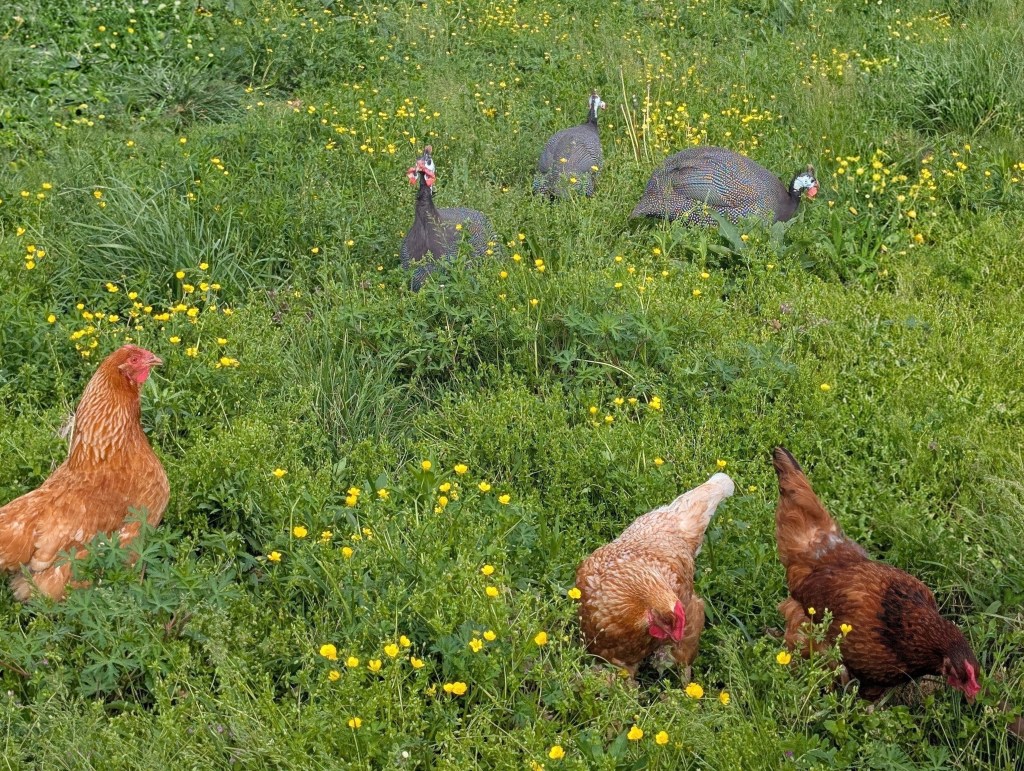
- Guineas are essentially semi-wild game birds. They hate being strictly confined and will stress easily in crowded coops. Their superpower is tick and pest eradication—they range endlessly without tearing up the ground like chickens do—and they are loud alarm systems for any intruder (hawk, dog, suspicious looking bucket, unknown people, or even the people who care for them every day). While guineas are famous for clearing standard farm fences when spooked, if given a large enough footprint with a tall perimeter, they will often settle in comfortably without trying to fly out. My eleven guineas have an acre or so fenced in with 8-10 foot high fencing and they are content to stay, and they also easily coop up for me each night in a 10 x 10 coop.
- Quail are the absolute lowest-footprint option. They cannot free-range (they will wander off and never return – and they can get lost in turf grass so don’t think you’ll be able to round them up!). Quail are best kept in raised, predator-proof wire hutches, so they don’t require acres of land. However, like guineas, they are fundamentally a game bird. They startle and stress easily, and if they do escape their coop/hutch, they can be very difficult to retrieve. Guineas and quail will not be your best cuddle buddy. Quail seem to be the least hardy, at least on our farm.
3. Egg Yield & Characteristics
| Metric | Chickens | Guineas | Quail |
| Annual Yield (during peak production) | 120–300 eggs/year (breed & management dependent) | 80–150 eggs/year (management dependent) | 150–300+ eggs/year (management dependent) |
| Time to First Egg | 18–24 weeks | 26–30 weeks | 6–8 weeks |
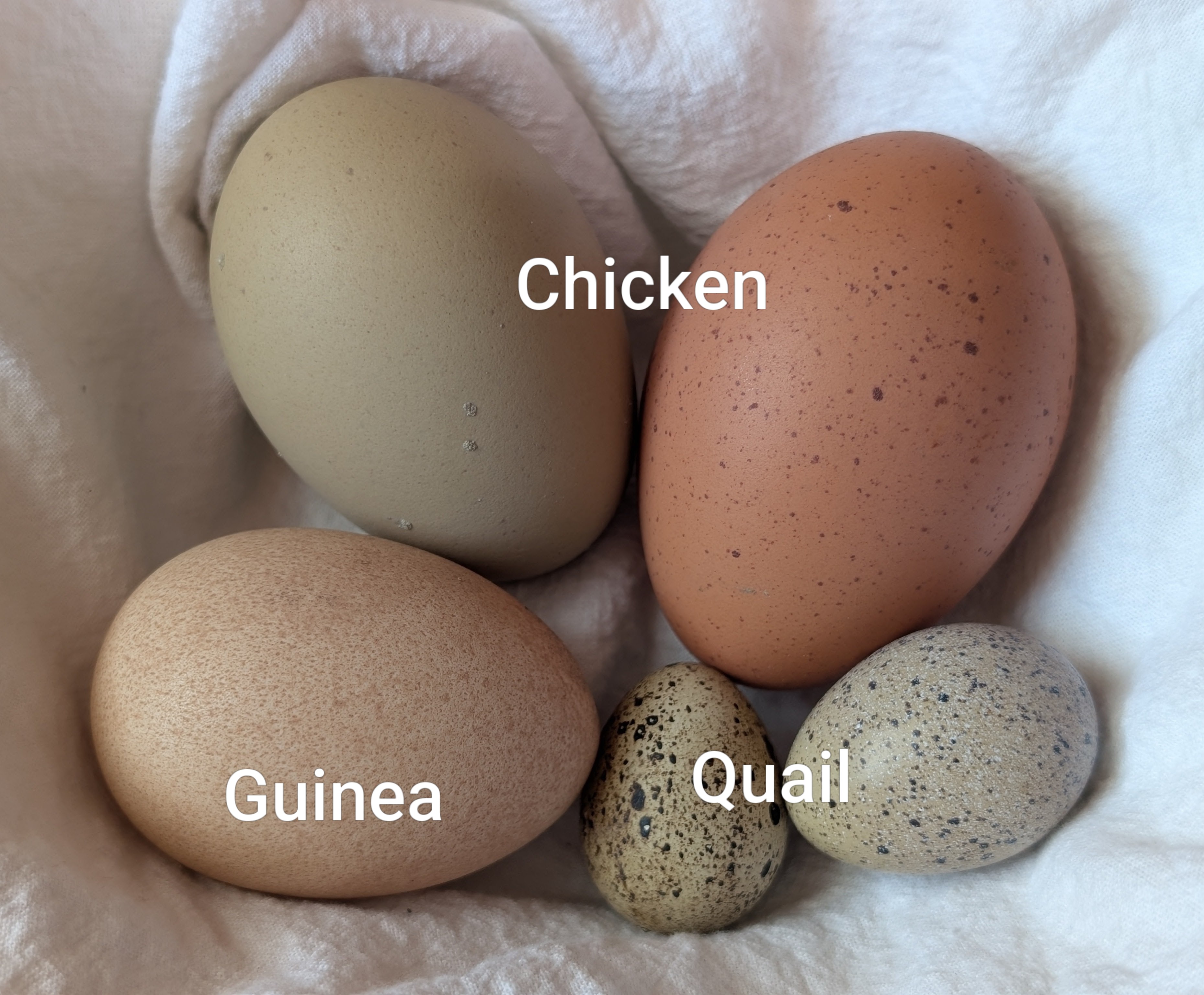
| Egg Size & Shell | Medium to Large, thin-to-moderate shell | Medium, very thick, hard shell | Tiny, tough membrane – recommend specialized quail egg scissors to crack open. |
| Flavor Profile | Rich, classic taste | Richer, higher yolk-to-white ratio | Rich, creamy, delicate |
- Chickens are the undisputed year-round champions for kitchen eggs. High-producing breeds give consistent eggs through most seasons. First time layers often lay through their first winter even without supplemental lighting. We have barnyard mixes, Easter Eggers, Olive Eggers, Cinnamon Queens, and Sapphire Gems with no supplemental lighting and we typically get eggs year-round, albeit less in the winter.
- Guineas lay seasonally – typically April through October. Their eggs are typically slightly smaller than chicken eggs (although we often get double yolkers from our guineas that are larger than chicken eggs) with thick, nearly unbreakable shells that protect them from the chaos that is guineas. The egg is slightly richer with a higher yolk to white ratio than chicken eggs. *Important note: guineas lay wherever they want, and sometimes it’s almost like they don’t even realize they have eggs coming out of them, so you may never even find most of their eggs if they have a very large area to roam.
- Quail yield a massive quantity of tiny, speckled eggs. It takes 3–4 quail eggs to equal one chicken egg, but Coturnix hens start laying at under 2 months old—making them the fastest path to fresh eggs on a homestead. *Note: without supplemental lighting, quail are seasonal layers like the guineas. Also, their egg production drops significantly by the time hens turn 2 years old, so their productive life is quite short.
4. Meat Yield & Processing
| Metric | Chickens (Meat / Dual-Purpose) | Guineas | Quail (Coturnix) |
| Processing Age | 8–12 weeks Broilers / Culls | 12–16 weeks | 7–9 weeks |
| Dressed Yield | 3.5 – 6.0 lbs | 2.0 – 3.0 lbs | 5.0 – 8.0 oz per bird |
| Meat Characteristics | Standard white & dark meat; familiar and mild | Lean, dark meat; rich flavor | Dark, tender, gourmet |
- Chickens: Meat breeds or dual-purpose culls offer the highest dressed yield with standard white and dark meat everyone is familiar with, but even layer breed culls can fill the freezer. The idea of plucking turns a lot of people away from processing chickens, but we have always skinned ours and skipped that step entirely!
- Guineas: Produce a lean, dark meat. They yield less breast meat than a heavy chicken, but the flavor is highly prized for slow-roasting, braising, or broth. Guineas have a more delicate skin, so skinning is actually the standard processing method.
- Quail: Processing quail is uniquely fast. Because of their delicate skin, most homesteaders skin them rather than pluck them, taking less than two minutes per bird. A single serving is usually 1–3 birds per person, ideal for grilling whole, pan-searing, or smoking. My favorite method is rubbing them with olive oil, sprinkling with salt and pepper, and baking in the oven.
5. Ease of Raising Replacements & Maternal Instincts
Chickens
- Broodiness: High in specific breeds (Orpingtons, Silkies, Sussex).
- Mothering Ability: Usually excellent. A good, broody hen will hatch, warm, and aggressively defend her chicks until they are fully feathered.
- Incubation: Easy to hatch in tabletop incubators (21 day cycle) and good fertility rates. Easy to raise chicks in a brooder.
Guineas
- Broodiness: Extremely high, but wildly impractical.
- Mothering Ability: Poor. Guinea hens often nest in hidden, dangerous spots (literally never in the coop) and will drag new keets through wet grass early in the morning, leading to high chick mortality from chill.
- Incubation: Highly recommended over natural brooding (26–28 day cycle) but fertility rates can be poor. Easy to raise keets in a brooder (just be aware they can fly young so you will need a cover).
Quail
- Broodiness: Almost non-existent in standard production strains (Coturnix).
- Mothering Ability: Almost non-existent (They rarely sit or hatch their own eggs).
- Incubation: Mandatory, but remarkably fast (17 day cycle). Because they hatch so quickly and mature in 6 weeks, you can go from egg to full adult replacement generation in under two months. However, be prepared for bumblebee-sized chicks with a death wish!
Comparison: Hatching & Brooding Ease
| Metric | Chickens | Guineas | Quail (Coturnix) |
| Incubation Time | 21 Days | 26–28 Days | 17 Days |
| Chick Size at Hatch | Medium (1.3 – 1.5 oz) | Small-Medium (0.9 – 1.1 oz) | Tiny (0.2 – 0.3 oz) |
| Brooder Duration | 5–6 Weeks | 5–6 Weeks | 3–4 Weeks |
| Diet Needs | 18–20% Chick Starter | 28–30% Gamebird Starter | 28–30% Gamebird Starter |
| Margin for Error | High (Forgiving) | Moderate (my main challenge has been fertility rates – otherwise, very comparable to chickens) | Low, especially in the first week (Demands precise setup and careful management) |
Summary: Which Bird Fits Your Homestead?
“Chickens give you dinner, guineas keep the bugs off your ankles, and quail fit where nothing else can.”
- Choose Chickens if… You want a reliable, easy-to-manage bird for high daily egg production, standard kitchen meat, and friendly backyard interaction. Also, the easiest to raise replacements with either a broody hen or an incubator.
- Choose Guineas if… You have acreage, need natural control for ticks, grasshoppers, mice or snakes, and want unhinged security guards patrolling your property providing unending entertainment. Also, a good choice if you are an avid treasure hunter or love easter egg hunts!
- Choose Quail if… You have limited space, strict neighbor/zoning noise rules, want the fastest possible egg/meat self-sufficiency turnaround, or prefer small-scale, quick and easy meat processing.
You don’t have to choose just one! We currently have all three. I love the ease of processing and cooking quail but they are the most high maintenance in my opinion. I love that my chickens and guineas can free range together and forage for bugs and other pests. I do wish the guineas had better fertility rates so I could hatch replacements easier, however, they provide the most entertainment and top-notch pest control. All in all, the chickens and guineas sing my tune for different reasons: the chickens hum a foundational melody on our farm while the guineas add a wild melody that makes me smile.
Are you team chicken, team guinea, or team quail? Drop a comment below and let me know which bird sings in tune with your farm!


Leave a comment and let me know what you think!