“Shall I not have intelligence with the earth? Am I not partly leaves and vegetable mold myself?”
Henry David Thoreau
Foraging is an ancient practice of gathering wild plants, fruits, nuts, seeds, and fungi for food and medicine. Too few people take advantage of what God has provided for us in nature. Modern grocery stores have greatly reduced the diversity of foods people utilize because running to the store for commercialized foods is convenient and fast. Not only is there a wide variety of food and medicine overlooked when your only food comes from the store, but foraging forces us to slow down and take notice of the world around us. God gave us everything we need for body, mind and spirit within nature.
“Forget not that the earth delights to feel your bare feet and the winds long to play with your hair.”
– Khalil Gibran
I am going to share a very short list of my absolute favorite things that can be foraged in my area of the world, the Ozarks. Keep in mind that we should always forage sustainably and respectfully. Always ask permission if you aren’t foraging on your own property, never forage for endangered or rare plants and don’t take all of anything. Leave some plants/nuts/seeds/fruit to replenish and fulfill it’s role in nature so there will be future foraging opportunities for everyone. Also, never eat something that you can not identify with one hundred percent certainty.
I will share more wild foraging opportunities and with more detail in future posts but here is a very brief introduction to my top favorite wild foraging opportunities in the Ozarks.
Pawpaw (Asimina triloba)
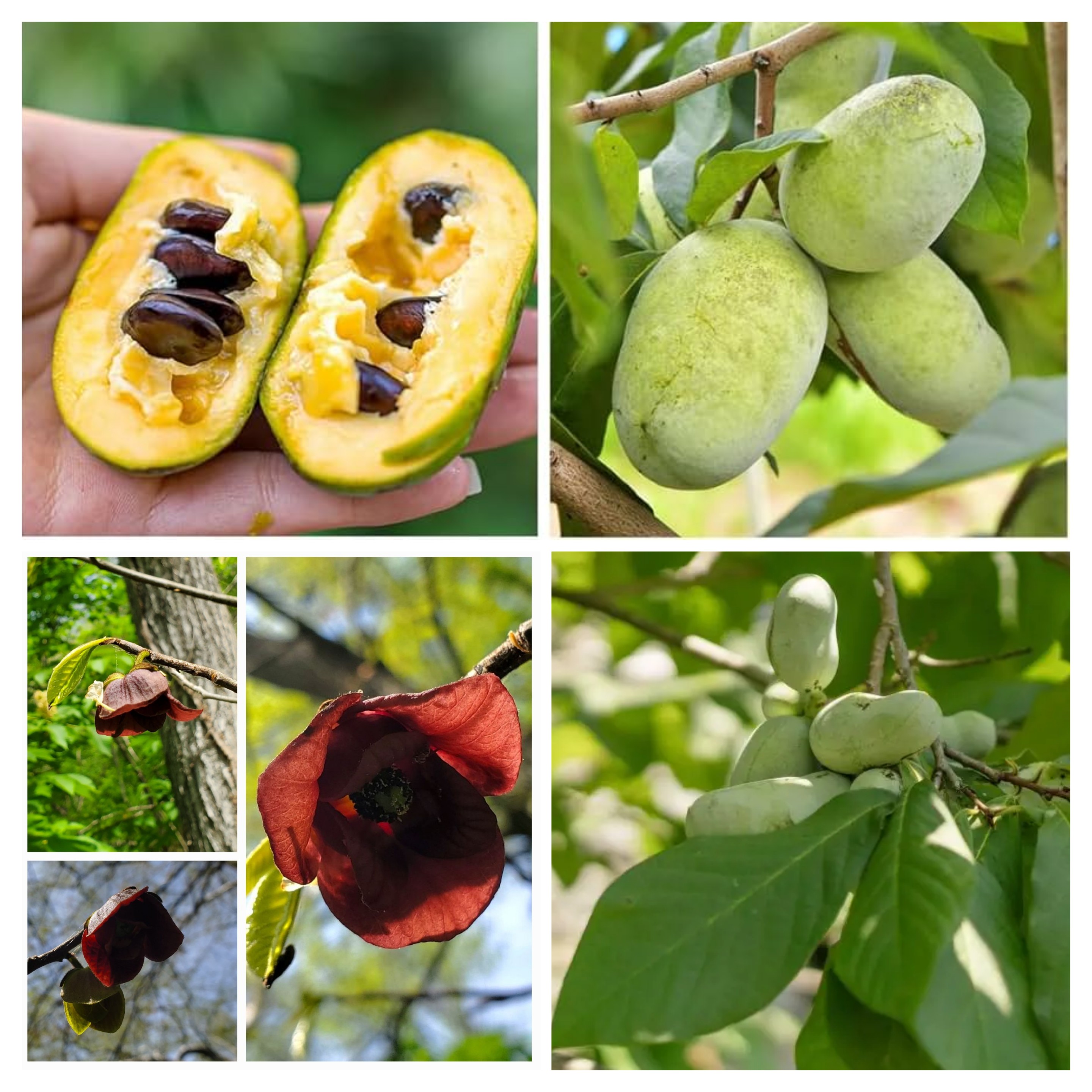
Pawpaw is a native, tropical-looking fruit that many are not even aware of. Pawpaw trees produce the largest fruit indigenous to North America. Many compare the flavor of the custard-type fruit to banana and mango. It has a short shelf life which is likely the only reason it is not available in stores.
Description: Typically an understory shrub or small tree with large oblong leaves which turn a beautiful golden yellow in the fall. Found often along creeks or rivers or woodland bottoms. Pawpaws often grow in clonal groves. In spring, the solitary, drooping flowers appear before the tree leafs out. Flowers are a dark burgundy color and about 1-2 inches across. The large fruit ripens in the fall, starting out the same color green as the leaves and ripening to a yellowish-green with brown spots. The ripe inner flesh is yellow and has one or two rows of large brown seeds. Fruit size varies but can grow quite large.
Uses: The custard-like inner flesh is delicious eaten fresh and raw. Some people also use it in baked goods and jam; however, be aware some people don’t tolerate pawpaw once it has been cooked. One of my favorite uses is in ice cream. The leaves, twigs, peel, and bark contain acetogenins that repel pests so the crushed leaves, etc, can be a handy insect repellent. The inner bark can make strong cordage. Compounds within the plant are being studied as a potential cancer treatment. Fruits can have a laxative effect.
Harvest: Look on the ground for freshly fallen fruits; a light shake of the trunk will bring down nearly ripe fruit. You do not want to pick the fruit – it will not ripen well off of the tree and it is only ripe when it will fall off of the tree easily.
Storage: The pulp oxidizes quickly so add a bit of lemon juice to the pulp, blend well and then freeze to preserve. Fresh fruit can be kept for a short time in the refrigerator but it will not keep long without freezing it.
Propagation: Starting pawpaws from seeds is quite simple as long as you know a few things. Number one rule is do not let the seeds ever dry out. You can plant directly in the ground or you can start them in pots. The method I used to start my pawpaw orchard was to start them in pots after cold stratifying them in the fridge. To do that, clean the seeds and then set on a moist paper towel. Sprinkle with cinnamon to discourage mold growth and then wrap the seeds up in the moist paper towel and put in a sealed zip lock bag. Put the bag in the refrigerator for several months (over winter) and then once the weather warms up, you can plant the seeds in pots.
Further notes on propagation: Pawpaws put out long tap roots first so be patient. It can take months to see growth above ground. Be sure to use deep pots to accommodate a long tap root. I use 14 inch tall tree pots. And remember when transplanting to their permanent location, they do NOT like their roots disturbed. They DO like wet feet so water well, especially in hot, dry spells. I keep my babies shaded in their first couple of years and then they can be acclimated to full sun.
Warnings: Some people have reported reactions to pawpaw, both to the plant itself and the fruit. The seeds, peel, leaves, twigs, and unripe fruit contains neurotoxic acetogenins and should not be consumed.
Pawpaw Recipes
Spiced Pawpaw Ice Cream
*This is a recipe of my own making and my absolute favorite use of both pawpaws and spicebush berries!
First you need infused spicebush berry sugar. To make this, you take 4 fresh or 5-6 dried spicebush berries for every half cup of sugar in a coffee grinder or food processor. Process until smooth. The infused sugar will be a creamy orange color and smell like allspice and citrus. Now on to the ice cream:
1/2 gallon fresh raw Jersey milk
2 cups infused spicebush berry sugar
1 TB real vanilla extract
1-2 cups of pawpaw pulp, depending on how strong you want the pawpaw flavor
Blend all ingredients well (I use a blender) and then use an ice cream maker to churn and freeze it into ice cream. So delicious!
Pawpaw Pancakes with Wild Ginger/Spicebush Berry Butter syrup
*Recipe from Foraging the Ozarks
Use your favorite pancake recipe and add 1/2 cup or so of pawpaw flesh.
Syrup:
2 cups brown sugar
1 cup water
1/2 cups butter
1 TB each spicebush berries and wild ginger roots
Bring to a boil then simmer to desired thickness. Pour through a strainer. Use the leftover roots to make a crystallized wild ginger snack.
Pawpaw Bread
*Recipe from The Forager’s Guide to Wild Foods
2 1/2 cups flour
2 tsp baking soda
1/4 tsp salt
2 cups sugar
1 cup butter, softened
4 eggs
1/2 tsp vanilla
3 cups pawpaw pulp
Combine dry ingredients in a bowl. In a separate bowl, whisk together sugar and butter, gradually introducing the eggs, vanilla, and pawpaw pulp. Lightly mix in dry ingredients. Bake in a greased Bundt pan for 40-45 minutes at 350.
There are many other pawpaw recipes I plan to try in two of my books. Wet, Wild and Woodsy Cookbook includes multiple muffin recipes, ice cream, cookies, bread, custard pie, cake, and regular pie. The Pocket Pawpaw Cookbook includes too many recipes to list but varies from salsas, sorbets, and sauces, to milkshakes, julius’, cupcakes, and buttercreams, to pudding, curds, preserves, and flan, to cornbread, cheesecake, and ketchup, to cakes, pies, and gelato, etc, etc, etc. I can’t wait to for my orchard to produce enough fruit to try all of these amazing sounding recipes! If you are a fan of pawpaws, this book is a must-have!
Purple Passionflower (Passiflora incarnata)
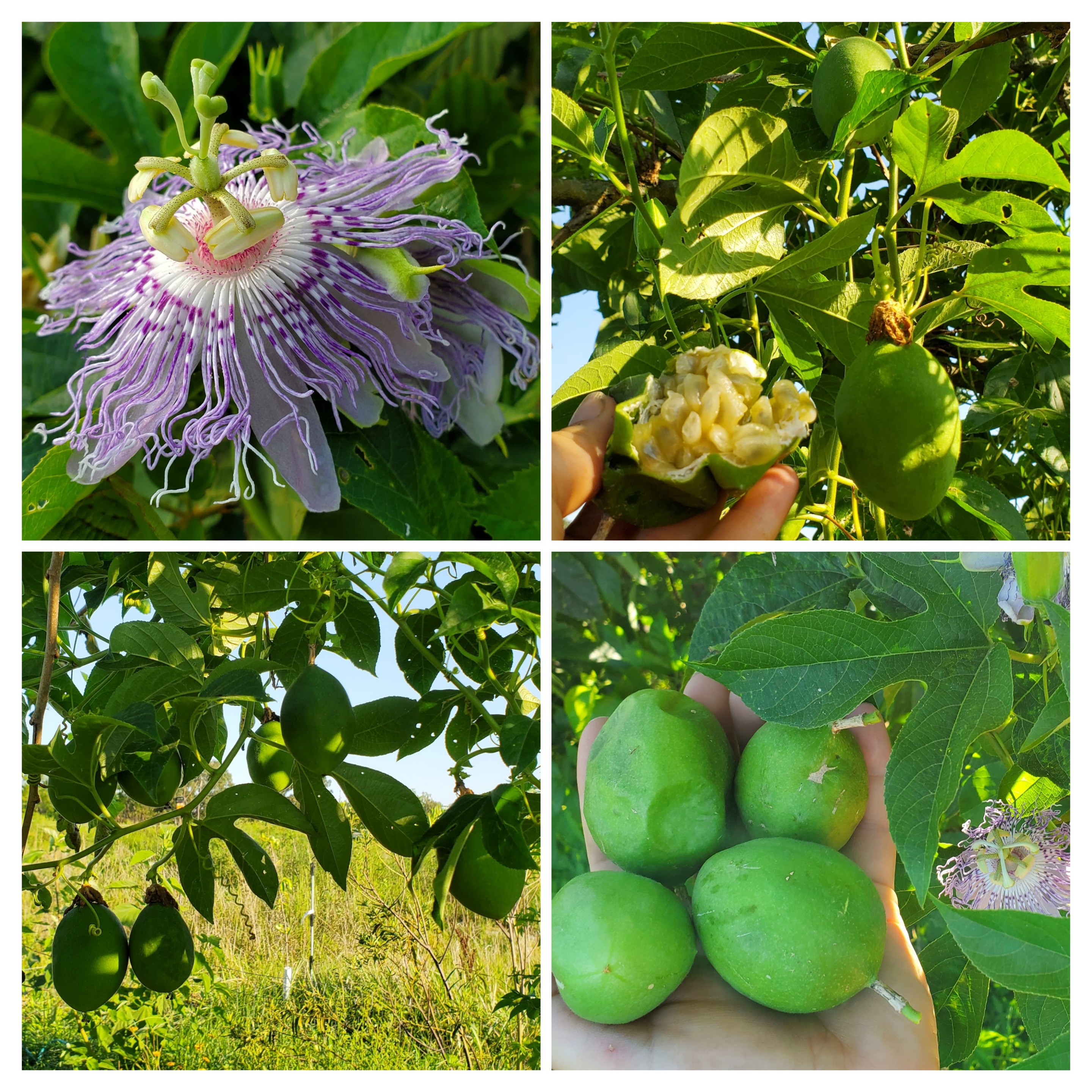
Description: Purple Passionflower, also known as Maypop and Wild Passion Vine, is a fast-growing perennial vine that uses tendrils to climb up anything they can grab or to spread along the ground if nothing is available to climb. It grows in full sun to part shade in fence rows, un-mowed fields, prairies, roadsides, thickets, and woodland edges. You may see butterflies and caterpillars as frequent visitors as it is a larval host for several butterfly species. The flowers are also a favorite to bumblebees and carpenter bees.
The vine has green, 3- or sometimes 5-lobed leaves. Flowers are purple and exotic-looking and appear in June and bloom through the summer and fall. Fruits are egg-shaped and green and when popped open they contain numerous sweet arils, each containing a small black seed. The fruit has an exquisitely sweet, tropical and slightly citrus flavor and is rich in vitamin C.
Uses: Fruits, buds, flowers, leaves, and seeds are all edible raw or cooked. The fruit is delicious straight out of the husk – you can suck the juice off from around the seeds and then spit out the seeds, or you can crunch it all up and eat the whole thing. I find the seeds are too hard and crunchy for my taste, however. You can simmer the pulp in water, strain and let cool to drink. My absolute favorite use for this plant, however, is to make an absolutely decadent jam with the fruit. The juice can also be made into syrup or wine and is used commercially for a food flavoring. Flowers can be eaten raw and make a beautiful addition to salads. Husks of younger fruits can be boiled as a vegetable. Tea can be made with the fresh or dried leaves, flowers and/or stems and is commonly used for insomnia, lowering blood pressure, inflammation, heart problems, menopausal symptoms, skin conditions, muscle spasms, ADHD depression, anxiety, and as an aid in opiate withdrawal.
Harvest: Pinch off flowers, leaves and stems. The fruit is ripe when it falls off the vine – give the vine a gentle shake and then pick up any that are on the ground. When ripe, they will have a wonderful, sweet smell, even through the husk.
Storage: Flowers, leaves and stems can be dried and stored in an airtight container. Fruit can be removed from husk and frozen for later use but my favorite way to preserve the fruit is to make and can it as a shelf-stable jam.
Propagation: The best way I have found to propagate passionflower vines is by seed. I get good germination rates by fermenting the seeds in their own juice and a little bit of water for several days at room temperature followed by cold stratification. You can do this by planting directly outside in the fall and letting nature do it’s thing over winter, or you can use the refrigerator method with a moist paper towel in a plastic bag – and again, adding cinnamon can help inhibit mold growth. In my opinion, you can not have enough of this beautiful vine that provides such a delicious fruit!
Warnings: Passionflower tea should not be consumed by pregnant or nursing mothers. Consuming the tea in excess can result in vomiting, cognitive distress, dizziness, and stomach upset.
Purple Passionflower Recipes
Passionflower Tea
*Recipe from The Forager’s Guide to Wild Foods
Place two flowers and 2-3 leaves with stems in 1 1/4 cup boiling water. Cover and steep for 10 minutes. Strain and add honey, to taste.
Passion Fruit Jam
*This is a recipe of my own making and (along with my peach salsa) is one of my favorite things to stock up my canned goods pantry with!
4 cups of passion fruit juice (I use an electric food strainer to remove the seeds)
1 1/2 cups of sugar
4 tsp Pomona’s Pectin
4 tsp calcium water
Pour fruit juice into pan, add calcium water and stir. Measure sugar and pectin into separate bowl and mix well. Bring juice to a full boil. Add the sugar/pectin mixture and stir constantly and vigorously for 1-2 minutes to dissolve pectin (wire whisk is handy). When moisture returns to full boil, remove from heat. Skim off foam (edible but not pretty). Fill jars to within 1/4 inch of rim. Wipe rims and screw on lids. Water bath for 10 minutes.
Passion Fruit Whey Cooler
*Recipe adopted from Lindsay Kolasa
Makes two 750 mL wine bottle (empty screw tops or swing tops)
1/2 cup whey (the liquid that separates from curds when making cheese from milk)
1/2 cup honey
1/4 teaspoon sea salt
2 Tablespoons lemon juice
5-6 passionfruits
1 1/2 quarts water
Scoop out the passionfruit pulp and place in pan. Add water and bring to simmer. Turn off heat and let cool to room temperature. Add in honey, salt, whey, and lemon juice and stir well. Strain the seeds out through a mesh filter. Pour into two screw-top wine bottles and screw the lids on tightly. Set in a warm place for 3-5 days (in the summer-time, this will be ready in 3 days max). Taste the brew and see if it is fizzy and ready. If it is still too sweet for you, let it sit out more so that it will culture more. When ready to drink, transfer to the fridge and serve cold.
(Warning: be careful when opening! These drinks get very fizzy and a lot of foam will pour out of the bottle!)
If you haven’t tried our native passion fruit yet, I highly suggest going out and looking for this unique vine. It is absolutely worth finding and perhaps cultivating for easy harvests! It is beautiful enough to cultivate just as an ornamental, in my opinion, but what a bonus that it produces delicious fruit as well!
Spicebush (Lindera benzoin)
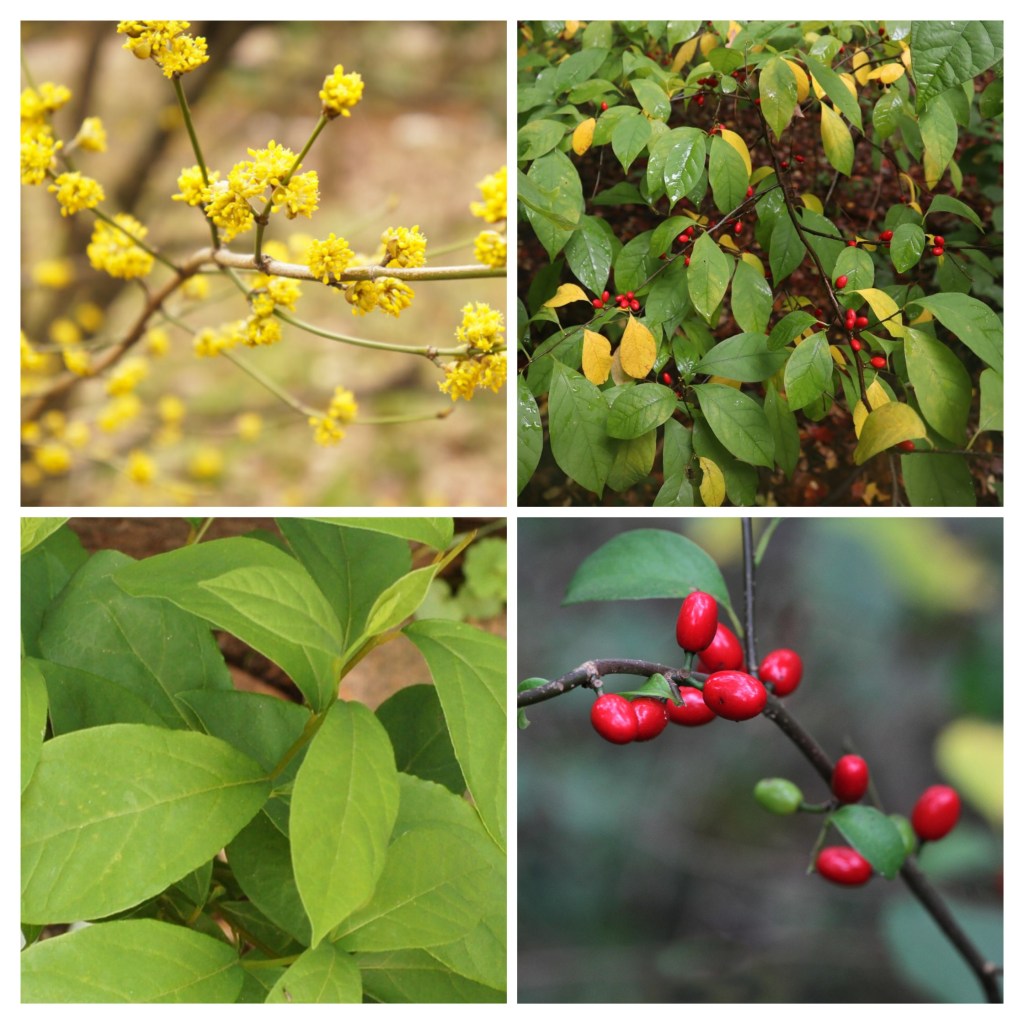
Description: Spicebush aka Common Spicebush, Northern Spicebush, or Wild Allspice, is a lovely plant that is quite prolific in favorable conditions. It is a shrub usually found in colonies in the understory or along woodland edges and streams. Spicebush is even planted as an ornamental in some landscapes. Yellow fragrant flowers appear in March before it leafs out. The flowers from clusters along the otherwise bare branches. During the summer it is an attractive, leafy green and then in the fall (usually September-October), the fruit matures to a bright, glossy red. Each fruit contains a hard, round seed. All parts of the plant are aromatic when crushed (think allspice).
Uses: All parts of the plant above ground are edible from the berries and flowers to the leaves and even the twigs. Can be used raw or cooked. The young, tender leaves make a flavorful addition to salads while larger leaves can be added to other boiled greens and soups. Raw or dried leaves, twigs and fruits can be used to make tea. Fruits can be used raw for flavoring syrups or sweets, or they can be dried and ground to be used as a substitute for allspice. Branches with leaves still attached can be used to pit-bake root veggies, green and meats to flavor the food and keep it moist (more info on how to do this in the recipe section). The fruit can be used to infuse sugar (my favorite use for them!). The leaves can be wrapped around meat for kabobs, or ground up and mixed in as a spice for breads, sweet or savory.
Harvest: Leaves can be harvested throughout the growing season. Berries are harvested in the fall, flowers in the spring. Twigs can be harvested year round.
Storage: The fruit has high amounts of Omega 3s which make it great for us but not great for long-term storage without freezing. Leaves and twigs will dehydrate well.
Propagation: *Note: spicebush plants are either male or female; if you want fruit, you will need to plant both male and female near one another for pollination. You can tell male from female when the mature plants flower if you know what to look for but the big giveaway is that mature female plants produce the red fruit in the fall. I haven’t gotten my spicebush grove started yet (soon!) but my plan is to plant a LOT so I can be sure I will have plenty of females to produce fruit someday.
All that said, my plan for propagation is to forage fruit this fall and start my spicebush grove from seed. As with the pawpaws, the seeds must not dry out for best viability and they need the same cold, moist stratification process to improve germination rates. I will do this in the fridge but they could also be planted directly in the ground and allow them to stratify naturally over the winter. Spicebush is a natural companion to pawpaw trees in the wild and they make a lovely flavor combination (such as in my Spiced Pawpaw Ice Cream recipe) so my spicebushes will be planted among my pawpaws in my food forest orchard just like they can be found in the wild.
Spicebush can also be propagated by rooting cuttings or by layering. I haven’t had good luck with those methods but some do.
Warnings: Spicebush is an important native plant that many insects and animals rely on to survive. Only gather leaves without eggs and only from areas where they are in large abundance.
Spicebush Recipes
Pit Baking with Spicebush
*Recipe from Foraging the Ozarks
Start with a deep, bed of coals. Scoop out a shallow pit about two feet across and layer the bottom with 2-3 inches of leaves and branches. Add the food in the center, then cover with another layer of leaves and branches. Cover with larger glowing embers and burned stick ends; bake for 45-50 minutes. This is a great utensil-less cooking method for drier meats like venison or Wild turkey breast and fall-apart meats like fish. This method will also work with other edible, flavorful leaves, such as sassafras, wild grape and cut-leaved coneflower.
Spicebush berry infused Sugar and Spiced Pawpaw Ice Cream
*Spiced Pawpaw Ice Cream is a recipe of my own making and my absolute favorite use of both pawpaws and spicebush berries!
First you need spicebush berry infused sugar. To make this, you take 4 fresh or 5-6 dried spicebush berries for every half cup of sugar in a coffee grinder or food processor. Process until smooth. The infused sugar will be a creamy orange color and smell like allspice and citrus. This can be used for all sorts of treats!
Now on to the ice cream:
1/2 gallon fresh raw Jersey milk
2 cups infused spicebush berry sugar
1 TB real vanilla extract
1-2 cups of pawpaw pulp, depending on how strong you want the pawpaw flavor
Blend all ingredients well (I use a blender) and then use an ice cream maker to churn and freeze it into ice cream. So delicious!
Spicebush Snickerdoodles (no butter, gluten, or eggs!)
*Recipe from Wild Foraged
First you need spicebush berry infused sugar. To make this, you take 4 fresh or 5-6 dried spicebush berries for every half cup of sugar in a coffee grinder or food processor. Process until smooth. The infused sugar will be a creamy orange color and smell like allspice and citrus. This can be used for all sorts of treats!
Cookie Ingredients:
1 cup blanched almond flour
3 TB spicebush berry infused sugar + 3 TB for rolling dough in
1/2 tsp baking powder
2 TB water
Preheat oven to 350 and line a baking sheet. Combine almond flour, sugar, and baking powder, and mix well. Add the water and stir until blended. Drop by rounded spoonful into a bowl containing your remaining 3 TB of sugar, one at a time, rolling to coat each. Then space each 2 inches apart on the cookie sheet. Bake in preheated oven for 10 minutes. Remove from oven and cool on wire rack.
*Note: Both of my kids really like these, even my picky one!
There are many more recipes for Spicebush in Wild Foraged such as Spicebush Wrapped Chicken, Southern Fried Spicebush Leaves, Spicebush Infused Butter, Spicebush Chocolate Chip Cookies, Spicebush Apple Dumplings in syrup, and Spicebush Ice Cream.
As I said, this is a very brief introduction to my top favorite things I have discovered so far in my wild foraging journey. These are plants that I love so much I have either already propagated them or will be propagating them to add to my food forest orchard so that I can sustainably and easily harvest them to my heart’s content.
What are some things you enjoy foraging for? Do you have favorite foraging recipes? Please share in the comments!
Note: This post does contain affiliate links, meaning I may receive a small commission if you make a purchase through them, at no extra cost to you. I will never recommend something unless I have first hand knowledge of it and genuinely believe it to be valuable.


Leave a comment and let me know what you think!