“He who seeks the mind of the Creator in the little things of the earth shall find a wisdom that the world cannot give.”
— In the spirit of George Washington Carver
**Before proceeding with this article, please note that these articles in my foraging for food and medicine series are very in depth and therefore can get a bit lengthy. I utilize a type of expanding detail feature for some things (particularly all the recipes) to help organize the post and make navigation easier. This feature does not work when reading directly from your inbox so if you want a more user-friendly read, please check at the top of your email and you should see an option to read directly on my blog where the features all work as they should. Thank you! Now, back to the good stuff!
While most of the garden is still deep in its winter dormancy, a bright, leafy green carpets the soil in many places. To some, it’s a stubborn garden weed; to the homesteader and forager, Chickweed (Stellaria media) is a nutritional powerhouse and a versatile medicinal ally.
Origin of Chickweed
Just as dandelions were intentionally brought over on the Mayflower, chickweed has been tucked into European satchels for centuries and was intentionally introduced to America as a food and medicine source as well as a high quality forage for poultry (thus, its name). It was traditionally used as a tonic to “cleanse the blood” after a long winter of eating heavy, dried foods. The North American Chippewa and Iroquois Indians were known to have used chickweed as an eyewash and wound poultice. Today, it remains a symbol of resilience—thriving in the cold and providing nourishment when we need it most.
Identification and Harvesting
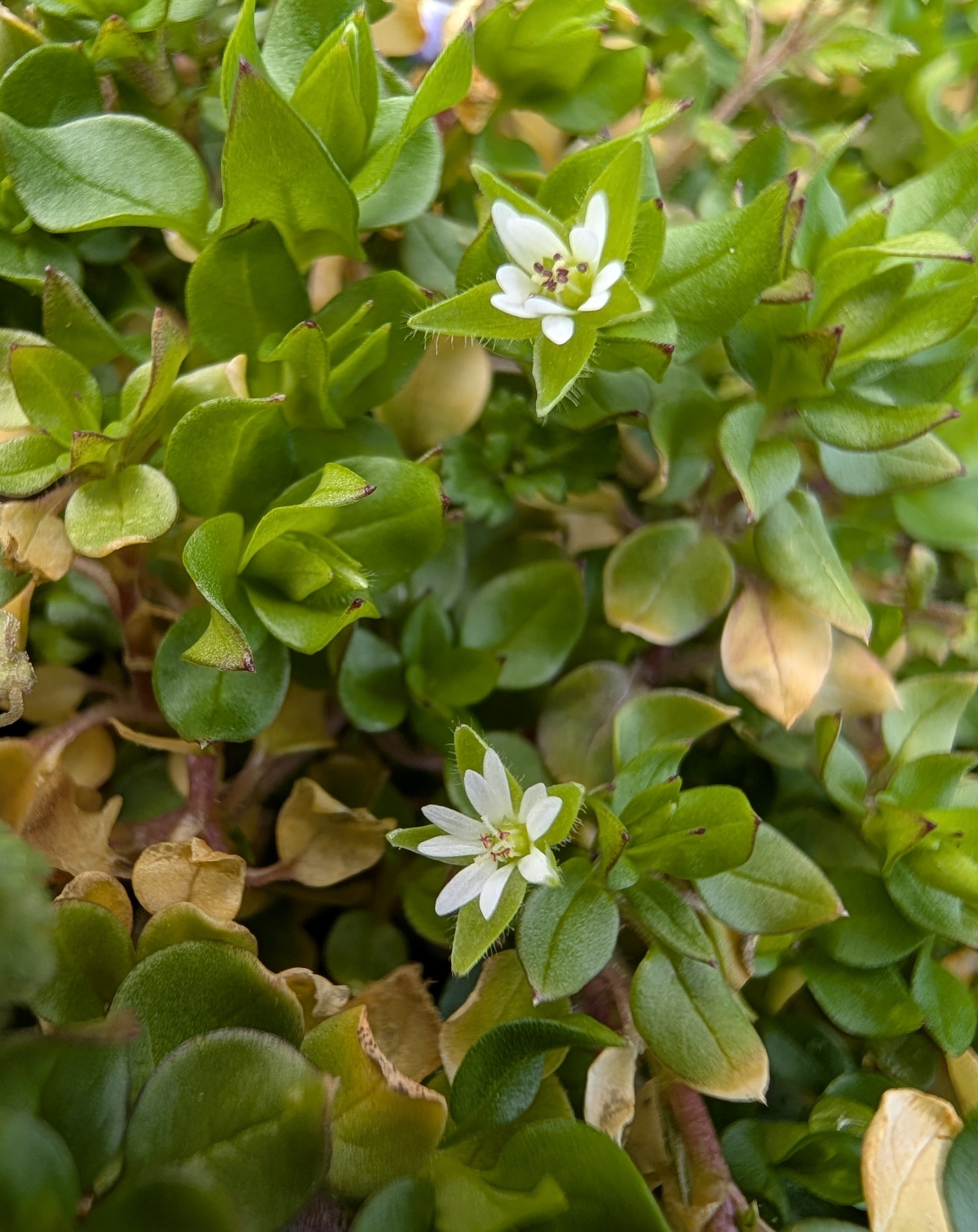
Chickweed can be found growing in dense, green mats when left to its own devices and grows at all times of the year. It doesn’t like hot, dry conditions so in the heat of the summer look for it in moist, shady areas. When it isn’t hot and dry it can be found in many places such as orchards, alongside trails and fields, gardens and lawns. Chickweed is easy to find if you know what to look for, but it has a few look-alikes like Scarlet Pimpernel. Always check for these three specific markers:
- The Single Line of Hair: This is the ultimate ID trick. Chickweed stems have a single line of tiny white hairs that runs up the side, switching positions at every leaf node. (Inedible look-alikes will have fine hairs covering the entire stem.)
- The Starry Flower: Look for tiny white flowers with five petals. Because each petal is deeply cleft, it actually looks like there are ten petals.
- The Elastic Core: If you gently pull the stem apart, the outer green sheath will break, but a thin, stretchy core will remain.
Harvesting Tip: Use scissors to snip the top 2–3 inches of growth. This keeps the plant tender and allows it to regrow quickly for your next harvest.
*Note: This is one plant that you can really harvest heavily without harming its ability to reproduce significantly. Chickweed self-sows abundantly and harvesting the leaves and flowers will just encourage it to grow even more bushy and lush. The main harvesting concern aside from correct identification is to make sure you are harvesting from a clean environment away from pollutants.
From the Kitchen: Chickweed Recipes
Unlike the bold and bitter dandelion, chickweed is mild, succulent, and tastes remarkably like fresh corn silk and cucumber. Chickweed can be eaten raw, chopped into salads, as a substitute for bean sprouts, in green smoothies, juiced like wheatgrass, or blended into a foraged spring pesto. Chickweed really shines best raw but it can also be steamed or lightly boiled, used as a spinach substitute, and in breads, quiche, and soups. Just make sure to add to cooked dishes in the last few minutes to avoid overcooking.
One of the nutritional aspects of chickweed that I am particularly interested is that it is an excellent source of calcium. Because of my Alpha Gal I am forced to be dairy-free so I was happy to see that according to some studies and herbalists, chickweed may contain significantly more calcium than popular greens like spinach – possibly as much as 12 times more! It is also rich in other bone-supporting minerals including magnesium, potassium, phosphorus, and silica. The substantial amounts of vitamin c it has also aids in absorption of these minerals. Furthermore, unlike spinach which is high in oxalates that can block calcium absorption, chickweed is not high in oxalates so the calcium is more bioavailable (your body can actually use it)! It really is just a powerhouse of nutrients!
Pro-Tip: Chickweed also makes for fantastic microgreens!
Note: Chickweed does have fairly high levels of saponins and it can also accumulate nitrates from the soil which can cause gastric distress in some more sensitive individuals when eaten in very large quantities but in the moderate amounts people typically eat greens, it is perfectly safe.
I have included links for a few books from which the below recipes come. I may receive a small commission if you make a purchase through them, at no extra cost to you. I will never recommend something unless I have first hand knowledge of it and genuinely believe it to be valuable.
Culinary Chickweed Recipes
Egg and Chickweed Sandwich
*Recipe from Foraging with Kids
Ingredients
1 egg
dash of vinegar
dollop of mayonnaise (optional)
a handful of freshly picked chickweed, washed and patted dry
2 slices of bread
butter
salt and freshly ground black pepper
Instructions
Put egg into a small saucepan of cold water, making sure there’s enough water to cover the egg. Add a dash of vinegar. Bring water to a boil, and boil the egg for 5 minutes (so that it is hard boiled). Turn off heat and use a slotted spoon to transfer the cooked egg to a bowl of cold water to cool it down. When cool enough to handle, dry the egg with a paper towel, then crack and peel egg in a bowl and mash with a fork, adding a dollop of mayonnaise if you like. Fold in fresh chickweed and sprinkle with salt and pepper, to taste. Butter the bread, then spoon the egg and chickweed mixture onto one slice. Pop the second slice on top and cut in half. Eat and enjoy!
Chickweed Pesto
Ingredients:
2 cups fresh chickweed (packed)
1/2 cup nuts and/or seeds (I used about 1/4 cup pine nuts and 1/4 cup sunflower seeds)
1/2 cup parmesan cheese or nutritional yeast (I used nutritional yeast)
2 cloves garlic or 2 tsp onion powder (I used onion powder)
1/2 cup olive oil
A squeeze of lemon juice
Instructions: Pulse all of the dry ingredients except the cheese/yeast in a food processor. Slowly drizzle in the oil until smooth. Stir in the cheese/yeast and lemon juice. Perfect over fresh sourdough or as a dip for garden veggies.
Garden Green Smoothie
Ingredients:
Handful of fresh chickweed
1 green apple
1/2 cucumber
A splash of raw milk (straight from the dairy!)
Instructions:
Blend and enjoy a fresh boost of vitamins!
Tropical Green Smoothie
*This was my own invention and it is surprisingly delicious – my top culinary pick for chickweed!
Ingredients:
A generous handful or two of fresh chickweed
One ripe banana
A spoonful of almond butter
About 4-6 ounces of water
A spoonful of honey
A couple of ice cubes (optional, I actually did not add them but could be added for a thicker, colder smoothie)
Instructions: Blend until smooth. Enjoy!
Chickweed and Tomato Bruschetta
*Recipe adopted from Mary Dang
Ingredients:
A couple of thick slices of crusty bread (rustic sourdough is perfect!)
A handful of fresh chickweed leaves
One ripe tomato, diced
A clove of garlic, minced
A generous drizzle of extra virgin olive oil
A splash of balsamic vinegar
A pinch of sea salt
A crack of black pepper
Instructions:
1. Preheat your oven to 375°F.
2. Slice your bread into ½-inch thick pieces – thicker slices hold up better against the juicy toppings!
3. Arrange bread slices on a baking sheet and toast in the oven for 5-7 minutes until golden brown and crisp around the edges.
4. While bread toasts, rinse your chickweed leaves thoroughly and pat them completely dry.
5. Dice your tomato into small, uniform pieces and place them in a mixing bowl.
6. Mince the garlic clove finely and add it to the tomatoes.
7. Add the chickweed leaves to the bowl – no need to chop them, their delicate texture is perfect as-is.
8. Drizzle in the olive oil and balsamic vinegar, then sprinkle with salt and pepper.
9. Gently toss everything together until well combined, being careful not to crush the chickweed.
10. Remove the toasted bread from the oven and immediately rub the warm surfaces with the leftover garlic clove halves for an extra flavor boost.
11. Spoon the chickweed and tomato mixture generously onto each bread slice.
12. Serve immediately while the bread is still warm and crisp. Try serving with some extra olive oil for dipping.
Preservation
While chickweed is best used fresh, there are a couple of ways to preserve it for future use in the kitchen. It is a tender, somewhat delicate plant so using heat to process it in any way is not ideal. Forage it in the morning if you can, rinse if necessary, and pat or gently shake dry. I use a salad spinner which works great to remove excess water.
Drying: Hang the clean chickweed in a paper bag in a well-ventilated area. Punch holes in the paper bag to facilitate evaporation. Once the leaves are dry and brittle, place them in a tightly closed jar or other container and store out of light. Dried chickweed can also be reduced to a powder to mix with flour or in soups for flavor, color, and added nutrition.
Freezing: After washing and shaking excess water off, chickweed can be frozen in freezer bags (preferably vacuum sealed). Another method is to freeze in water by blending it into a paste and freezing in ice cube trays. Or, to freeze in oil, chop the chickweed and mix 2 parts chickweed with 1 part olive oil, pour into ice cube trays, and freeze until solid. Once frozen, store cubes in freezer bags with as much air removed as possible. These cubes are great for cooking use later on.
Nature’s Pharmacy: Home Remedies
Chickweed is famous for drawing out impurities, toxins, heat, and for soothing irritations. It is high in mucilage (a slippery, soothing plant tissue) and saponins (natural soap-like compounds). It is a great go-to for stings, splinters, and minor infections. Chickweed is also good for any itchy, inflamed tissue whether it’s eczema, a dry winter rash, or contact dermatitis.
In traditional herbalism, chickweed is known as a lymphatic tonic, which means it helps move stagnant fluids in the body. (Remember the “cleansing the blood” I mentioned earlier?) It helps the body’s natural filtration system work more efficiently. And because of the saponins I mentioned, chickweed is believed to help the body better absorb nutrients by clearing excess mucus from the digestive tract and thinning cell membranes. It can also be helpful for those with minor acid or heat-related digestive issues.
Even cooler, chickweed is a bio-accumulator, meaning it pulls deep minerals out of the soil and concentrates them in its leaves. Chickweed is high in vitamin C (immune system boost!), gamma-linolenic acid (omega-6 fatty acid vital for skin health and reducing inflammation), and the heart and bone healthy trio potassium, magnesium, and calcium!
According to The Lost Book of Herbal Remedies, chickweed can be used for:
- Arthritis
- Roseola and Other Rashes
- Nerve Pain
- Constipation and Digestive Problems
- Skin Irritations, Dermatitis, Eczema, Hives, Shingles, and Varicose Veins
- Detoxification, Blood Purification, Tetanus, Boils, Herpes, and Venereal Diseases
According to The Little Herb Encyclopedia: The Handbook of Natures Remedies for a Healthier Life:
- Chickweed can be applied externally (as a poultice) to any skin problem including boils, burns, and sores in the mouth and throat; abscesses, acne, bruises, and burns.
- A chickweed ointment would be an excellent treatment for diaper rash.
- Chickweed is used for breast inflammation during lactation (internally and externally).
- Chickweed poultices are good for sore eyes and has been used for swollen testes and hemorrhoids.
- Chickweed has been used on fatty tumors.
- Chickweed can help heal stomach ulcers, inflamed bowels, lungs and most any inflammation whether internal or external.
- Chickweed aids in expectoration of phlegm from the lungs, relieves sore throats, lowers fevers and treats stomach and duodenal ulcers.
- Chickweed works to move plaque out of blood vessels and eliminates fatty substances in the system.
- Chickweed strengthens the tissue lining of the stomach and intestines.
- Chickweed can treat blood poisoning internally and externally.
- Chickweed has been used to break down cellulite.
- Chickweed can help allergies, hay fever, gout, gas, cramps, and more.
The Back Yard Pharmacy mentions that chickweed helps to dissolve harmful plaque build-up in arteries, fatty material, and toxins, as well as dissolving and getting rid of excess fat cells. It also helps to strengthen and heal the glandular system, relieve cysts, thyroid problems, ovarian cancer, respiratory and digestive illnesses. And it doesn’t take a concoction that takes weeks or months to make – you can reap the benefits by simply ingesting the fresh leaves. A chickweed poultice can help heal pink eye, conjunctivitis, sties, or even sore eyes from wearing contact lenses.
The Encyclopedia of Natural Remedies makes note that chickweed is a natural antihistamine.
The Lost Ways even mentions that chickweed’s high iron content makes it a valuable treatment for iron-deficiency anemia.
Chickweed really is a miraculous and very under-appreciated little plant. It’s no wonder old-time herbals recommend chickweed for “convalescents, weak children, the anemic, and the elderly”!
Medicinal Chickweed Recipes
Soothing Chickweed and Vinegar Bath: for Rashes
This recipe may support relief for rashes and irritated skin, as well as sunburned skin.
*Recipe from Forgotten Home Apothecary
Ingredients:
1 cup of fresh chickweed leaves or 1/2 cup of dried chickweed
2 cups of apple cider vinegar
Instructions:
In a large pot, bring 4 cups of water to a boil. Add the washed chickweed leaves or dried chickweed to the boiling water. Let it simmer for 10-15 minutes. Strain the chickweed-infused water into a bathtub filled with warm water. Add 2 cups of apple cider vinegar to the bath. Mix the bath water and then soak in the bath for 15-20 minutes, allowing the infusion to soothe the skin. Pat your skin dry after the bath; do not rub vigorously.
Dosage:
Take this bath once a day until the rash or irritation subsides.
Chickweed Tincture – two versions
*Recipe from Midwest Medicinal Plants
Ingredients:
1 part fresh chickweed leaves, chopped
2 parts menstruum (50% alcohol, 50% distilled water)
OR
1 part dry leaves, chopped
4 parts menstruum (50% alcohol, 50% distilled water)
Dosage: Take 15 drops per day
*Recipe from Back Yard Pharmacy
Ingredients:
Fresh, chopped chickweed
Vodka or glycerine mix
Instructions:
Fill any jar, large or small, with fresh, chopped chickweed. Fill it again with vodka or glycerine mix. Wait 4-6 weeks, shaking occasionally. Strain out the chickweed and it is ready to use.
Dosage:
A dropper of the tincture taken 2-3 times per day for 2-12 months for general use. For swollen glands, take 25-40 drops, 4 times daily. Drinking a few cups of mullein tea daily will make it even more effective.
Herbal Bug Spray: for mosquitoes, ticks, spiders
*Recipe from Midwest Medicinal Plants
Ingredients:
1 part catnip tincture
1 part chickweed tincture
1 part Plantain tincture
1 part yarrow tincture
Instructions:
Combine tinctures. Add 1 part tincture mix to 1 part distilled water and pour it into a spray bottle. Add 15 drops of essential oils of lavender or lemongrass, as preferred, per 4 ounces of bottled spray.
Dosage: Spritz the spray on clothing and skin to deter bugs and use it topically to soothe bites.
Chickweed Balm: for Sore Eyes
*Recipe from Back Yard Pharmacy
Ingredients:
4 oz water
4 oz witch hazel
1 tablespoon chickweed tincture
Instructions:
Combine all ingredients in a clean dispenser-top bottle. Shake well.
Dosage:
Wet a cloth with the balm and apply to closed eyes for 3 minutes. Repeat often throughout the day, always using a clean cloth so you do not spread any infection.
Chickweed Tea: for Health
*Recipe from Back Yard Pharmacy
Ingredients:
2-3 tablespoons of fresh chickweed or 2 teaspoons of dried chickweed
1 cup boiling water
Instructions:
Allow the infusion to steep for 5 minutes.
Dosage: Drink two to three cups daily for at least 6 weeks.
Chickweed Tea: for Weight Loss
*Recipe from Back Yard Pharmacy
Ingredients:
3 tablespoons of dried chickweed or 2 hands full of fresh chickweed
Boiling water
Instructions:
Add chickweed to a quart jar and fill it to the top with boiling water. Cap it tightly and wait for at least 1 hour (fresh chickweed) or up to four hours (dried chickweed). Strain and drink it, hot or cold, with honey.
Dosage:
A quart a day is not too much to drink but even two cups a day can help you begin to shed excess fat.
Notes: The saponins in chickweed help dissolve fat cells and clean metabolic waste from other cells, boosting metabolism. It thins cell walls and the mucous lining in the intestines, making your food more digestible and delivering higher levels of nutrition to every part of your body. Since a well nourished body tends not to desire junk food, this also helps weight loss efforts.
Chickweed Infused Oil
Ingredients:
Dried chickweed
Carrier oil of choice (olive oil will give you the most options for use)
Instructions:
Crush the bone-dry chickweed and place in a glass jar. Cover with oil.
-Option 1: Seal and let sit for 6-8 weeks, shaking from time to time.
-Option 2: Seal and gently warm the combined chickweed and oil being cautious not to overheat or burn it. Think 110*F or below. Allow to infuse for at least 30 minutes and up to several hours for a more potent infusion.
Once your choice of infusion process is done, strain the oil to remove the plant material using a fine mesh strainer or cheesecloth. Transfer the infused oil into a dark glass bottle. Shelf life of 1-2 years.
Usage: Massage, skincare, salves, and if you used an edible carrier oil also cooking, drizzled over sourdough, pasta dishes, or salads.
Chickweed Salve
Ingredients:
4 parts chickweed-infused oil
1 part beeswax
1-2% essential oils (optional, but I like the well-rounded benefits of lavender essential oil to boost the effectiveness of the salve)
Instructions:
Melt beeswax and then add your chickweed-infused oil, mixing thoroughly. Once it has cooled some but is still pour-able, add essential oils if desired for fragrance and benefits (about 24-48 drops of essential oil per 4 ounces of salve). Pour the mixture into clean, sterilized containers. Allow salve to cool and solidify before sealing the containers.
Usage:
Apply to anything itchy: eczema, psoriasis, bug bites and stings, hives, allergic reactions.
Use for “drawing out”: splinters, minor infections, boils.
Apply to dry, irritated skin such as chapped knuckles, diaper rash, chafed skin, even minor abrasions.
Soothe minor burns or sunburns (*Note: always let a burn cool under cold water before applying a salve so the beeswax doesn’t trap initial heat.)
This salve is also great for tired, sore feet: rub into your arches for a cooling, anti-inflammatory effect.
Fresh Chickweed Poultice:
For a localized itch, sting, or splinter, simply crush a handful of fresh chickweed in your hand (or if you’re feeling fancy, use a mortar and pestle) until it’s bruised and juicy. Apply it directly to the skin and wrap it with a clean cloth for 20 minutes.
A few other simple uses for chickweed that I wanted to include that can be used in culinary or medicinal capacities:
Chickweed Infused Vinegar
Ingredients:
Fresh or dried chickweed
Apple cider vinegar (or other type of vinegar)
Instructions:
Chop fresh chickweed or grind dried chickweed into fine pieces to increase surface area and enhance extraction. Fill a glass jar loosely with chickweed about half full. Pour vinegar over the chickweed until fully covered by an inch of vinegar. Seal jar with a tight-fitting lid and shake the jar gently to ensure the chickweed is well-saturated. Place the jar in a cool, dark location (for fresh chickweed, the refrigerator would be best) for 2-6 weeks, shaking the jar daily to facilitate the extraction process.
After the steeping period, strain the liquid to remove the plant material using a fine mesh strainer or cheesecloth. (*Note: Don’t toss the plant material in the garbage! Feed that good stuff to your chickens or compost it for your garden!)
Transfer the strained vinegar tincture into dark glass bottles for storage. This should remain shelf-stable for approximately six months and can last longer if refrigerated.
Usage:
This can be used as a base in salad dressings to help with digestion and mineral absorption. It can be diluted with water and used as a post-shampoo hair rinse or facial toner. It can also be poured into a bath as a skin soother.
Chickweed Oxymel
Ingredients:
Fresh or dried chickweed
Raw, unprocessed, local honey
Apple Cider Vinegar (or other type of vinegar)
Instructions:
Chop fresh chickweed or grind dried chickweed into fine pieces to increase surface area and enhance extraction. Fill a glass jar loosely with chickweed about half full if using dried, three-quarters full if using fresh. Pour vinegar over the top until jar is three-quarters full, topping the rest of the jar with raw honey. Seal the jar and let it sit in a cool, dark place for about 2 weeks, shaking daily.
After the infusion period, strain out the herbs using a fine mesh strainer or cheesecloth (again, don’t waste them – feed them to your chickens or garden!) and then pour the Oxymel into a clean glass bottle, seal it, and store it in the refrigerator. It will last for several months.
Usage:
This can be taken by the spoonful for health benefits, added to sparkling water for a refreshing drink, or used in salad dressings and marinades.
Back Yard Pharmacy has numerous other chickweed recipes that I did not include, both for medicinal and culinary purposes.
Note: Always consult with a healthcare professional before starting new herbal remedies, especially if you are pregnant or on medication.
For the Little Foragers: Activities for Kids
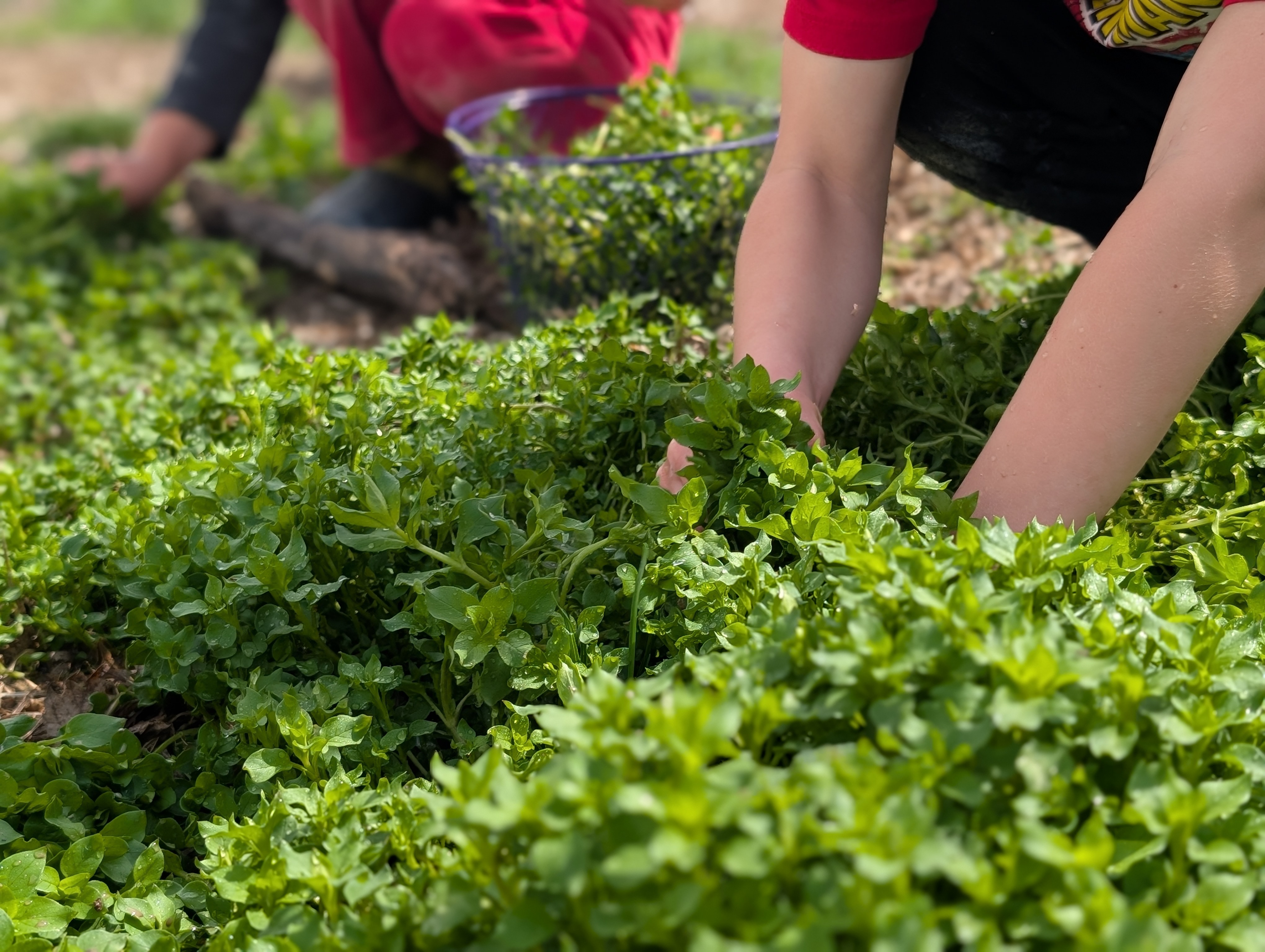
Bringing the kids along for a forage is the best way to teach them about the hidden treasures in our own backyards. My kids have no trouble identifying chickweed in the backyard and love gathering baskets of it to feed their chickens. You can also include the kids in many of the culinary and medicinal recipes by allowing them to help gather and clean the chickweed, prepare in the kitchen, mix, shake, and use!
Some fun chickweed activities for the kiddos:
- The “Stretchy Stem” Test: Let them gently pull the stems to find the “hidden rubber band” inside.
- Star Hunting: Give them a magnifying glass to count the petals on the tiny white stars. They will likely say ten. Then, show them how to look closer to see that it’s actually five petals that are split down the middle. It’s a lesson in double checking the details.
- Chicken Treat Time: As the name suggests, chickens (and goats!) love chickweed. Let the kids gather a basket to toss to the flock—it’s like candy for birds. Just watch out for the ensuing chaos as the flock descends upon the bounty!
- Chickweed Crushing: Have the kids crush fresh chickweed with a mortar and pestle or just use a rock. The resulting paste can be used on any scratches or bug bites they have or mix it with a tiny bit of water to create a natural green watercolor paint for their nature journals or sketchbooks.
- Smoothies: Let them create their own smoothies using chickweed and their favorite ingredients. My kids love to experiment with mixing different things and my son is a big fan of the chickweed smoothies just like his mama!
Bringing Faith into it
1. The Lesson of Hidden Design
As you show the kids the split petals under a magnifying glass, you can talk about how God cares for the smallest details.
- The Verse: “Are not five sparrows sold for two pennies? Yet not one of them is forgotten by God.” — Luke 12:6
- The Lesson: If God designed a tiny, “insignificant” weed with such intricate, starry petals and a specialized line of hair to catch the dew, how much more does He care for the details of our lives? Even when we feel small, we are designed with purpose.
2. Provision in the Lean Times
Chickweed thrives when the rest of the garden is dormant and brown. It is a literal “table in the wilderness” (Psalm 78:19).
- The Verse: “And my God will meet all your needs according to the riches of his glory in Christ Jesus.” — Philippians 4:19
- The Lesson: In the winter seasons of our lives—when we feel spiritually dry or unproductive—God often provides “chickweed” moments: small, bright pockets of grace and nourishment that sustain us until the full spring arrives. He is the God of the lean months just as much as the harvest months.
3. The Drawing Out of the Heart
Use the medicinal drawing property of the chickweed salve as a metaphor for prayer and confession.
- The Verse: “Search me, God, and know my heart; test me and know my anxious thoughts.” — Psalm 139:23
- The Lesson: Just as a chickweed poultice gently draws out a splinter or heat from a wound, God’s Spirit gently draws out the thorns in our hearts—the anxieties, the anger, or the hidden pains—so that true healing can begin. We don’t have to dig at our wounds alone; His grace is the cooling salve.
4. Stewardship of the “Lowly” Things
What the world calls a “weed,” the steward calls a “treasure.”
- The Verse: “The Earth is the Lord’s, and everything in it.” — Psalm 24:1
- The Lesson: Being a good steward means recognizing that nothing God made is truly waste. When we take the time to learn the name of a weed and use it to feed and heal our family, we are honoring the Creator by valuing His entire “broadcasting station” of nature. Chickweed is a very quiet broadcast. It doesn’t have the bright, loud yellow of a dandelion. It’s small, green, and grows low to the ground. Don’t miss the message just because the messenger is small.
Conclusion
Whether you’re using it to soothe a winter rash, tossing it to your chickens, fixing a nutritious snack, or simply marveling at the petal details of its tiny flowers, chickweed reminds us that we are never without provision.
What about Chickweed surprises you the most? Is it the massive calcium boost, its almost endless medicinal uses, or the fact that this unassuming “weed” was so valuable to our ancestors that they brought it with them as a survival crop? Which recipe are you most excited to make? Let me know in the comments—I love hearing from you!

 Radiant Roots
Leave a comment and let me know what you think!