“Motherhood is a constant process of letting go—including letting go of the expectation that you should feel like yourself overnight.”
I never thought I had postpartum depression. There were no crying spells on the nursery floor, no terrifying anxiety, and none of the overwhelming symptoms that medical professionals ask about at your six-week checkup. I wasn’t in a crisis; I was just getting through the days. But now, almost six years later, I am experiencing a quiet, profound realization: I was living in a fog, and I am only just coming out of it.
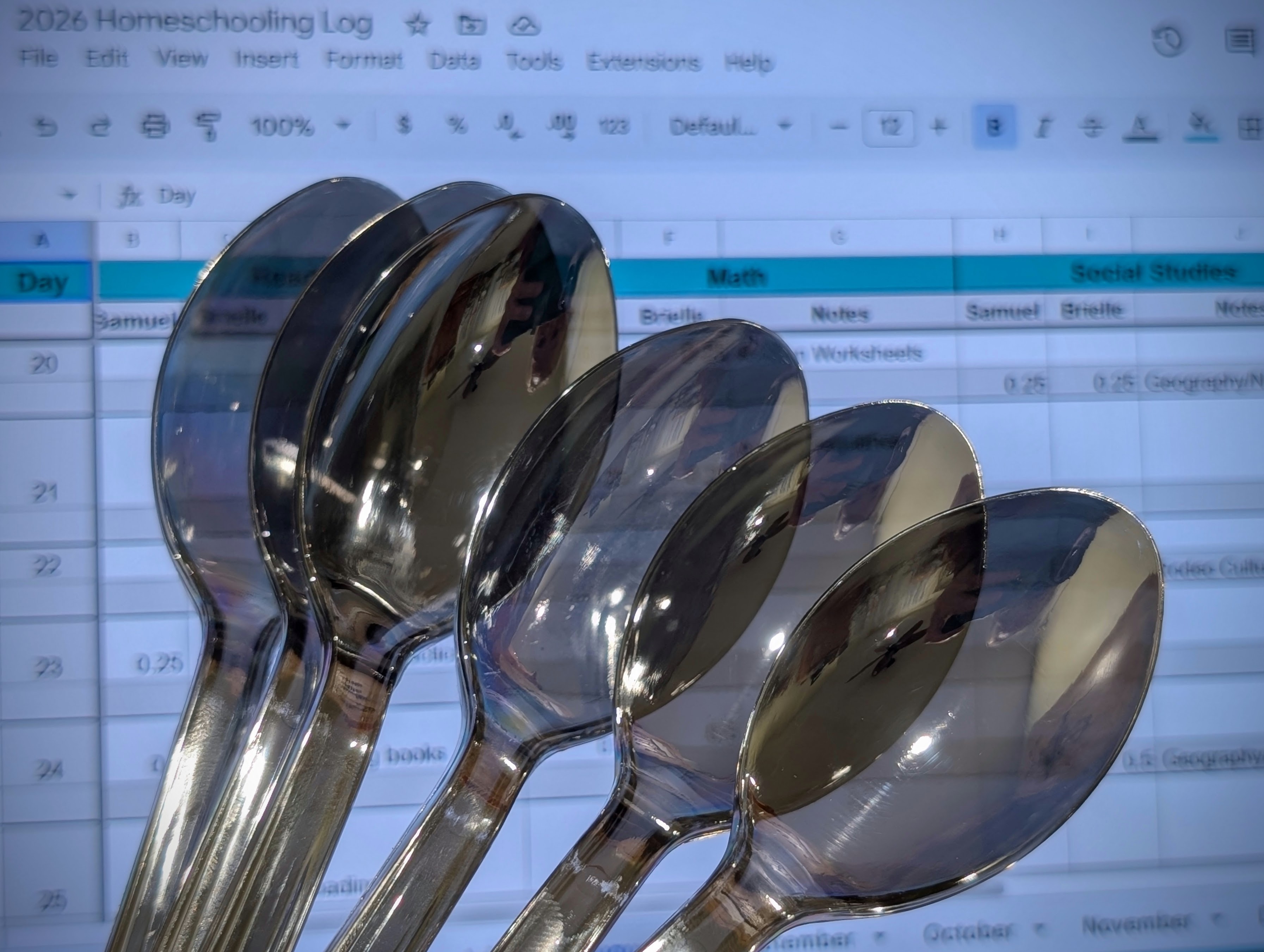
When you’re raising twins through early childhood, survival mode isn’t a temporary phase—it becomes your default setting. If you’re familiar with the concept of “Spoon Theory”—the idea that we only have a limited amount of energy units, or spoons, to spend each day—you know how quickly basic living can drain your reservoir. In those early years, every single spoon is handed over to keeping small humans thriving, safe, and fed. You keep the machinery of family life running, and because you are functional and accomplishing what needs to be done, it never occurs to you that you are operating on mental autopilot. Your brain simply puts every ounce of mental space towards survival. There are no spoons left over for yourself, and no breathing room to even notice what’s missing.
Lately, though, something subtle and wonderful has started to shift. My twins are turning six in about six weeks and growing more independent. As we come into a season of needing to organize for homeschooling, I recently sat down and built a detailed Google Sheets system to log our hours and have a visual of what we need to cover. It sounds like a mundane administrative task, but to me, it felt like a massive breakthrough. Putting this together was tangible proof that my mental capacity was returning. I wasn’t just using every available spoon to react to the next hour’s needs anymore; I finally had enough room to plan, structure, and look ahead.
The waking up didn’t stop with spreadsheets. Over the last several months, as the daily spoon-cost of caretaking has dropped, long-dormant parts of myself have begun trickling back. I feel the urge to sit down and write again. I feel the familiar pull to make art. Even more exciting is the hunger for new things—signing up for classes, going to hands-on workshops, and stepping back into the world as a curious learner in my own right.
For a long time, I wondered if those parts of me were just in my past—if motherhood had flat-out crowded the painter, the writer, and the creator out for good. But standing on this side of almost six years, I can see that those gifts weren’t lost; they were simply waiting.
We need to reframe how we talk about postpartum recovery. It isn’t a six-week doctor’s clearance or a one-year milestone. For many of us, postpartum is a multi-year recalibration of who we are. You don’t just snap back; you slowly rebuild as the tide of survival recedes and your energy returns.
If you are years in and still feel like you’re using every spoon just to stay afloat, give yourself grace. God didn’t design us to live in permanent survival mode. The fog eventually lifts, the light comes back, and you’ll find that the creative gifts He placed inside you aren’t gone; they were simply resting and waiting until the season turned and you are able to find your spoons again.


Leave a comment and let me know what you think!