“Whoever drinks cleaver water for nine weeks shall be so beautiful, everyone will fall in love with them.”
— Ancient Welsh Folk Belief
**Before proceeding with this article, please note that these articles in my foraging for food and medicine series are very in depth and therefore can get a bit lengthy. I utilize a type of expanding detail feature for some things (particularly all the recipes) to help organize the post and make navigation easier. This feature does not work when reading directly from your inbox so if you want a more user-friendly read, please check at the top of your email and you should see an option to read directly on my blog where the features all work as they should. Thank you and enjoy!
If you’ve ever walked through a neglected corner of the garden or along a damp fence line and come back covered in tiny green hitchhikers, you’ve met cleavers (Galium aparine). While many gardeners curse them for their clingy personality, knowledgeable foragers welcome them as one of the most potent internal cleansers of the spring season.
Interesting History of Cleavers
The same “Galium” is from the Greek word “gala”, meaning “milk”. At one time, the plant was used to curdle milk in the process of making cheese (a vegetarian alternative to rennet). The “aparine” part of the name also is of Greek origin; it means to “take hold of”.
People throughout history found brilliant ways to use them:
Ancient Greece: Shepherds used the sticky stems to weave little mats to strain hair and debris out of fresh milk.
Medieval Europe, Early Colonial America, Ancient Norse & Germanic Regions: The name “Bedstraw” (the family cleavers belong to) comes from their use as mattress stuffing. Because the plants “velcro” together, they kept the mattress filling from shifting around or getting lumpy.
Native American Traditions: Tribes like the Cherokee used the native North American varieties as a blood purifier and a cooling wash for itchy skin—very similar to how we use them today!
Pro Tip: Bunches of cleavers can be used to float across a pond covered in thick pond weed or algae to clear the water.
How to Identify Cleavers
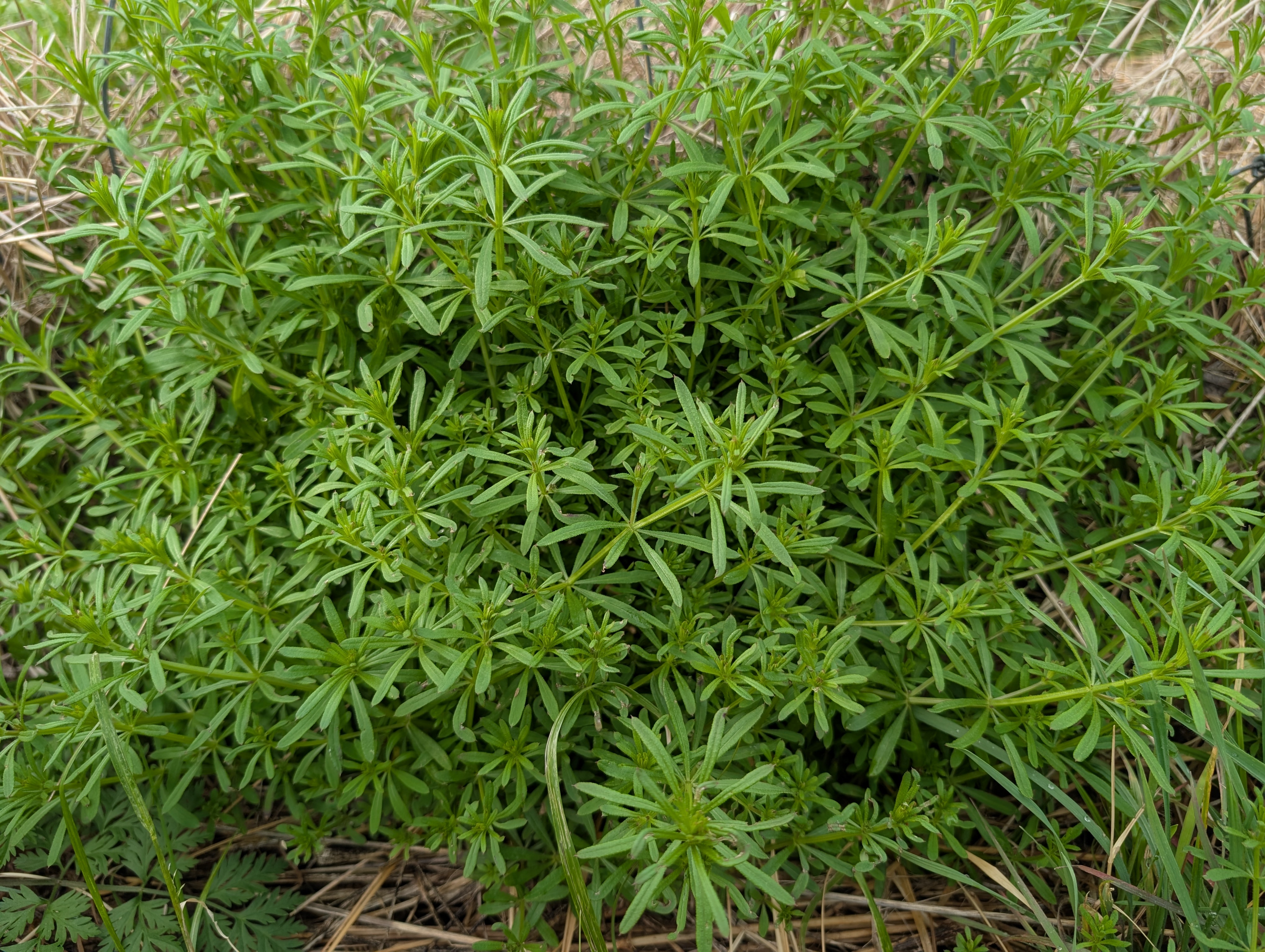
Cleavers are member of the Madder family (Rubiaceae), making them a distant cousin to coffee! Look for these key features:
- The Stem: Square-shaped and weak; they prefer to sprawl or climb.
- The Leaves: Narrow, lance-shaped leaves arranged in whorls (circles) of 6 to 8 around the stem.
- The Texture: The entire plant feels like Velcro or fine sandpaper due to microscopic hooked hairs.
- The Flowers: Tiny, four-petaled white flowers that eventually turn into small, round, sticky seed pods.
Look-a-Likes
Identifying Cleavers is generally very safe because most of its cousins in the Galium family are non-toxic. However, there are a few plants that look similar enough to warrant a second look, especially if you’re harvesting for medicine or food.
Here is how to tell them apart:
1. The Safe Cousins (The Bedstraws)
Most plants you’ll mistake for Cleavers are just different species of Bedstraw.
- Sweet-Scented Bedstraw (Galium triflorum): This is the most common look-alike.
- How to tell: It’s much smoother and doesn’t stick to you nearly as well as true cleavers. If you crush the leaves, it smells like sweet hay or vanilla (due to coumarin), whereas cleavers just smell like greens.
- Smooth Bedstraw (Galium mollugo): This one looks very similar but, as the name suggests, it lacks the sticky hooked hairs. If it doesn’t cling to your sleeve, it’s not the cleavers you’re looking for.
2. The One to Watch: Sweet Woodruff (Galium odoratum)
This is the most important look-alike to identify because it can be toxic in large doses (it contains high levels of coumarin, which can cause headaches or dizziness).
- The Difference: Sweet Woodruff is a perennial that grows in tidy, dark green mats. Its leaves are broader and firmer than cleavers, and it has beautiful, upright clusters of white flowers. Most importantly: it isn’t sticky. It won’t hitchhike on your clothes.
3. The “Beefy” Sibling: Dyer’s Madder (Rubia tinctorum)
If you see something that looks like a giant, woody version of Cleavers, it might be Madder.
- The Difference: Madder has much thicker, prickly stems and leaves that feel more like sandpaper than velcro. It also produces yellow flowers and dark berries, whereas Cleavers have tiny white flowers and green/tan sticky ball-like seeds.
Field Fling Test
Pick a small piece and toss it at your sweater:
- If it sticks immediately: It’s almost certainly Galium aparine (Cleavers).
- If it falls off: It’s likely one of the smoother bedstraws or Sweet Woodruff.
Rule of Thumb: If it’s not sticky, don’t put it in your tea!
Harvesting Tips
When: Spring is the prime time, before the plant starts to flower and the stems become too stringy. Where: They love nitrogen-rich soil, damp shady spots, and the base of hedges. How: Simply pull them up (they have shallow roots) or snip the top 6 inches. If you have sensitive skin, you might want to wear gloves, as the tiny hooks can cause a mild grass burn for some.
In the Kitchen
While you can eat cleavers raw, the texture is…well…like eating velcro. They are much better prepared in ways that break down those tiny hooks. They can be used as a cooked vegetable or the seeds can be dried and roasted. Cleavers are full of chlorophyll and vitamin C so they are a good addition to green smoothies or juice them like wheatgrass.
I have included links for a few books from which the below recipes come. I may receive a small commission if you make a purchase through them, at no extra cost to you. I will never recommend something unless I have first hand knowledge of it and genuinely believe it to be valuable.
Cleavers Culinary Recipes
Cleavers Omelette
*This recipe is from Foraging with Kids
Ingredients
2 large eggs (farm fresh is best!)
1 tsp cold milk
1 small handful fresh cleavers, washed and patted dry and torn into small pieces
knob of butter
dash of oil
salt and freshly ground black pepper
Instructions
Crack eggs into a mixing bowl, add the milk and a pinch each of salt and pepper, then whisk with a fork until very well blended. Stir in the cleavers. Melt the oil and butter together in a heavy frying pan over a low heat. Turn the heat up and quickly pour in the egg mixture, swooshing it gently around in the pan so that the mixture is evenly spread over the base. Cook for 3 minutes, then use a spatula to lift the edge of the omelette and carefully fold it in half. Cook for another 1 minute, then carefully turn it with the spatula and cook the other side for about 1 minute, or until pale golden brown, then slide the omelette onto a warmed plate and serve.
Green Rice
*Recipe from The Forager’s Guide to Wild Foods
Ingredients
2 cups rice or other grain
1 cup clean, trimmed, and chopped young cleavers leaves and stems.
Instructions
Cook the rice. At the last stages of cooking, once the rice is fully cooked byt still steaming, throw the cleavers on top and replace the lid. Let it steam for an extra 10 minutes. Fold steamed leaves into rice. Serve warm.
A few more simple uses for cleavers in the kitchen:
- Spring Tonic Cold Brew: This is the most traditional way to enjoy them. Chop a handful of fresh cleavers, place them in a jar of cold water (I also bruise/crush them up a bit to release all their goodness), and let them steep in the fridge overnight. Strain and drink the next day for a refreshing, cucumber-like flavor. It is actually quite refreshing and also makes a lovely base for a green smoothie such as the tropical green smoothie in Chickweed: The Forager’s Winter Star. Just use the cleaver cold brew instead of water.
- Cleaver Green Smoothie: Blending them completely destroys the sticky texture. The key word being “completely”. My blender is not quite strong enough apparently. The cold brew is definitely my preferred method.
- Cleaver Succus: If you have a juicer, you can juice the fresh stems and leaves. If you don’t, you can put the cleavers in a blender with just enough water to blend. Add a shot of this to a morning smoothie for an instant energy boost. Freeze in cubes to use later.
- The Coffee Substitute: If you let the plant go to seed, you can harvest the little round seeds, roast them, and grind them. Since they are related to the coffee plant, they offer a remarkably similar (though caffeine-free) flavor.
Medicinal Benefits: The Lymphatic Mover
Disclaimer: I am not a doctor. Always consult with a medical professional before introducing new wild herbs into your diet, especially if you are pregnant, nursing, or have existing health conditions.
Did You Know?
If you were to drink an infusion of cleavers every day for three weeks, you would not only detoxify your body’s internal systems, but in turn help to clear and bring a healthy glow to your skin.
In the world of herbalism, cleavers are the janitors of the body. They are a powerhouse for the lymphatic system. Cleavers are astringent, anti-inflammatory, diuretic, detoxifying, and can help reduce/prevent fever. It is effective both internally and externally. According to The Lost Book of Herbal Remedies, cleavers can be used for:
- Rejuvenate the Skin, Slow the Signs of Aging
- Detoxify the Body, Drain the Lymphatic System, and Swollen Glands
- Skin Disorders, Acne, Psoriasis, Eczema, Abscesses, and Boils
- Kidney Stones, Bladder and Urinary Tract Infections
- Cancer
- Chickenpox, Measles, and Fevers
- Stop Bleeding, Burns, and Sunburns
- Tonsillitis, Sore Throat, Glandular Fever, and Prostate Problems
According to The Lost Ways, cleavers can be made into a poultice to use on wounds, ulcers, seborrhea, eczema, psoriasis, and other skin problems. An infusion can be used to treat glandular Fever, tonsillitis, hepatitis, cystitis, and tonic. It relieves constipation and induces sweating.
- Lymphatic Support: Cleavers help move fluid through the body, making them excellent for swollen glands, “puffy” feelings in the spring, or minor urinary tract support.
- Skin Soother: Applied topically as a poultice or a wash, cleavers can help soothe hot, itchy skin conditions like eczema, psoriasis or dermatitis or for insect bites and stings.
- Detoxification: After a winter of heavy foods, a cleaver infusion helps flush the kidneys and clear the blood.
- Skin Health: Because it clears the internal sewer system of the body, it often clears up external issues like acne or eczema from the inside out.
- Liver Restorative: help build the liver back up in times of jaundice and hepatitis.
Cleaver Juice
*Recipe from The Lost Book of Herbal Remedies
Ingredients
Fresh cleavers leaves
Water
Instructions
Wash the fresh leaves thoroughly and place them in a blender with a small amount of water. Use only as much water as needed to blend. Blend the leaves into a pulp and strain out the juice with a fine sieve. You can make a large batch of juice and freeze the extra. Most people drink 2 cups daily to treat cancers and tumors.
Lymphatic Cleanser
The lymphatic system plays an important role in immune function, helping to remove waste and toxins from the body. Herbs such as cleavers and red clover are traditionally used to support lymphatic health by promoting lymphatic drainage and circulation.
*Recipe from Forgotten Home Apothecary
Ingredients
2 tablespoons dried cleavers
2 tablespoons dried red clover blossoms
4 cups of water
*Optional additions: for added flavor and benefits, add other lymphatic herbs such as burdock root or dandelion leaf. Consider adding a splash of lemon juice or a drizzle of honey to enhance flavor.
Instructions
Combine the dried cleavers and red clover blossoms in a teapot or heatproof container. Bring 4 cups of water to a boil and pour the boiling water over the herbs. Cover and let steep for 15-20 minutes to extract the beneficial compounds. Strain the herbal infusion using a find mesh strainer or a cheesecloth into a clean container.
Dosage
Drink 1-2 cups of the herbal infusion daily. For a more intense cleanse, you may drink up to 3 cups per day for a limited period, typically 1-2 weeks.
*Note: Pairing this herbal remedy with gentle exercise, such as yoga or walking, can further support lymphatic circulation.
Cleaver Infusion: wash the plant, place into either hot or cold water. If hot, leave for 10-15 minutes and then drink. If cold water, leave for a few hours and then drink.
For the Kids: Sticky Science
If you’re looking for a nature study lesson, try these:
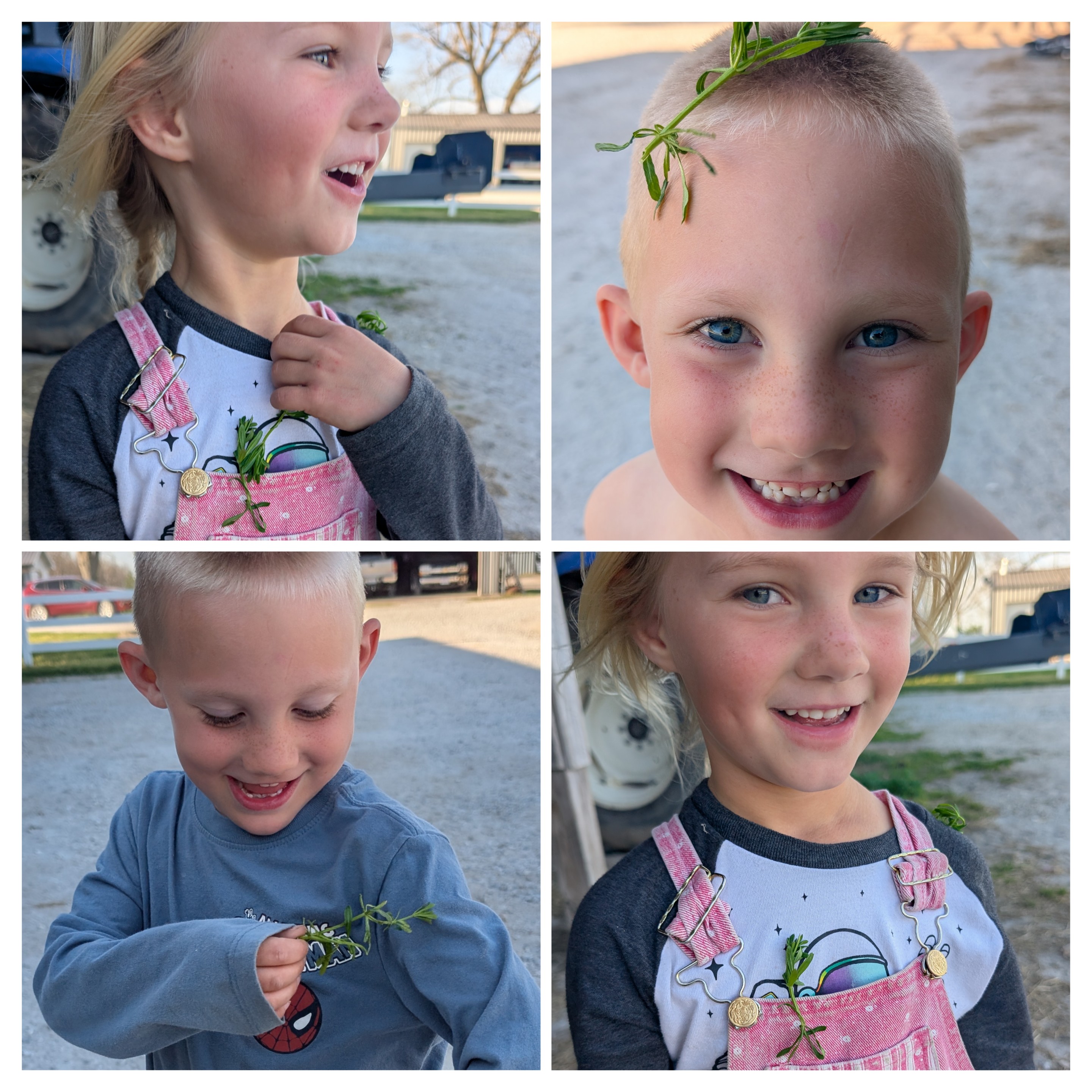
- Nature’s Stickers: See who can get the biggest patch of Cleavers to stick to their back without using any hands. My kids just enjoyed running around and seeing who could throw the most cleavers onto someone else’s clothing and/or hair!
- The Seed Race: Talk about seed dispersal. Attach some cleaver seeds to a piece of wool or an old sock and see how far they stay attached while running. This is exactly how the plant travels in the wild—by hitching a ride on passing animals!
- Cleaver Art: Use the sticky stems to “draw” shapes on a piece of felt or fabric. They will stay put, allowing for 3D textured art.
- Water Magic: Watch the tiny hairs trap air bubbles when you submerge a stem in water—it looks like it’s covered in silver! (*Note for older kids: those tiny hairs are called trichomes – a great vocabulary word for a nature study!)
- The Mayflower Connection: Talk about how early settlers used dried Cleavers to stuff mattresses because the sticky nature kept the bedding from matting down. You can even craft your own little cleaver-stuffed pillow with them!
- Chickens! Cleavers are another fun treat the kids can feed their chickens! (Our chickens get the plant matter that is strained out after making cold brews and the cleavers that have been tossed around in fun!)
A Faith-Based Reflection
Cleavers remind me of how we are called to cling to what is good (Romans 12:9). Just as this plant uses every tiny hook to hold fast to its support, we should be intentional about what we attach ourselves to. Sometimes, being sticky isn’t a nuisance—it’s a survival strategy for staying upright in a messy world.
Whether you see them as a garden pest or a sticky childhood memory, cleavers are a beautiful reminder that God provides exactly what we need, exactly when we need it. As the world wakes up around us, these little hitchhikers offer us a chance to clear out the old and make room for the new. So, the next time you find a sprig of sticky greens clinging to your sleeve, don’t be so quick to pick it off. Take it as an invitation to slow down, head to the kitchen, and embrace the wild, wonderful medicine growing right at your doorstep. Happy foraging!


Leave a comment and let me know what you think!