“Nature is a first-aid kit, and the world is a garden; we need only to look down to find the remedy.”
**Before proceeding with this article, please note that these articles in my foraging for food and medicine series are very in depth and therefore can get a bit lengthy. I utilize a type of expanding detail feature for some things (particularly all the recipes) to help organize the post and make navigation easier. This feature does not work when reading directly from your inbox so if you want a more user-friendly read, please check at the top of your email and you should see an option to read directly on my blog where the features all work as they should. Thank you!
Known to Native Americans as “White Man’s Foot” because it seemed to spring up wherever European settlers walked, Plantain (Plantago major and Plantago lanceolata) is one of the most resilient and versatile medicinal herbs you can find. It thrives in high-traffic areas where other plants give up, literally offering itself up to be stepped on so it can be there when you need a quick remedy for a bee sting or a scraped knee.
Did you know?
Long before it reached American shores, plantain was a hero of the old world:
- The Vikings: They used the leaves to heal battle wounds, calling it groblad (literally “healing leaves”).
- The Saxons: It was listed as one of the Nine Sacred Herbs in ancient Anglo-Saxon lacnunga (medicinal texts).
- Shakespeare: Even Romeo mentions it in jest in Romeo and Juliet, saying, “Your plantain leaf is excellent for that,” when referring to a broken shin (slang for a broken heart).
How to Identify Plantain
Plantain grows as a basal rosette, with either broad or narrow leaves, depending on the species.
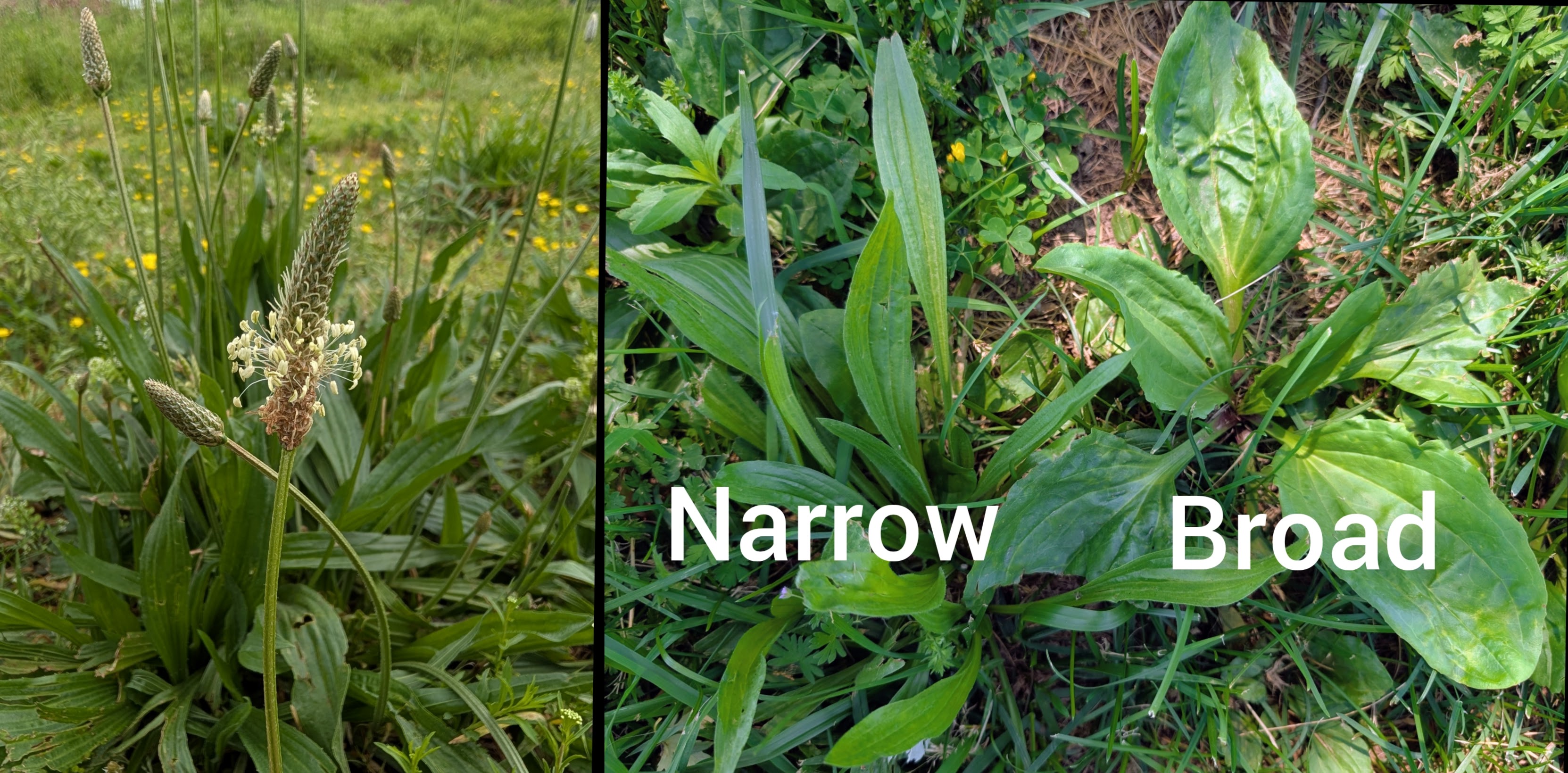
- Broadleaf (Plantago major): Features wide, oval leaves with 5–7 prominent parallel veins running from the base to the tip.
- Narrowleaf (Plantago lanceolata): Long, slender, lance-shaped leaves, also with distinct parallel veins.
- The String Test: If you snap the stem of a leaf, you’ll see tough, elastic-like strings (similar to celery) inside the veins.
- The Seed Head: Both varieties produce a central stalk with a dense cluster of tiny seeds that look like a miniature, skinny cattail.
Where to Look: Plantain grows abundantly in fields and disturbed areas. It likes to grow where people live: yards, parks, cracks in the sidewalk, on the trail.
In the Kitchen: Culinary Uses
While not as gourmet as pineapple weed or chickweed, plantain is a nutritional powerhouse, packed with calcium, potassium, iron, sulphur (a mineral known to purify the body and is involved in collagen formation) and vitamins A, C, and K. The leaves are edible at all times but grow more tough and bitter as they mature. Use them raw in salads or cook them as a pot herb. The seeds are also edible, either raw as a trail snack, ground into flour, incorporated into a nut and seed granola bar, or even fermented into a fermented wild kimchi with other wild seeds. Plantain seeds can also be used as a chia seed substitute. It is also said that if you eat the seeds for at least three days that the bugs won’t bite you and mosquitoes will be repelled.
Did you know?
Greater plantain leaves can add a very distinctive fragrance and flavor to cooking. On a dry day, find 3 or 4 leaves that are not too muddy and crumple them up in your hands. Start to rub the leaves between your hands, first slowly, then faster. Rub them vigorously together for at least 2 minutes. This will heat up the leaves so that it releases its oils – the oils which produce the scent and flavor. Now, stop rubbing and sniff the pulpy leaves. What do you smell? If you can’t place the scent, it smells like mushrooms and/or truffle oil (if you’ve ever priced a good truffle oil, you will know it is very expensive). Plantain leaves are a good way to create mushroom/truffle flavors in dishes – for free!
Culinary Plantain Recipes
Risotto with Greater Plantain Leaf “Truffle” Oil
**This recipe is from Foraging with Kids
Ingredients
1.5 teaspoons vegetable oil
generous knob of butter
1 red onion, finely chopped
2 garlic cloves, crushed
1.5 cups risotto rice
32 fl oz vegetable stock
1/2 cup frozen peas
7 oz strong cheddar cheese, grated
8 large greater plantain leaves, washed and patted dry
green salad, to serve
Instructions
Melt the oil and butter in a large frying pan, preferably with a lid, over medium heat. Add onion and cook, stirring, for about 7 minutes, then add the garlic and cook for a further minute, until golden. Turn the heat down a little and add the rice, stirring continually for a minute or so, until the grains are covered in the oil/butter. Don’t let the rice burn! Add half the stock, then turn the heat to medium and cook for 10 minutes, stirring all the time. Add the remaining stock, little by little, stirring well so that the rice absorbs the liquid gradually. Add the peas, lower the heat again, put the lid on the pan and cook for a further 15 minutes, stirring occasionally, until all the liquid has been absorbed. Stir in the cheese, then remove the pan from the heat. Pop the plantain leaves on top of the rice, put the lid on the pan (or cover it with foil) and let it stand for 10 minutes before serving, so that the flavor of the leaves can infuse the rice. Remove the plantain leaves and give the risotto a final stir before serving, with a salad on the side.
“Black Truffle” Creamed Corn
*This recipe is my own variation of an absolutely delicious recipe using real truffles and truffle oil that I got from my cousin (this is when I discovered the astronomical cost of truffle products!)
Ingredients
- 2 qt. White Corn Kernels Freshly removed
- 2 tbsp. Olive oil
- 1 ½ cups onion yellow minced
- ½ cup shallots sliced into thin rings
- 2 tbsp. Garlic minced
- ½ cup dry vermouth
- 2 cups Heavy Cream
- 2 tbsp Greater Plantain Infused Oil (see Note 1 in instructions below)
- 2 cups aged white cheddar
- 1.5 tsp. Ground Black Pepper
- 1 tbsp. Kosher Salt
- several handfuls of young, tender plantain leaves (see Note 2 in instructions below)
- 1 tsp. Thyme fresh
- 2 tbsp. Fresh Chives Finely cut
Instructions
Note 1: Infuse your choice of oil (such as olive oil or avocado oil) with plantain leaves by taking 1 cup of fresh, young, washed and completely dry leaves, and roughly chop or bruise the leaves to break the cell walls. Place the leaves and 1 cup of oil in a small saucepan or double boiler. Warm on the lowest possible setting for 1-3 hours. Do not let the oil bubble or fry the leaves as this will ruin the delicate “truffle” flavor/scent. Once the oil is infused, strain through a fine meshed sieve or cheesecloth, squeezing firmly to extract every drop of flavorful oil. This infused oil can be kept in a clean glass jar in the fridge for up to 1 week.
Note 2: Plantain leaf prep. Use young, tender leaves. Blanch them quickly in boiling water for 30 seconds and then shock them in ice water. Finely mince about 1/2 – 3/4 cup of the blanched plantain leaves.
- Preheat oven to 350 degrees Fahrenheit.
- In a large pot, add your olive oil and heat over medium heat. Add your onions and shallots and sauté for about 6 minutes, or until translucent. Add your garlic and blanched plantain leaves and sauté an additional 3 minutes. Add your fresh corn and sauté for 3 minutes until the corn has slightly softened.
- Deglaze the pan by adding your vermouth and scrape the bottom of the pan to make sure all of the brown bits are removed. Cook your vermouth 2 minutes, until the odor of raw alcohol begins to fade. Add your cream, plantain-infused oil, salt and pepper to the pot. Once it begins to simmer again with small bubbles, remove the pot from the heat and add in your thyme, and cheddar.
- Take a 9×9 square baking dish or large gratin dish and grease with butter. Add your mixture to the dish and bake at 350F for about 18-20 minutes, until the top begins to turn lightly golden brown and the edges are bubbling.
- Garnish with chives.
A few more simple culinary uses for plantain:
- Wild Seeds: The seed heads can be harvested, dried, and ground into a flour or used whole in crackers for an extra boost of fiber and protein.
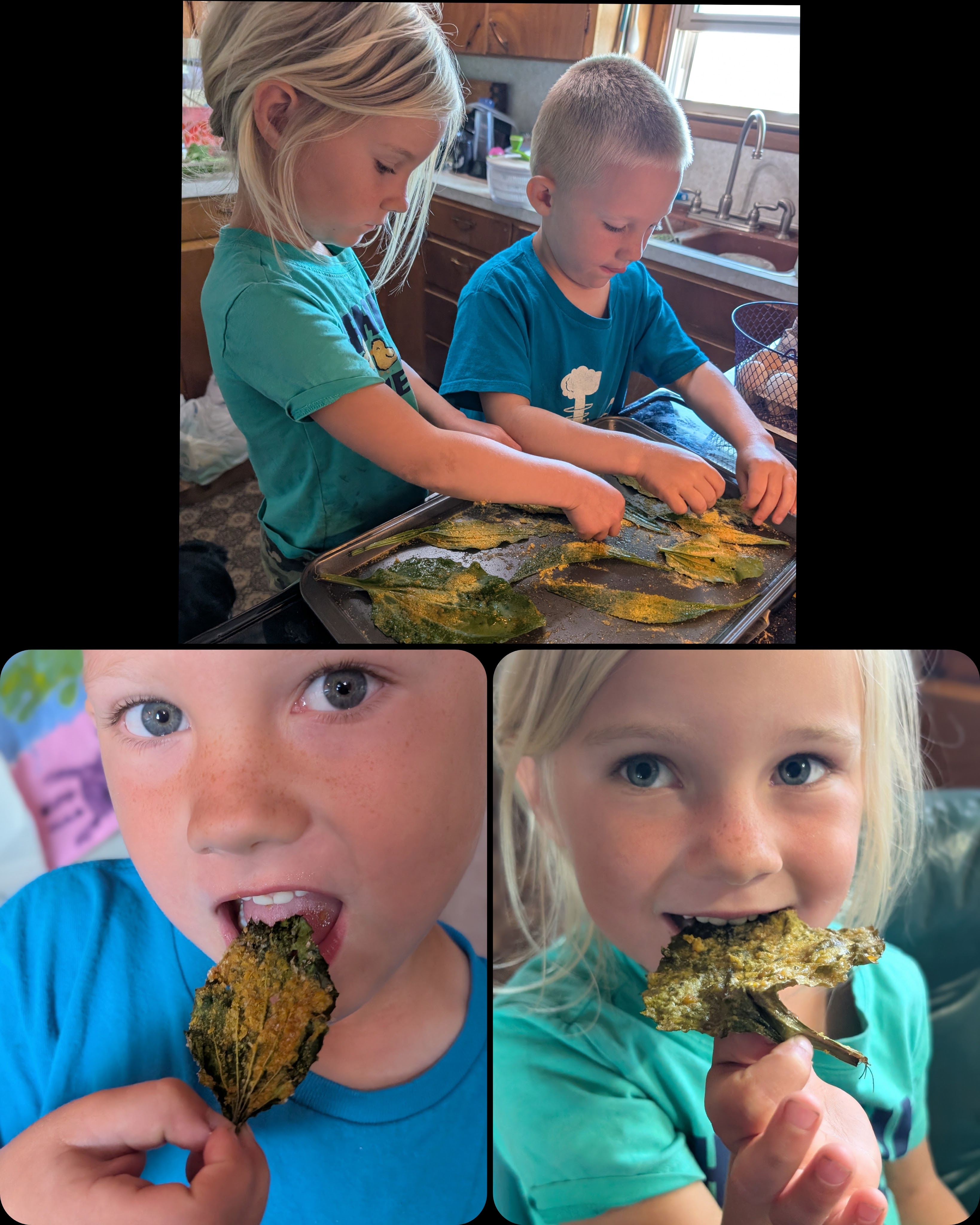
- Plantain Chips: Similar to kale chips, brush larger leaves with olive oil, sea salt, and any other desired seasonings (we enjoy nutritional yeast and salt), then bake at 250 *F for 12-14 minutes or until crisp. *Note: We prefer the broadleaf plantain for this snack.
In the Apothecary: Medicinal Uses
Plantain is famous for its ability to draw toxins, stingers, and heat out of the skin. It is used for infections, inflammation, stings, snakebites, cuts, wounds, sores, poison oak and ivy, swellings, rashes, sore throats, etc.
I have included links for a few books from which the below recipes come. I may receive a small commission if you make a purchase through them, at no extra cost to you. I will never recommend something unless I have first hand knowledge of it and genuinely believe it to be valuable.
According to The Lost Book of Herbal Remedies, plantain can also be used for cystitis, diarrhea, respiratory tract infections, ulcers, colitis, auto-immune diseases, leaky gut, toothache, constipation, intestinal worms, and inflammatory bowel disease. And according to Midwest Foraging, plantain seeds are useful as a binder ingredient in gluten-free baking, a great addition to smoothies, and good for anyone who wants to add a healing fiber to their diet.
Medicinal Plantain Recipes
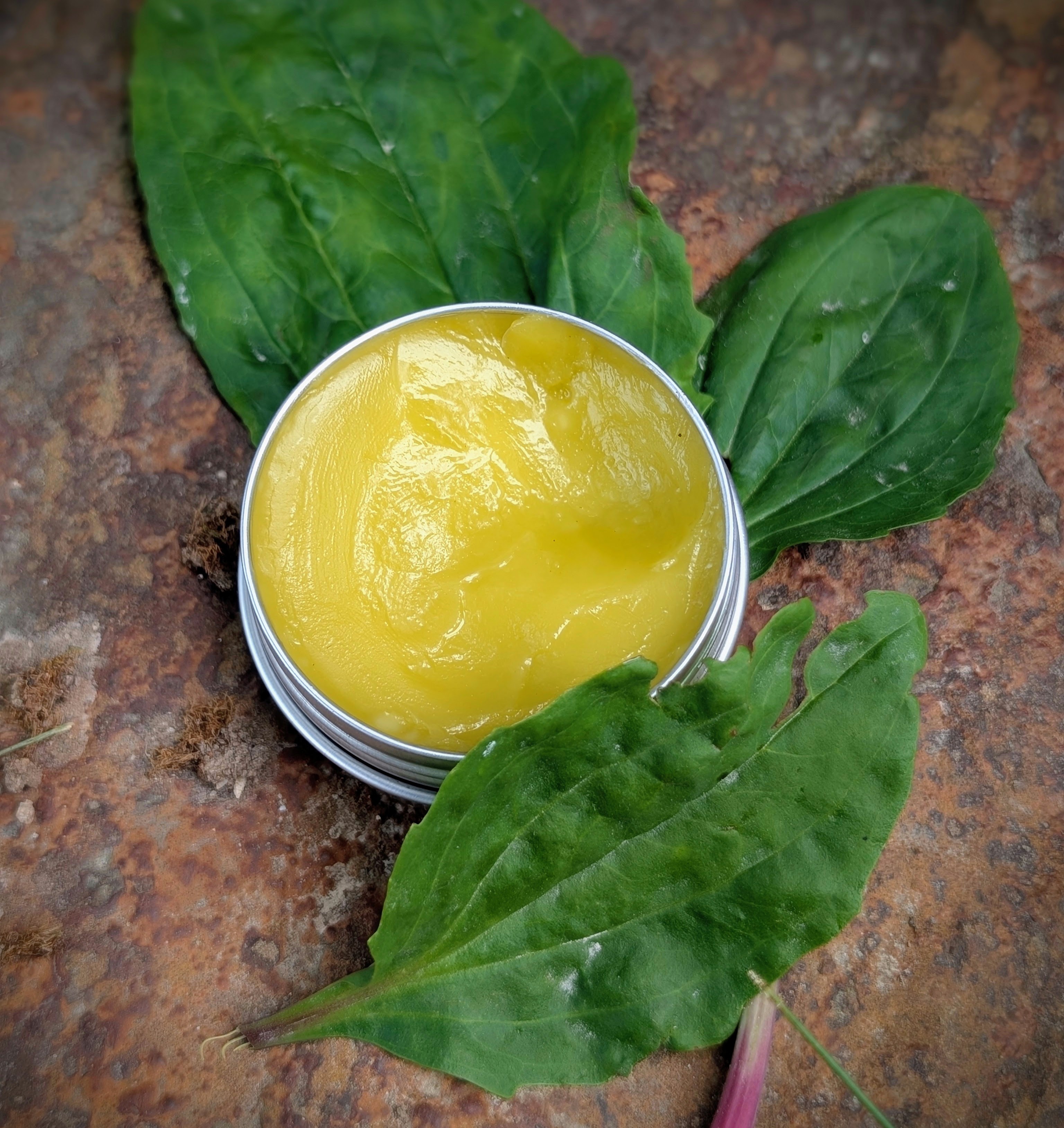
Plantain Band-Aid Balm
Plantain is soothing, anti-inflammatory, anti-microbial, anti-bacterial, and promotes healing. This is my kids’ go-to for any and all bug bites. You can also add other complementary herbs such as yarrow, comfrey, calendula, lavender, chamomile, pineapple weed, and/or chickweed.
*Recipe from Forgotten Home Apothecary
Ingredients
2 tablespoons of fresh plantain leaves
1/4 cup olive oil
1 teaspoon beeswax
Instructions
Finely chop the plantain leaves and let air dry for a day or two so the leaves are free of any moisture. Combine the chopped leaves with olive oil and heat the mixture on low heat for about 30-40 minutes, ensuring it doesn’t boil. Strain the infusion through a fine mesh sieve or cheesecloth into a heatproof container. Melt the beeswax on low heat and then add to the infused plantain oil. Stir well. Pour mixture into a small container or tin. Allow to cool and solidify.
Dosage
Apply a small amount of the balm to the affected area as needed.
Plantain Seed Infusion
*Recipe is from The Lost Book of Herbal Remedies
Pour 1 cup of boiling water over 1 teaspoon of plantain seeds. Allow to steep while it cools. Drink the tea and the seeds.
Dosage
Drink 1 cup at bedtime for relief of constipation.
Plantain Tincture
*Recipe is from The Lost Book of Herbal Remedies
Fill a glass jar with fresh plantain leaves that are chopped into small pieces (or half a jar of dried plantain leaves). Pour 80 proof vodka or other drinking alcohol over the leaves and fill the jar, making sure all the leaves are covered. Cap the jar tightly. Let the tincture sit for 6-8 weeks, shaking occasionally. Pour through a fine-mesh sieve, cheesecloth, or coffee filter to remove all the leaves. Store the tincture in a cool, dark place for up to 5 years.
Dosage
1/2 – 1 teaspoon
Plantain Tea
*Recipe from A Kid’s Herb Book
Fill a pot with fresh plantain leaves or use a heaping teaspoon of dried leaves per cup of water. Pour boiling water over the plantain and cover. Let sit for 15-20 minutes. Cool, strain, and drink or use as a wash.
Dosage
As a wash for skin conditions such as poison ivy, measles or other skin eruptions: Dip a washcloth into the tea and wash the desired area with it. Let the tea air-dry on the skin. Repeat several days as needed.
As a tea for many uses: For children, drink 1/4-1/2 cup every 2 hours or as needed. Sweeten if desired.
*Note: according to Midwest Foraging, plantain tea can be helpful in a combination with slippery elm or marshmallow root, along with a dollop of raw, local honey, to help soothe a dry, raspy cough.
A couple more simple medicinal Plantain Recipes:
- The Spit Poultice: The ultimate field remedy. Chew a clean leaf into a paste and apply it directly to bee stings, spider bites, or nettle rashes for instant relief. I have done this multiple times for myself and my children. It is quite effective. You can also just mash it up – spit is optional.
- Skin Repair: Plantain contains allantoin, which promotes skin cell regeneration. It is a vital ingredient in black drawing salves or healing balms for cracked hands and minor wounds. Mash and apply directly to minor wounds or make a balm as outlined in the above recipe.
Kid Activities & Homeschooling
Plantain may look plain but kids can have a lot of fun with it! Check out these fun (and educational!) activities:
- Plantain Window Picture (art, physics, botany): Pick a few plantain leaves, wash and dry completely on a towel. Cut two pieces of waxed paper larger than the plantain leaves. Lay one sheet of waxed paper down and place the plantain leaves on it in any shape or design you choose. Then lay the second sheet of waxed paper on top of the plantain leaves. Put a towel over this plantain “sandwich” and lightly iron it until the two sheets of waxed paper stick together. Trim the edges of the waxed paper and punch a hole in the top to thread a string through. Hang the plantain picture in a window where light can shine through it and show the details and veins in the leaves better.
*Homeschooling note: You can discuss with as much detail as you want – I.e. the veins (xylem and phloem) aren’t just for decoration—they are the pipes that carry water and food from the soil up to the very tip of the leaf. You could also hit upon transparency vs. opacity, phase changes (wax from solid to liquid and back again), symmetry (fold a plantain leaf in half to show bilateral symmetry). - Art Rubbing (art, biology, botany): The long, ribbed leaves of plantain make it very good for leaf print rubbing. You can add in leaves from other plants for variety if you like. Use thin paper and soft colored pencils, crayons or chalk. Place your chosen leaves on a hard surface and cover them with a sheet of paper. Hold the paper securely in place. Using light pressure, rub your choice of color over the leaves until the leaf details appear on the paper.
*Homeschooling note: You can discuss how the ribs in the leaf give it structural integrity and compare the stronger “skeleton” of plantain compared to more fragile leaves like maple or oak. You can have them do rubbings of both broad and narrow leaf plantain and compare as their first step into botanical classification. - The Strength Test (physics, science, botany): Show the kids the parallel veins. Have them try to pull a leaf apart sideways versus lengthwise to see how the strings protect the plant.
- Nature’s Band-Aid (health, biology/chemistry, botany, life skills): Have the kids practice making a proper poultice to apply to wounds. It’s a great lesson in self-sufficiency.
- Seed Sowers (biology, math, agriculture): Collect the brown seed heads in late summer and talk about how plants hitchhike on shoes and animal feet and fur to travel (epizoochory). Have them count the seeds on just one small inch of a seed head, then estimate how many are on the whole stalk and talk about how the plant produces thousands of seeds because only a few will actually find the perfect spot to grow. This introduces the concept of survival rates.
Lessons from the Soil: A Faith Perspective
There is a beautiful irony in Plantain. It grows best in disturbed and compacted soil—the places that have been trampled, driven over, and hardened.
In our own lives, we often feel compacted by the weight of responsibilities or trampled by circumstances. Yet, just like the Plantain, God can use those hardened places in our hearts to grow something that is meant for the healing of others. The very thing that was stepped on becomes the very thing that provides the cure.
“He heals the brokenhearted and binds up their wounds.” — Psalm 147:3
Next time you head outside to hang the laundry or check the garden, take a look at the edges of your gravel driveway or the hard-packed soil right off your porch. That little green rosette pushing through the cracks isn’t a nuisance—it’s a gift. It’s a quiet reminder that our Creator places exactly what we need right under our feet, even in the hardest, most heavily trodden places. Whether you’re whipping up a batch of “truffle” risotto with the kids or tucking a jar of green healing balm into your medicine cabinet, plantain is a wild ally worth celebrating.
Before you go, leave a comment below! Have you or your kids ever tried the spit poultice on an unexpected bee sting? Have you ever made a plantain drawing salve or snacked on plantain chips before, or is this your first time learning about plantain’s amazing properties? If you enjoyed this dive into a fantastic forage-able, please share it with a friend who loves the wild, handmade life!

 Radiant Roots
Leave a comment and let me know what you think!